
Nullam dignissim, ante scelerisque the is euismod fermentum odio sem semper the is erat, a feugiat leo urna eget eros. Duis Aenean a imperdiet risus.
Nullam dignissim, ante scelerisque the is euismod fermentum odio sem semper the is erat, a feugiat leo urna eget eros. Duis Aenean a imperdiet risus.
The top cover of a handheld therapy device sits in the middle of the user interface. It frames the display or treatment window, locates the control buttons, seals against the lower housing and carries much of the visible finish of the product. When the cover is molded in a transparent or translucent PC material and the device is intended for clinical or home therapy use, the injection molding work has to satisfy optical, dimensional and regulatory expectations at the same time.
This cover was developed as a medical-grade PC part for a handheld therapy device, together with the button panel and the bottom cover of the same unit. Material selection, mold design, molding practice and documentation were planned together, because for a device component the part alone is not enough — the record behind it matters as well.
PC is widely used for housings that need to stay rigid, carry a transparent window area and survive repeated handling and cleaning. Compared with general-purpose grades, medical-grade PC is supplied with biocompatibility and regulatory documentation, such as ISO 10993 test reports and USP Class VI or FDA food-contact listings, which makes it easier to support the OEM’s device file later.
The material also has to tolerate the sterilization and cleaning methods used for the finished device. Gamma irradiation, ethylene oxide and steam each affect PC differently, so the resin grade, colorant and any secondary treatment should be confirmed against the intended process before tooling is finalized. Raising these questions early costs far less than changing material after the mold has been cut.
Device approval is held by the OEM, not by the molding supplier. The practical contribution of the molding partner is a controlled process and complete, traceable documentation that can be used inside the OEM’s quality system. This includes resin certificates with lot traceability, tooling and change records, retained process parameters and inspection data for each production run.
For this cover, that meant locking the resin grade and colorant before production, keeping material traceability from delivery to shot, recording cavity-level process data, and routing any change to material, tool or process through a formal review. Without that record, a change as small as a resin lot switch or a venting adjustment can raise questions during a device audit.
Transparent and light-colored PC surfaces show defects that an opaque housing would hide. Flow marks, sink above ribs, witness lines around shutoffs, gate marks and stress around ejector locations all become visible. Gate position, polishing, venting and cooling therefore have to be planned around the appearance surface rather than treated as finishing corrections.
For this cover, the circular window area and the cluster of control holes were treated as the critical zones. Shutoffs around the holes, the sealing lip at the window edge and the flatness of the display opening were reviewed in DFM before mold manufacture, together with draft, wall transitions and ejector layout. Samples were then checked against the same requirements rather than only against the drawing.
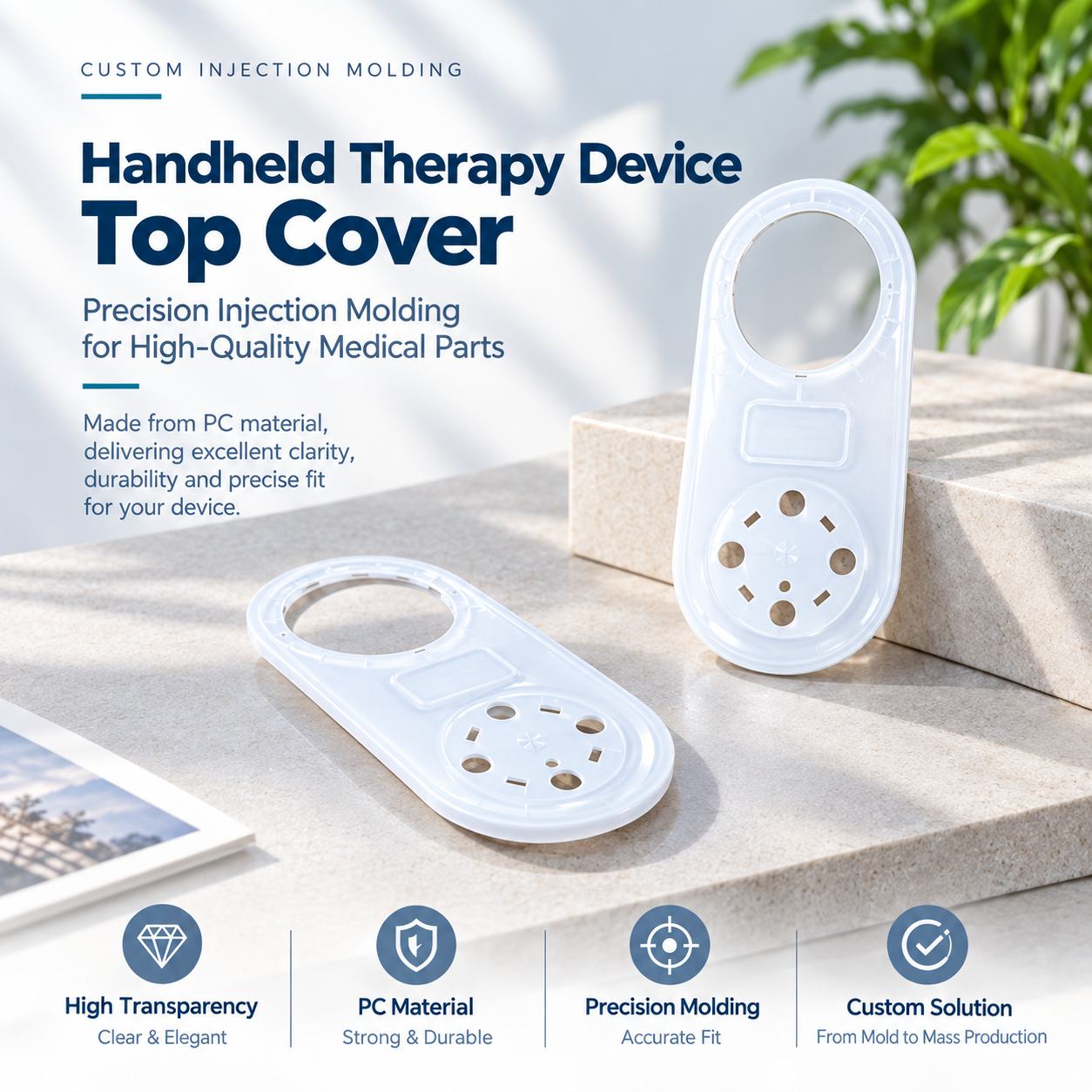
The cover has to align with the lower housing, the display module and the switch assembly behind it. Hole positions, the window opening and the sealing surface are therefore reviewed against the mating parts rather than against the drawing alone. Wall thickness transitions around ribs and bosses influence sink and warp, which in turn affect how the cover seats and how the gap and flushness look after assembly.
Finished samples are reviewed for assembly force, gap and flushness, sealing against the gasket, button feel and appearance after repeated assembly cycles. Dimensional reports are taken at defined positions, so later production lots can be compared against the same reference points instead of a new measurement plan each time.
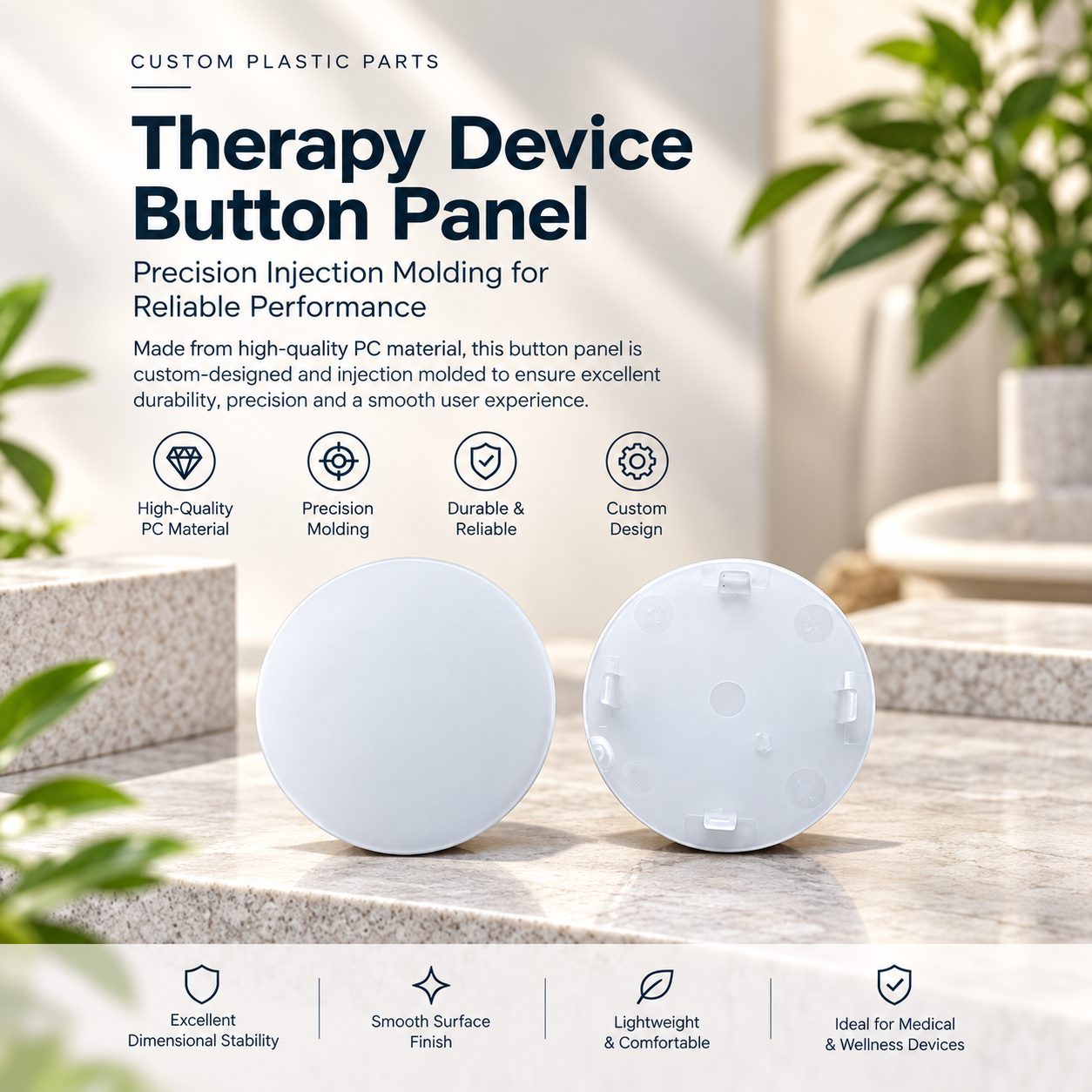
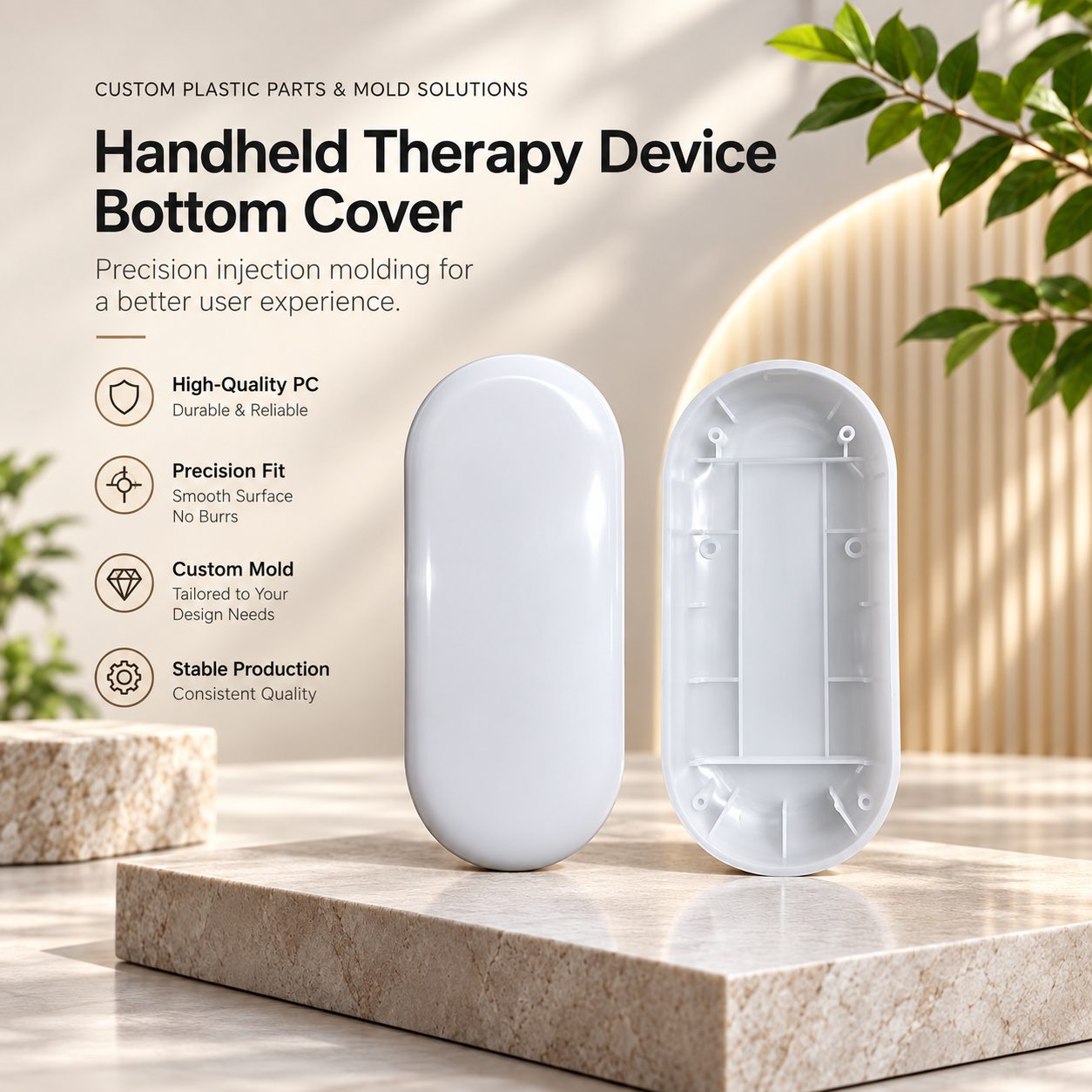
Kunshan Maifeng Precision Industry Co., Ltd. supports product structure review, custom mold design and manufacturing, single- and dual-color injection molding, and plastic-part assembly. Drawings, mating-component data and the intended regulatory background provide a practical starting point for evaluating a new device housing or a related medical component.

Kunshan Maifeng Precision Industry Co., Ltd. (MIF) has an investment of RMB 35 million and an independent factory of more than 5,000 m². Our manufacturing resources include 36 single- and dual-color injection molding machines from 90 to 700 tons and more than 50 sets of mold manufacturing and processing equipment. Supported by a service, management and production team of over 100 people, we provide product design, mold design and manufacturing, injection molding, and product assembly. Our parent company was established in 2008.
1. Product Design
Product structure design and optimization based on customer drawings and samples.
2. Mold Design
Mold concepts developed around product requirements, material and production needs.
3. Mold Manufacturing
Machining, polishing, assembly and related processes for custom molds.
4. Injection Molding
Single- and dual-color molding capabilities for custom production.
5. Product Assembly








 English
 Chinese