
Nullam dignissim, ante scelerisque the is euismod fermentum odio sem semper the is erat, a feugiat leo urna eget eros. Duis Aenean a imperdiet risus.
Nullam dignissim, ante scelerisque the is euismod fermentum odio sem semper the is erat, a feugiat leo urna eget eros. Duis Aenean a imperdiet risus.
A tool box looks like a simple box with a handle, but it is one of the harder everyday plastic products to mold well. The two halves have to close on the same line every time, the hinge has to survive thousands of open-and-close cycles, the latches have to hold under load, and the whole case has to stay stiff without becoming heavy. Because the walls are thin and the ribs are many, every one of those requirements is decided inside the mold rather than on the drawing.
This case covers a custom PP tool box produced by Kunshan Maifeng Precision Industry Co., Ltd. — a single-color polypropylene case with a molded hinge, twin latches and an integrated carrying handle. The project combined product structure review, mold design and manufacturing, injection molding, inspection and packing, and the sections below describe the decisions that mattered most.
Polypropylene brings three properties that matter for tool storage: it is light, it tolerates most workshop chemicals and oils, and it absorbs very little moisture, so the case does not swell or lose its fit in a humid workshop. It is also tough enough to take the knocks that come with being carried, stacked and dropped, provided the wall and rib geometry is designed for it.
PP also sets the constraints. It shrinks noticeably as it cools — more than ABS or PC — so a large, flat part like a tool box lid tends to warp if the cooling and ejection are not balanced. That shrinkage behaviour is the reason the mold layout, not the resin datasheet, decides whether the finished case closes cleanly.
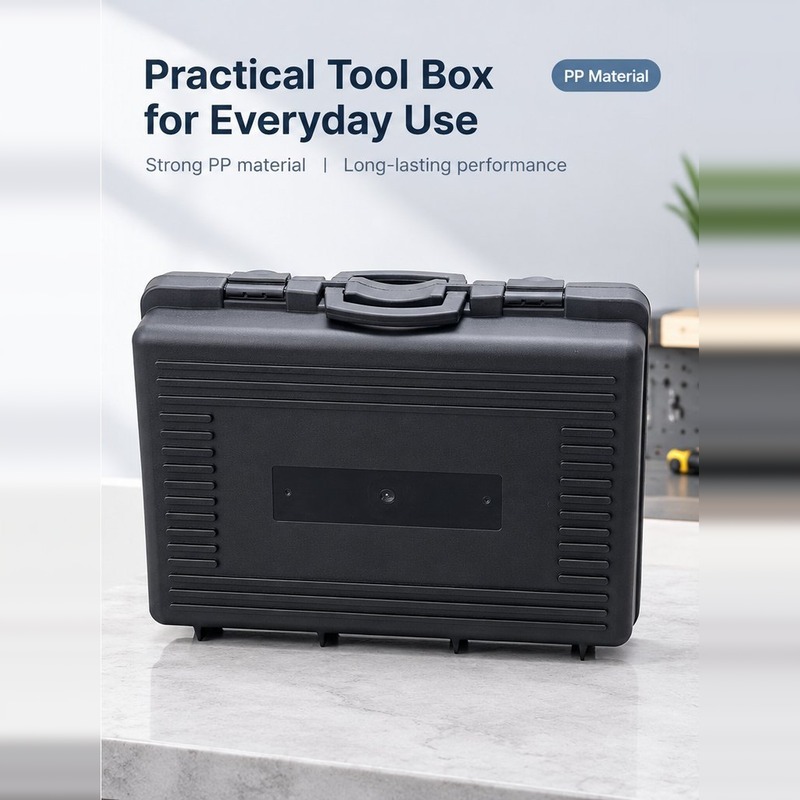
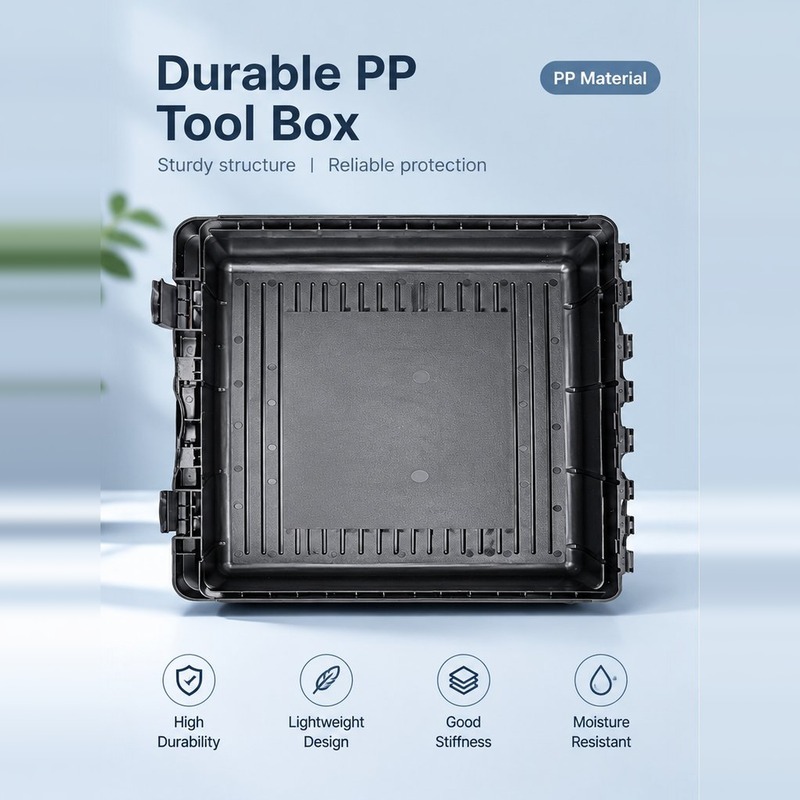
The structural work happens in the rib pattern. Ribs carry bending load far more efficiently than a thicker wall, so the body is reinforced with a grid of ribs rather than by adding material — that keeps the case light while still resisting the squeeze and twist of a loaded tool box. Rib thickness is kept to roughly 60% of the nominal wall and the roots are filleted, which avoids the sink marks and internal voids that appear when a rib is as thick as the wall it sits on.
The hinge is the other critical area. The hinge barrels, the pin seats and the latch keepers all sit on the parting line, so they are defined by the mold steel rather than by assembly. Gate position was placed away from the visible front face so the gate mark does not land where the user looks first, and ejector layout was balanced so the case releases without white stress marks around the bosses.
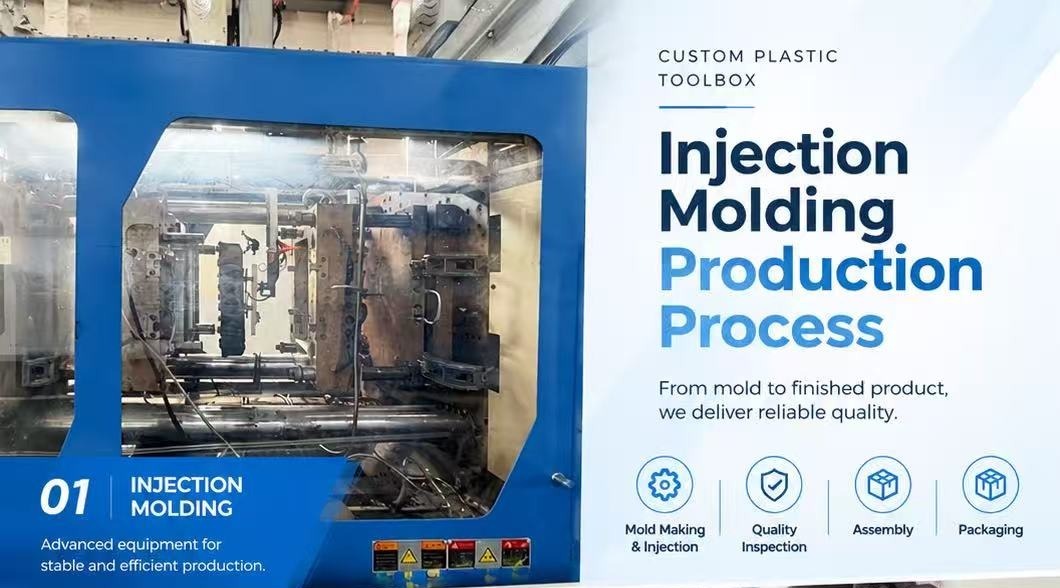
Once the tool was approved, the case ran on our injection molding machines with process parameters locked per mold and per cavity: melt and mold temperatures, injection profile, hold pressure and cooling time are recorded rather than adjusted case by case. That matters for a part with a long flow path and a thin section, because a small drift in mold temperature is enough to change how the two halves fit at the closing line.
Because the case is a large part with a visible surface, the first-off samples were checked for warpage and for the flatness of the mating faces before production was released. Color is controlled by locking the masterbatch ratio, so repeat orders stay visually consistent with the first shipment.
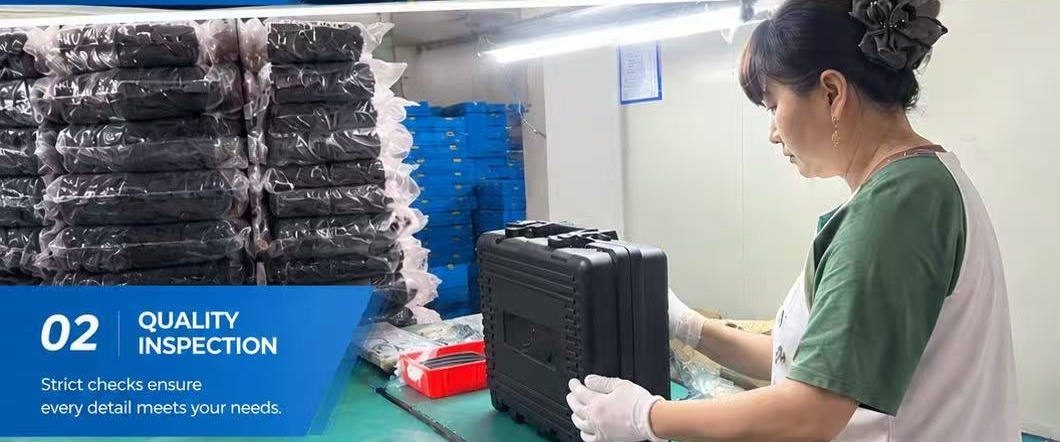
Every batch is inspected at the end of the line rather than only at the start. The checks that decide whether a case ships are practical ones: closure and latch force, hinge action without binding, flatness of the closing faces, visible sink or flow marks on the front panel, and the fit of the case when closed empty and when loaded. Cases that fail on latch engagement or hinge feel are pulled before packing, because those two points are what a buyer notices first.
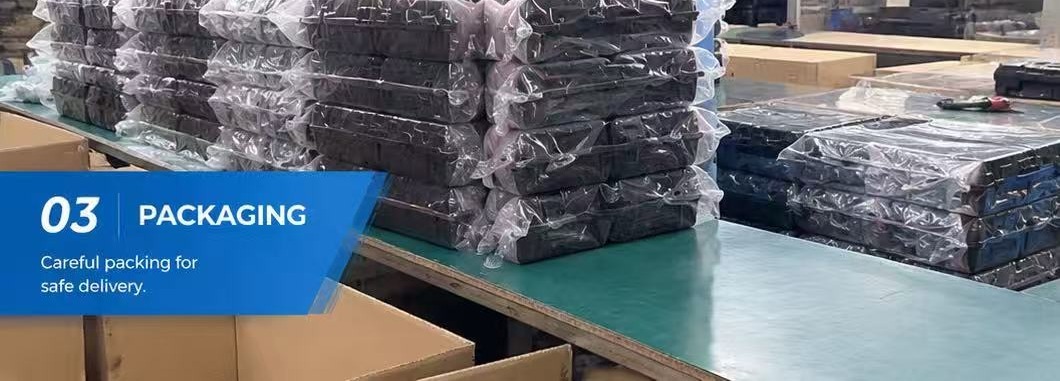
Packing is specified per shipment. Cases are wrapped individually to protect the textured surface in transit, then stacked and cartoned so that the latches are not loaded by the weight above. Because the tool, the process window and the packing specification are all documented, a repeat order can be produced without re-qualifying the part from scratch.
Maifeng Precision covers product structure review, custom mold design and manufacturing, single- and dual-color injection molding and product assembly in-house, so a tool box project can be handled from drawing to packed carton. If you are developing a new case or improving an existing one, send the drawings, the parts it has to hold and your target volume, and we will come back with a mold concept and a production plan. Contact: Lucie-MF@mold-std.com.
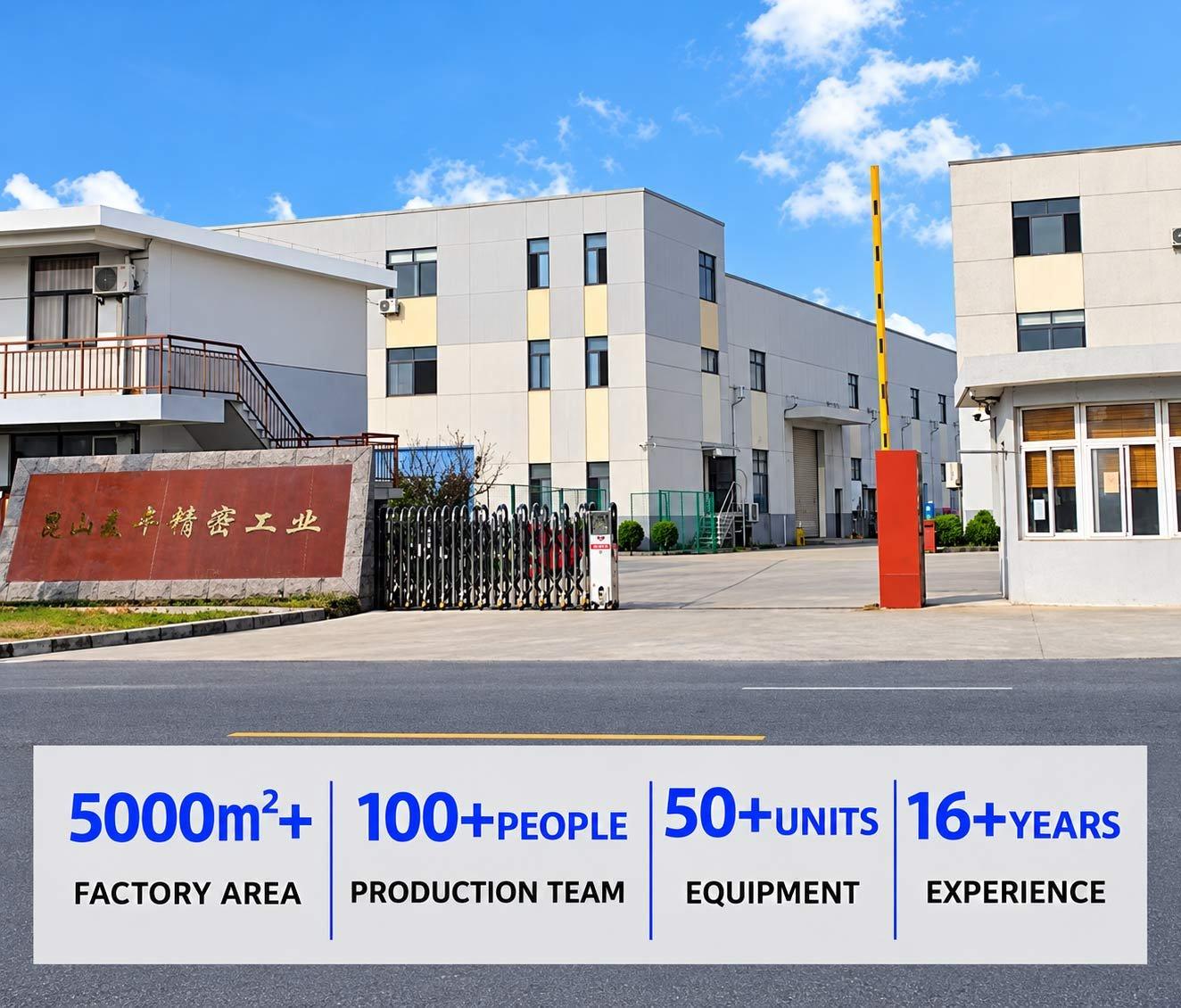
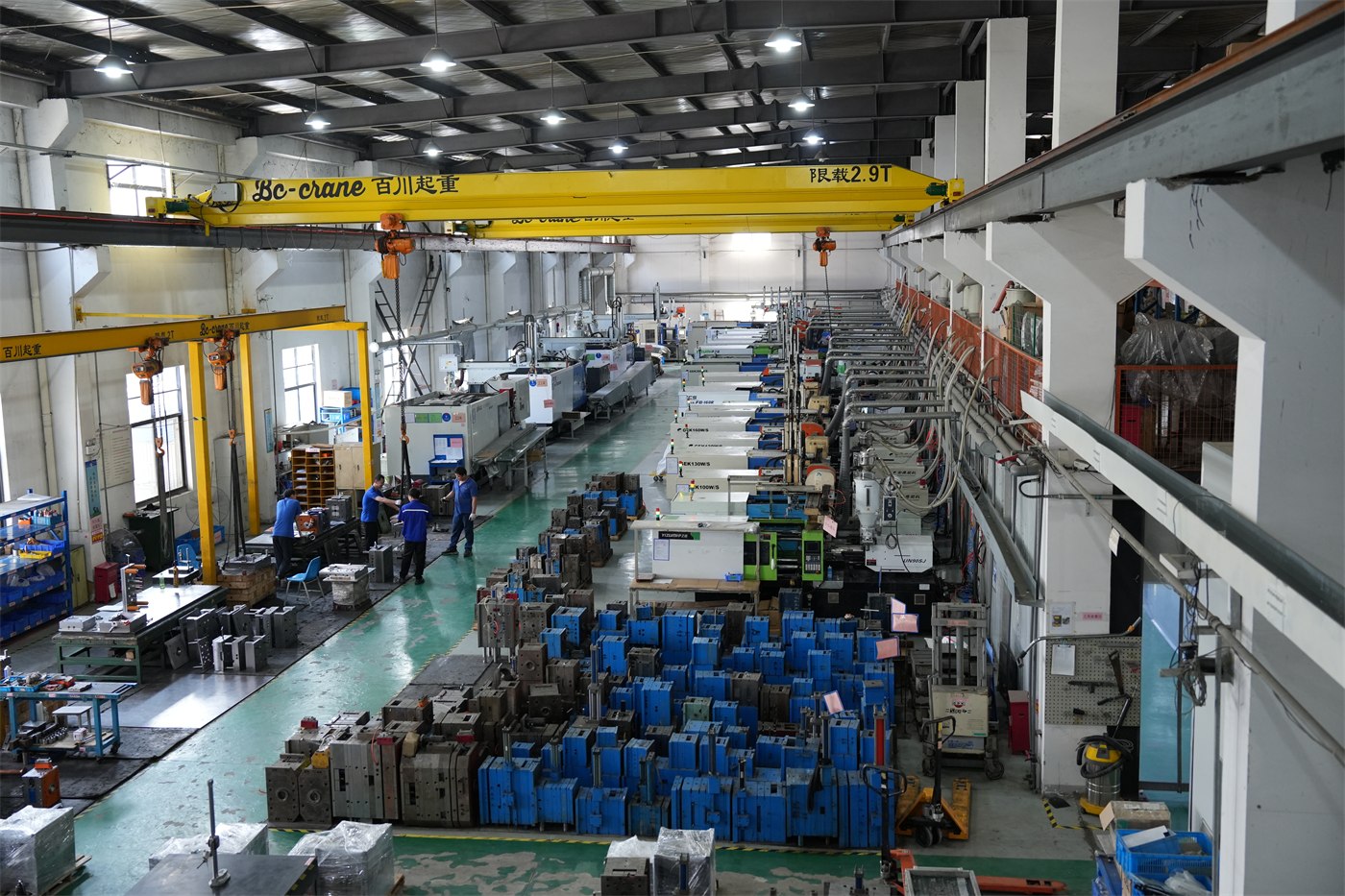
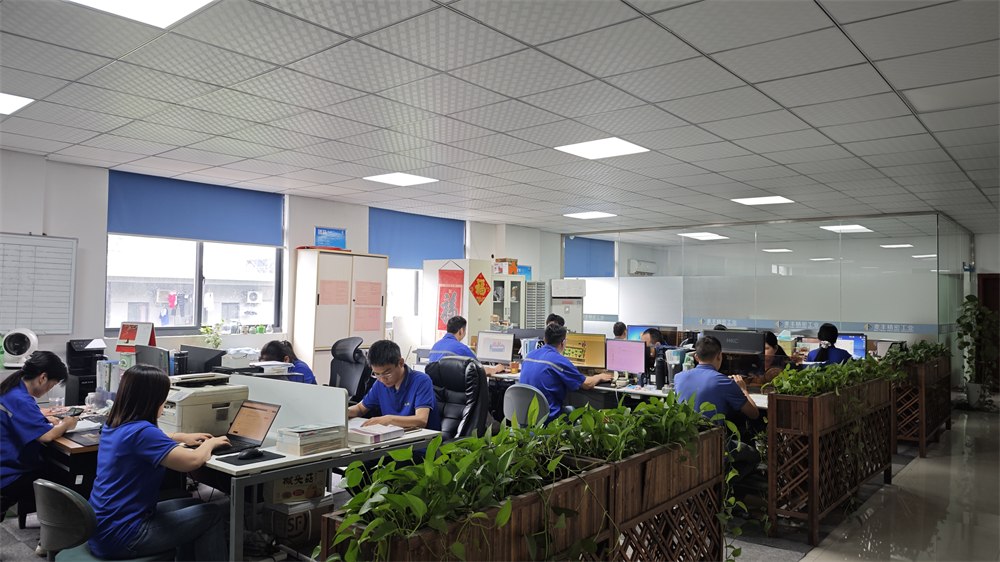
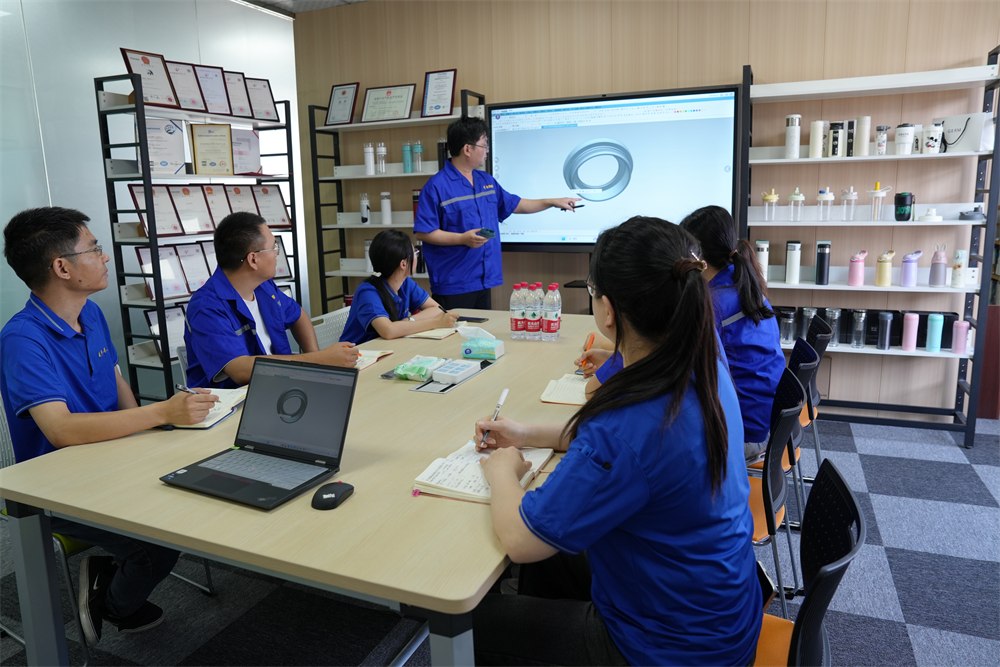
Kunshan Maifeng Precision Industry Co., Ltd. (MIF) has an investment of RMB 35 million and an independent factory of more than 5,000 m². Our manufacturing resources include 36 single- and dual-color injection molding machines from 90 to 700 tons and more than 50 sets of mold manufacturing and processing equipment. Supported by a service, management and production team of over 100 people, we provide product design, mold design and manufacturing, injection molding, and product assembly. Our parent company was established in 2008.
1. Product Design
Product structure design and optimization based on customer drawings and samples.
2. Mold Design
Mold concepts developed around product requirements, material and production needs.
3. Mold Manufacturing
Machining, polishing, assembly and related processes for custom molds.
4. Injection Molding
Single- and dual-color molding capabilities for custom production.
5. Product Assembly




 English
 Chinese