
Nullam dignissim, ante scelerisque the is euismod fermentum odio sem semper the is erat, a feugiat leo urna eget eros. Duis Aenean a imperdiet risus.
Nullam dignissim, ante scelerisque the is euismod fermentum odio sem semper the is erat, a feugiat leo urna eget eros. Duis Aenean a imperdiet risus.
A nasal irrigator base looks like a simple round plastic shell, but it carries a disproportionate share of the product’s performance. It locates the pump and the liquid chamber, provides the screw bosses that hold the internal assembly, and forms the flat seating face that has to sit tight against the tank without leaking. Because the part is small and thin-walled, those features are packed into a footprint of only a few centimetres — which is exactly where molding discipline shows.
This case covers an ABS base housing produced by Kunshan Maifeng Precision Industry Co., Ltd. for a nasal irrigator: a single-color injection molded part with a ribbed inner structure, three screw bosses and a precision seating face, supplied in dust-free tray packing. The sections below describe the material choice, the mold decisions and the production controls used on this part.
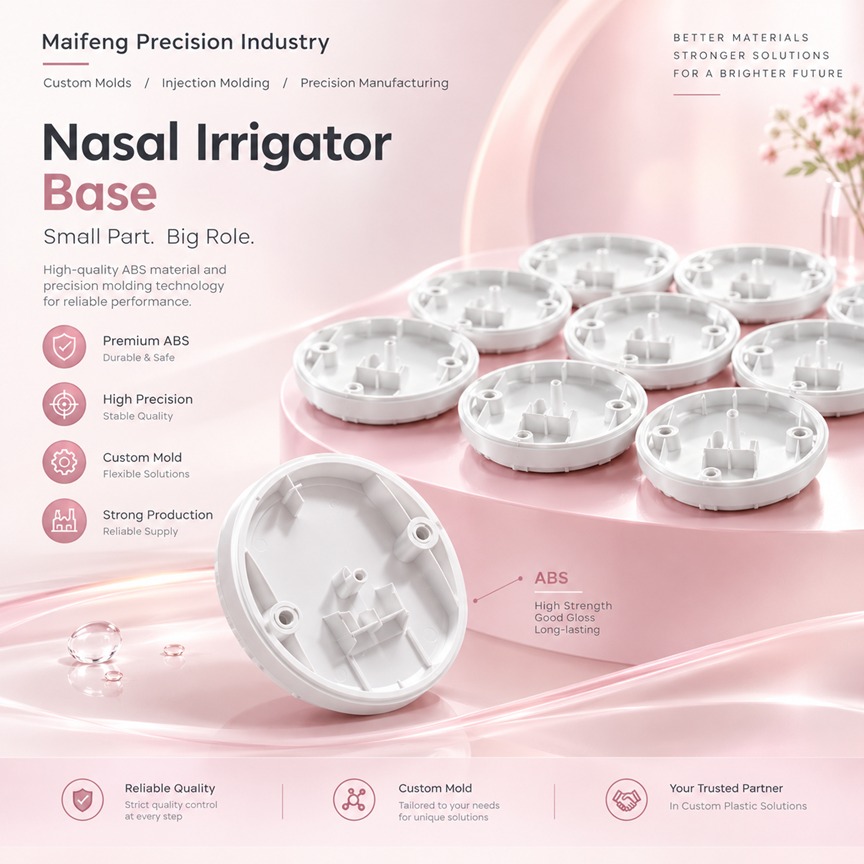
ABS was chosen for four reasons that matter on a hygiene product: it is stiff enough that a thin wall still holds the bosses rigid, it molds with a clean, uniform gloss on the visible surface, it keeps its dimensions well after molding, and it tolerates the mild detergents and alcohol wipes used to clean the outside of the device. Compared with PP, ABS gives a harder surface and a better finish on the visible shell; compared with PC, it is easier to mold at this wall thickness and less prone to stress marks around the bosses.
The trade-off is heat. ABS is not intended for steam or autoclave cycles, so the cleaning method has to be settled before the material is locked. On this part the requirement was wipe-down cleaning rather than sterilization, which keeps ABS the right choice and avoids the cost of an engineering resin the product does not need.
The inner side of the base does most of the work. A radial rib pattern stiffens the shell without thickening the wall, and three screw bosses are tied into those ribs so that screw torque is carried into the structure instead of into a free-standing column. Boss wall thickness was kept within the safe range against the nominal wall, with fillets at the root, to avoid the sink marks and internal shrinkage voids that appear when a boss is molded as a solid lump.
The seating face is the feature most sensitive to tooling. It has to stay flat after ejection, otherwise the base will not sit square against the tank and the assembly leaks at the joint. That drove the gate position — placed so the flow front reaches the seating face evenly rather than washing across it — and the cooling layout around the core, which is balanced so the part releases without warping. Ejector pins sit on non-visible internal ribs, so no witness marks appear on the outside of the housing.
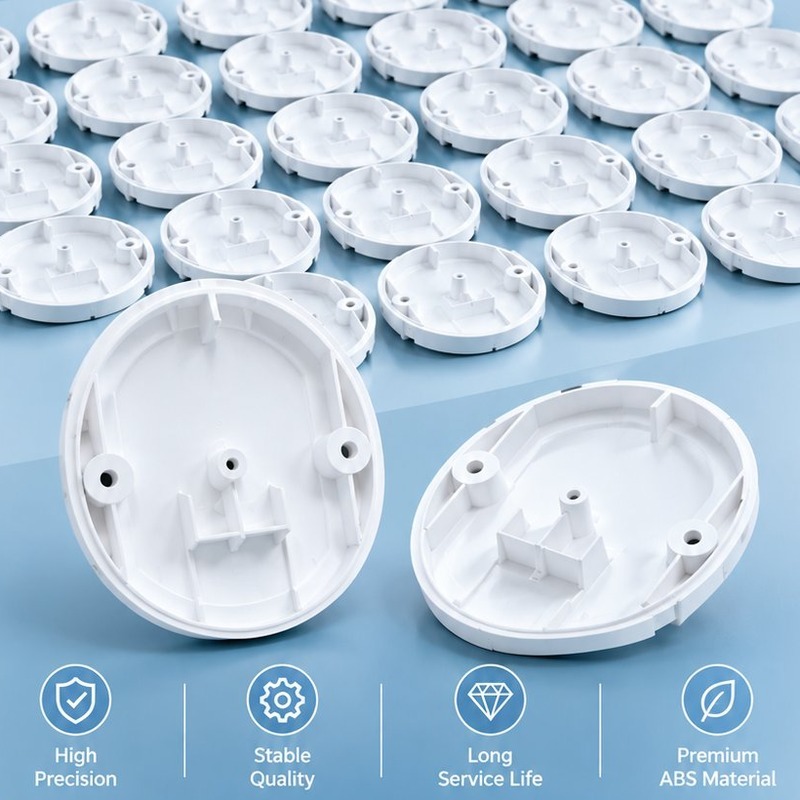
Once the tool was qualified, process parameters were locked per mold: melt temperature, injection speed profile, hold pressure and cooling time are recorded and reused rather than re-tuned at each run. On a small ABS part with multiple bosses, the parameter that most often drifts is hold pressure — too low and the bosses shrink away from the screw, too high and the part sticks and stresses at ejection. Keeping it fixed is what makes the third shipment match the first.
Checks during production focus on the features that decide assembly: boss hole diameter and depth, flatness of the seating face, the height of the part at the joint line, freedom from short shots at the thin rib ends, and surface appearance on the visible shell. Parts are sampled against the approved first-off sample, and dimensions are recorded per batch so a drift is caught before it reaches packing.
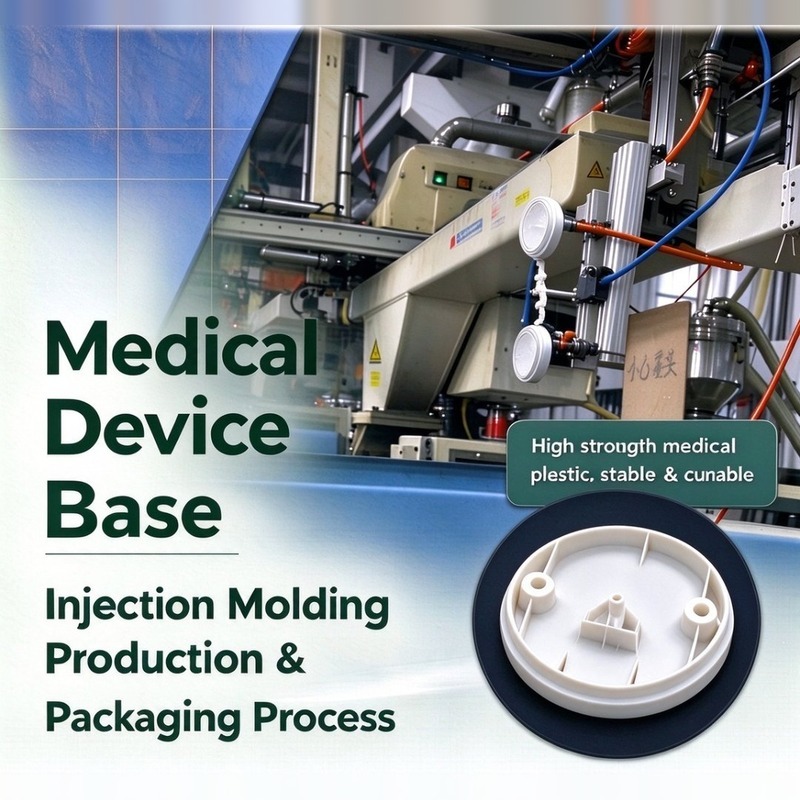
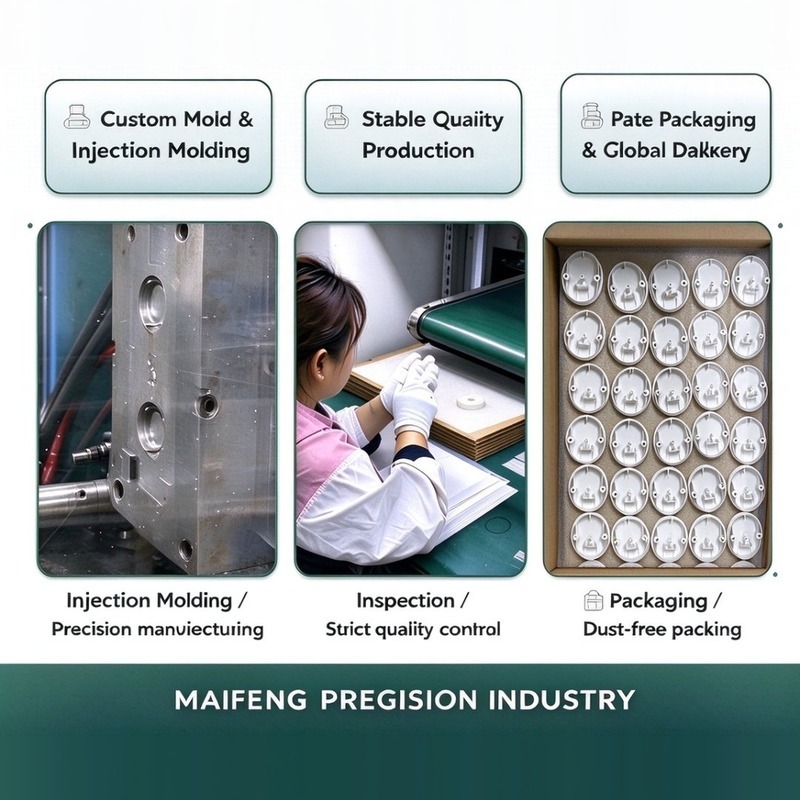
Because the base is a hygiene-facing component, handling after molding matters as much as the molding itself. Parts are inspected by hand at the line — gloves on, one piece at a time — for flash at the parting line, gate residue, oil or dust on the surface, and any visible defect on the shell. Rejects are pulled at the inspection table rather than after packing.
Packing is done in trays: each base sits in its own cavity in the tray so the parts cannot rub against each other in transit, and the trays are stacked and boxed for export. That layout protects the visible surface, keeps the parts dust-free until they reach the assembly line, and makes the count per carton easy to verify at receiving.
Maifeng Precision handles product structure review, custom mold design and manufacturing, single- and dual-color injection molding and assembly in-house, with medical parts produced under our ISO 13485 quality system. If you are developing a device housing or base, send the drawings, the mating components and your cleaning requirement, and we will come back with a mold concept and a sampling plan. Contact: Lucie-MF@mold-std.com.
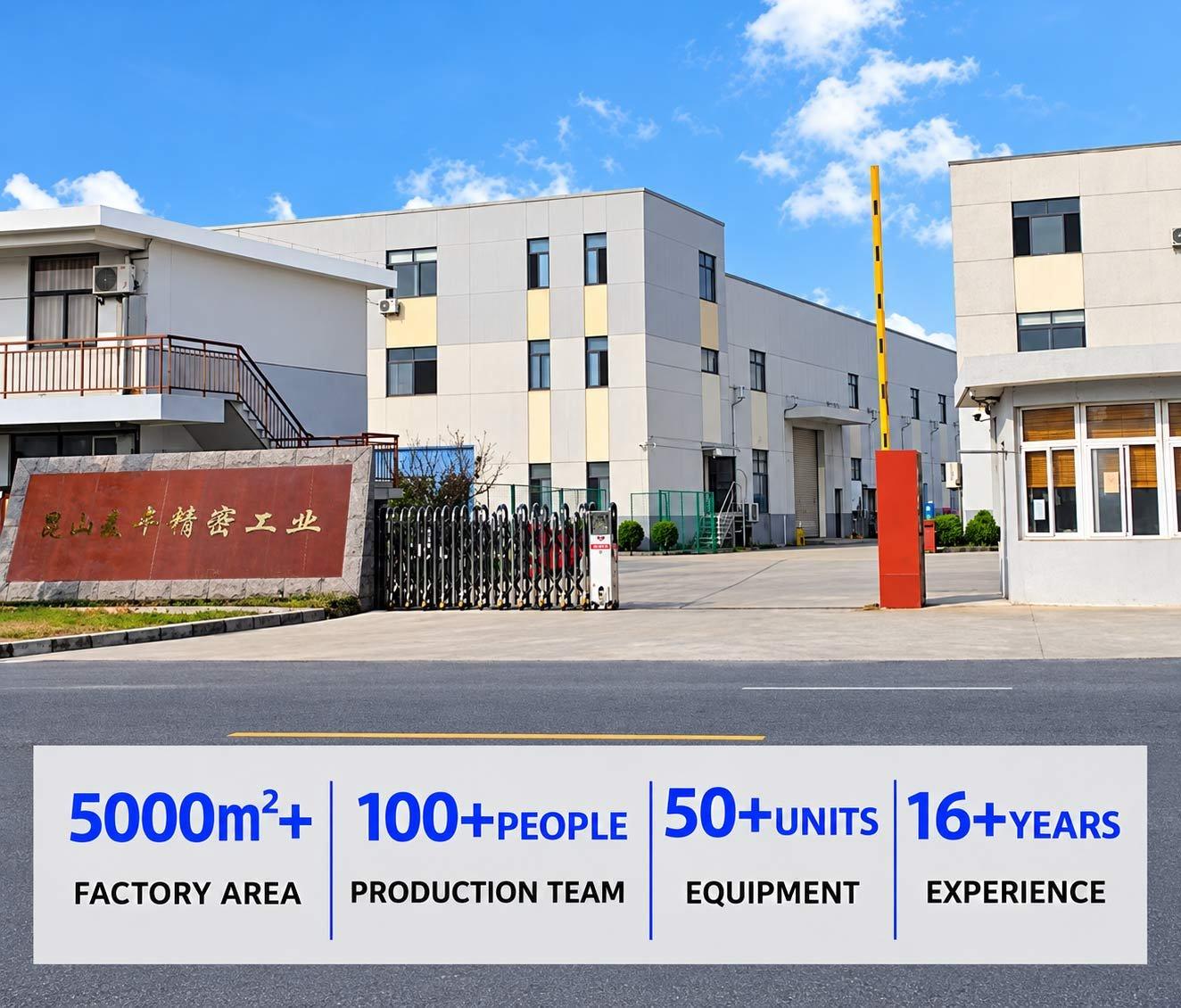
Kunshan Maifeng Precision Industry Co., Ltd. (MIF) has an investment of RMB 35 million and an independent factory of more than 5,000 m². Our manufacturing resources include 36 single- and dual-color injection molding machines from 90 to 700 tons and more than 50 sets of mold manufacturing and processing equipment. Supported by a service, management and production team of over 100 people, we provide product design, mold design and manufacturing, injection molding, and product assembly. Our parent company was established in 2008.
1. Product Design
Product structure design and optimization based on customer drawings and samples.
2. Mold Design
Mold concepts developed around product requirements, material and production needs.
3. Mold Manufacturing
Machining, polishing, assembly and related processes for custom molds.
4. Injection Molding
Single- and dual-color molding capabilities for custom production.
5. Product Assembly








 English
 Chinese