
Nullam dignissim, ante scelerisque the is euismod fermentum odio sem semper the is erat, a feugiat leo urna eget eros. Duis Aenean a imperdiet risus.
Nullam dignissim, ante scelerisque the is euismod fermentum odio sem semper the is erat, a feugiat leo urna eget eros. Duis Aenean a imperdiet risus.
A toilet brush handle looks like the simplest part in the bathroom, and that is exactly why buyers underestimate it. It is a long hollow tube that has to stay straight after it leaves the mold, sit in the hand without feeling flimsy, hold the brush head at a fixed angle, and survive years of contact with water, bleach and descaler without cracking or discolouring.
This case covers a pink PP handle with a tapered hollow body, one molded locking hole for the head, and a smooth surface on both the outside and the bore. The project ran from mold concept through a four-cavity tool, a locked process window, and a packing method that keeps the handles from scuffing each other in the carton.
Polypropylene is chosen here for reasons that have nothing to do with price alone. It does not absorb water, so the handle does not swell and change fit after months in a damp bathroom. It resists the household chemicals a brush actually meets — chlorine-based toilet cleaner, descaler, soap and hard water — far better than PS or a low-end ABS. It is also the lightest of the common molding materials, which matters for a part that is held at arm’s length and waved around.
The trade-offs are real and should be raised before the tool is cut. PP shrinks more than ABS and it is less stiff, so a hollow tube in plain PP can feel whippy if the wall is taken too thin; the fix is wall thickness and a slight taper, not a different material. PP also whitens when it is scratched or over-flexed, which is visible on a coloured part under bathroom light, and it needs a UV-stabilized grade if the brush will stand next to a window. Where a soft grip is wanted, the answer is a two-shot PP plus TPE handle rather than a softer single material.
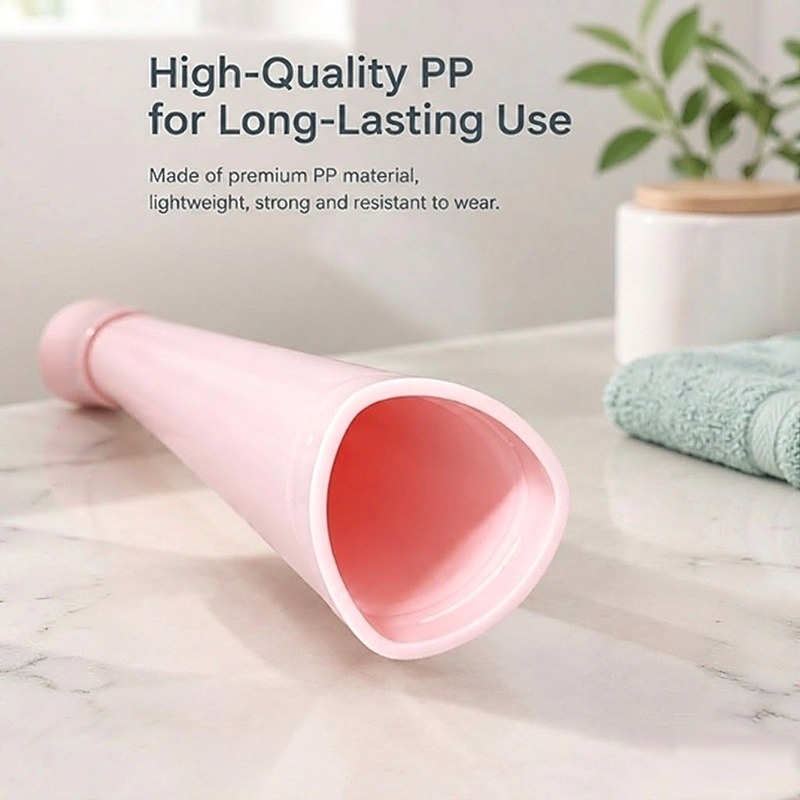
The mold is dominated by one feature: a slender core running the full length of the handle. That core decides the wall thickness, and wall thickness decides whether the part is straight. Under injection pressure the core deflects, so the wall ends up thicker on one side than the other, and the handle cools into a slight banana that only shows up when twenty of them are laid side by side on a bench.
Three things control it. The core is tapered and polished in the draw direction, with draft generous enough for PP — a tight core will drag and leave longitudinal marks on the bore. Core cooling runs on a baffle or bubbler so the inside of the tube cools at roughly the same rate as the outside; when the core runs hot the part stays soft on the way out and bows on the conveyor. And the part is stripped rather than pinned: a stripper plate pushes on the open rim, because ejector pins on a thin tube wall will punch through or leave a stress ring that cracks in service.
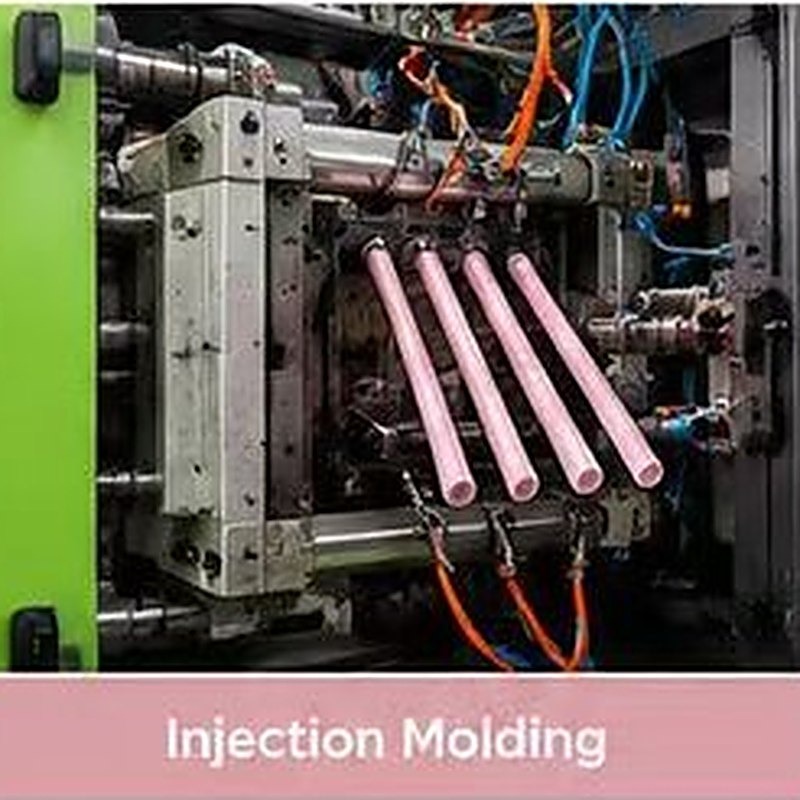
The gate sits on the open end rim, the face that disappears inside the brush head during assembly. Gating there keeps the vestige off the part the customer sees, and it fills along the length of the tube instead of shooting into a closed end where air has nowhere to go. The closed tip is vented so the last of the air escapes rather than being compressed into a burn mark.
The locking hole is formed by a small pin in the cavity. It is the feature most likely to give trouble in production: a worn pin leaves a ring of flash that the head will not pass over, and a pin that is slightly out of position makes the head sit at an angle. The pin is replaceable, its position is checked on the first-off sample, and the flash limit at the hole is written into the inspection sheet rather than left to the operator’s judgement.
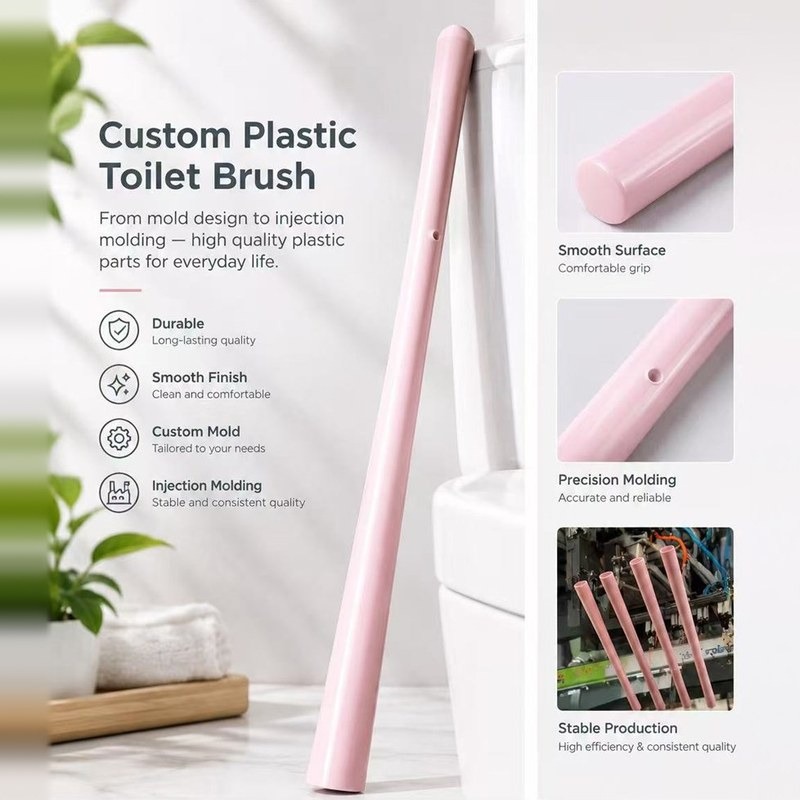
Surface quality on a part like this is mostly a tooling decision. The cavity is polished to a uniform gloss so the colour reads evenly along the length, and the core is polished in the draw direction so the bore does not show drag lines when a user looks into it. Colour is the other visible variable: the masterbatch let-down ratio is fixed and recorded, because a batch that runs two percent richer looks like a different product on the shelf.
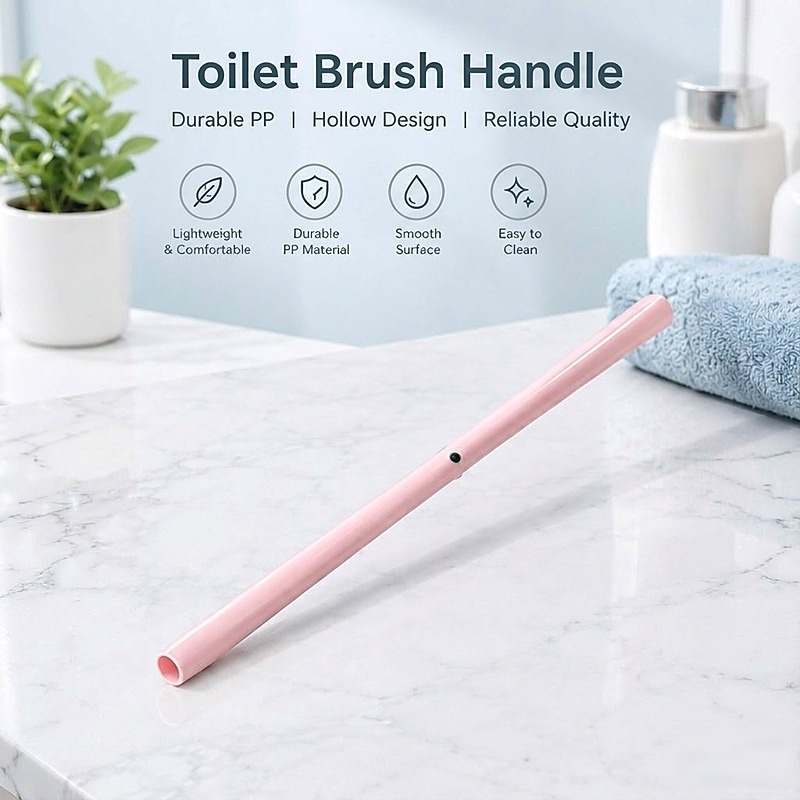
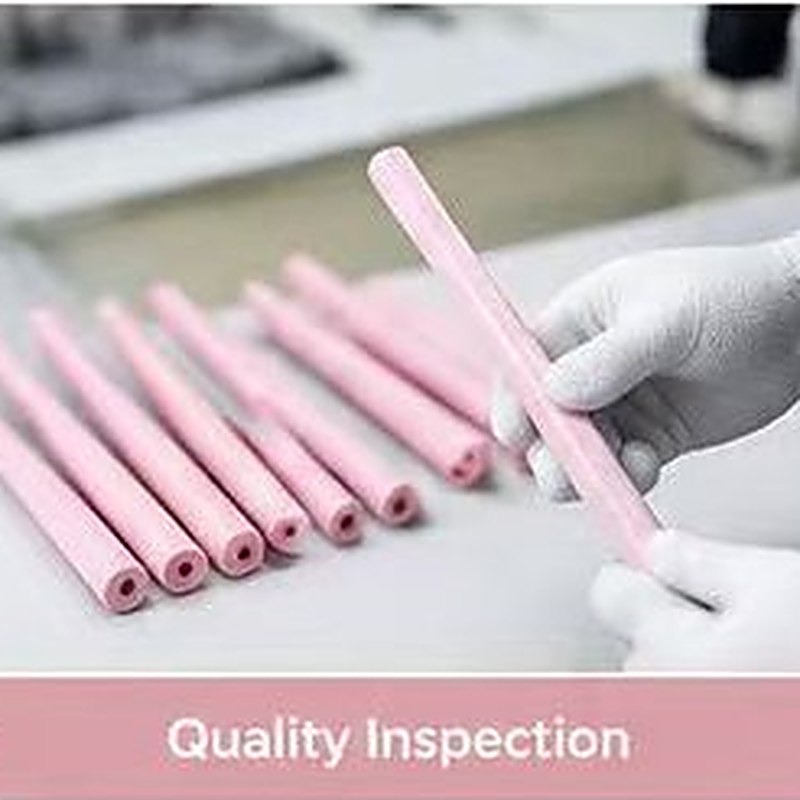
Straightness is the measurement that matters most and the one most often left off the drawing. We check it on a surface plate over the full length, and we check weight per hour as a cheap proxy for wall thickness — a drifting weight means a drifting cavity, long before the parts look wrong. Length, hole position and bore diameter are checked against the first-off sample at the start of every run.
Trimming is done by hand at the bench for this part: the gate remnant on the rim is cut flush, and any stringing at the tip is removed. The operator wears gloves not for hygiene theatre but because the parts are inspected by touch as well as by eye — a burr at the rim or a rough spot in the bore is found faster with a fingertip than with a light box.
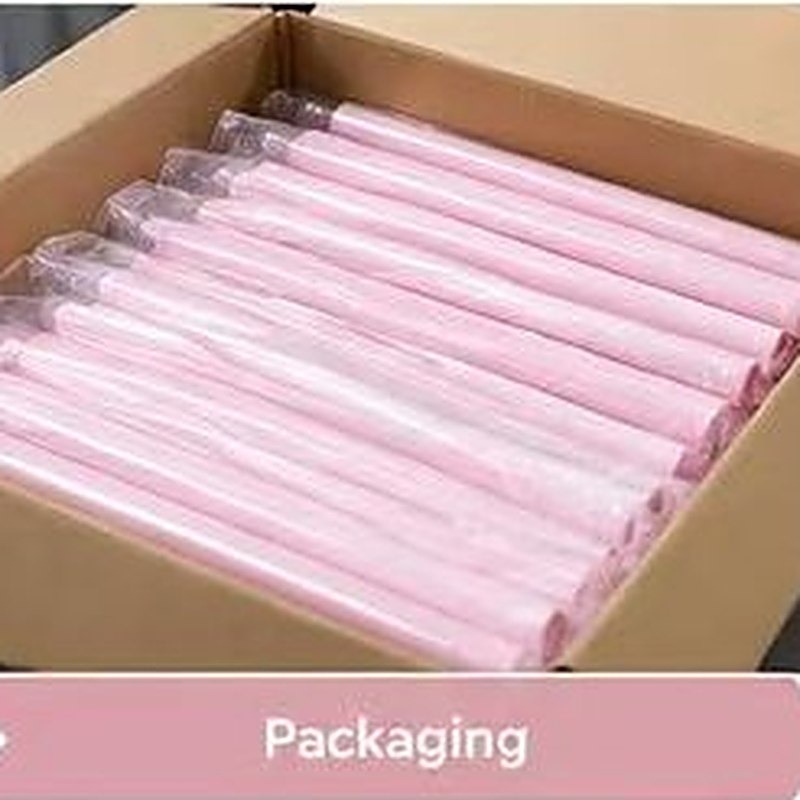
Packing follows from the same concern. Handles are sleeved individually before they go into the carton, so they cannot rub against each other in transit, and they are laid flat rather than stood on end — a bundle standing on its end will bow under its own weight over a long sea freight. Carton count and layer arrangement are agreed with the customer, because a carton that arrives with bowed handles is blamed on the molder even when the parts left the factory straight.
Looking for a reliable partner for custom plastic parts or injection molds? Send us your drawings, samples or mating parts, and our engineering team will come back with a DFM review and a mold proposal for your next project.
Contact Us
📩 Email: Lucie-MF@mold-std.com | 📱 WhatsApp: +86 17714886855
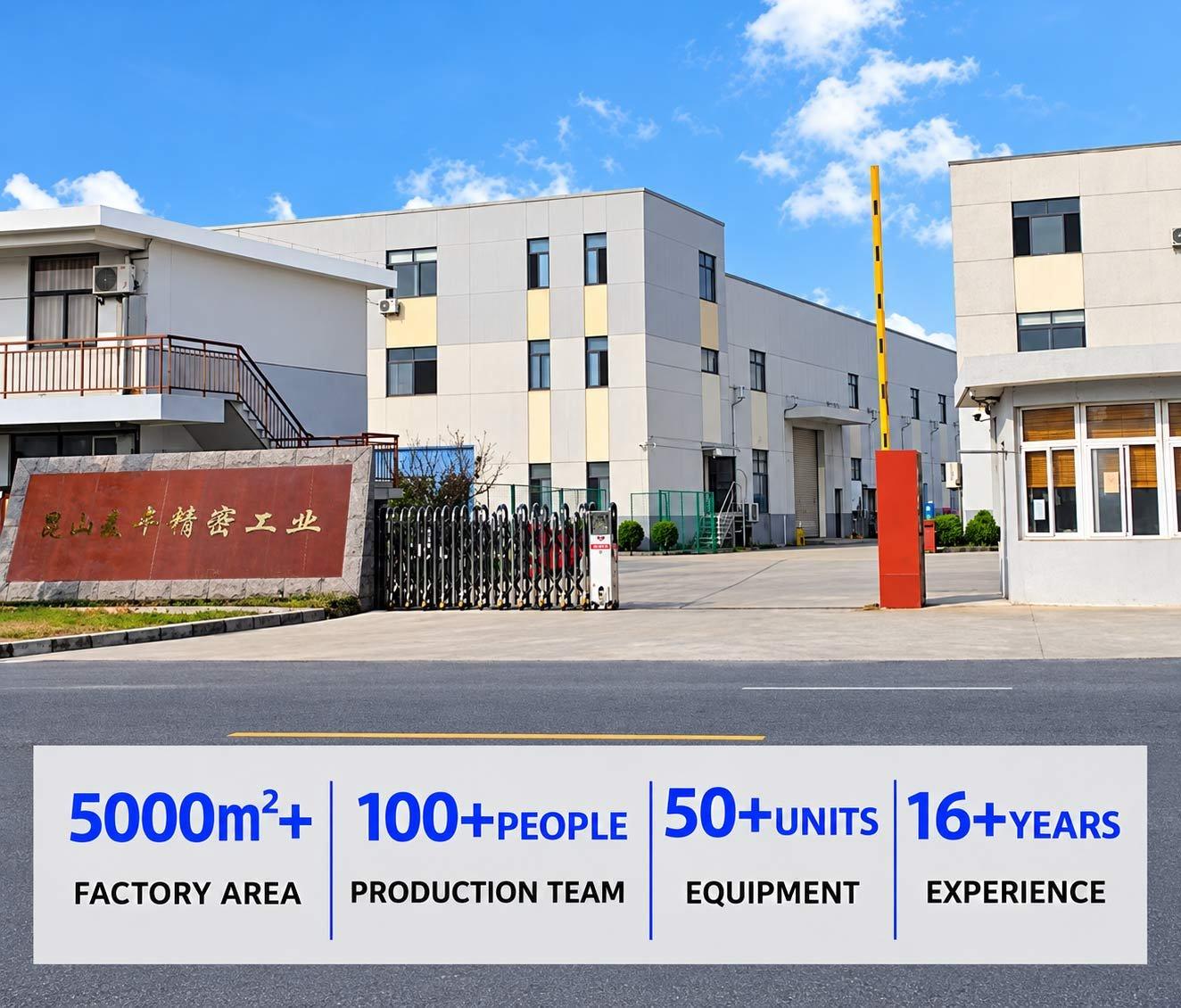
Kunshan Maifeng Precision Industry Co., Ltd. (MIF) has an investment of RMB 35 million and an independent factory of more than 5,000 m². Our manufacturing resources include 36 single- and dual-color injection molding machines from 40 to 700 tons and more than 50 sets of mold manufacturing and processing equipment. Supported by a service, management and production team of over 100 people, we provide product design, mold design and manufacturing, injection molding, and product assembly. Our parent company was established in 2008.
1. Product Design
Product structure design and optimization based on customer drawings and samples.
2. Mold Design
Mold concepts developed around product requirements, material and production needs.
3. Mold Manufacturing
Machining, polishing, assembly and related processes for custom molds.
4. Injection Molding
Single- and dual-color molding capabilities for custom production.
5. Product Assembly








 Chinese
 English