
Nullam dignissim, ante scelerisque the is euismod fermentum odio sem semper the is erat, a feugiat leo urna eget eros. Duis Aenean a imperdiet risus.
Nullam dignissim, ante scelerisque the is euismod fermentum odio sem semper the is erat, a feugiat leo urna eget eros. Duis Aenean a imperdiet risus.
A tail light grille on a ride-on mower looks like a trim part until you list what it actually has to do. It has to pass light out of the lamp assembly without showing the LED as a hot spot, keep grass clippings, dust and thrown stones away from the lens, sit flush in bodywork that flexes and vibrates all day, and still look like the same part after three summers in the sun. Most of the returns on a part like this are not mechanical failures — they are yellowing, crazing, a gap at one end of the frame, or a light output that no longer matches the lamp it was approved against.
This case covers a PC (polycarbonate) rear light grille for a lawn mower: a thin-walled rounded frame with a fine tooth pattern along its inner edge, molded in a light diffusion grade so the lamp reads as one even panel instead of a row of bright dots. The work ran from DFM review through the tool, a locked process window, an inspection plan built around flatness and light output, and a packing method that keeps the frames from twisting in the carton.
Polycarbonate is chosen here for toughness first. A mower works next to a spinning blade, on gravel, under branches, and the lamp is the part that takes the hit. PC has the highest notched impact strength of the transparent engineering plastics and keeps a useful share of it down to freezing, which is why it survives a stone strike that would crack PMMA. It also holds dimensions better than PP or PE in the sun, so a frame that clipped in on the first sample still clips in on the thousandth.
The grade matters more than the resin family. A light diffusion PC is not clear PC with a bit of white in it: the diffuser loading sets the balance between transmission and hiding, and that balance is what the customer’s photometric test is really measuring. Two consequences follow. The diffuser affects melt viscosity, so the filling pressure and the warpage of a thin frame change with the grade. And the color point drifts with let-down ratio, so the masterbatch ratio is fixed, recorded and kept to the same lot for the life of the program — a batch run two percent richer reads as a different product next to the old one on the shelf.
PC also needs its UV package settled before the tool is cut. Unstabilized PC yellows outdoors; the answer is either a UV-stabilized grade or a co-extruded UV cap, and if the customer also wants scratch resistance, a hard coat on the visible face. Each of those decisions changes wall thickness, gate position and the acceptance test, so they belong in the DFM review, not in a change request after the first production run.
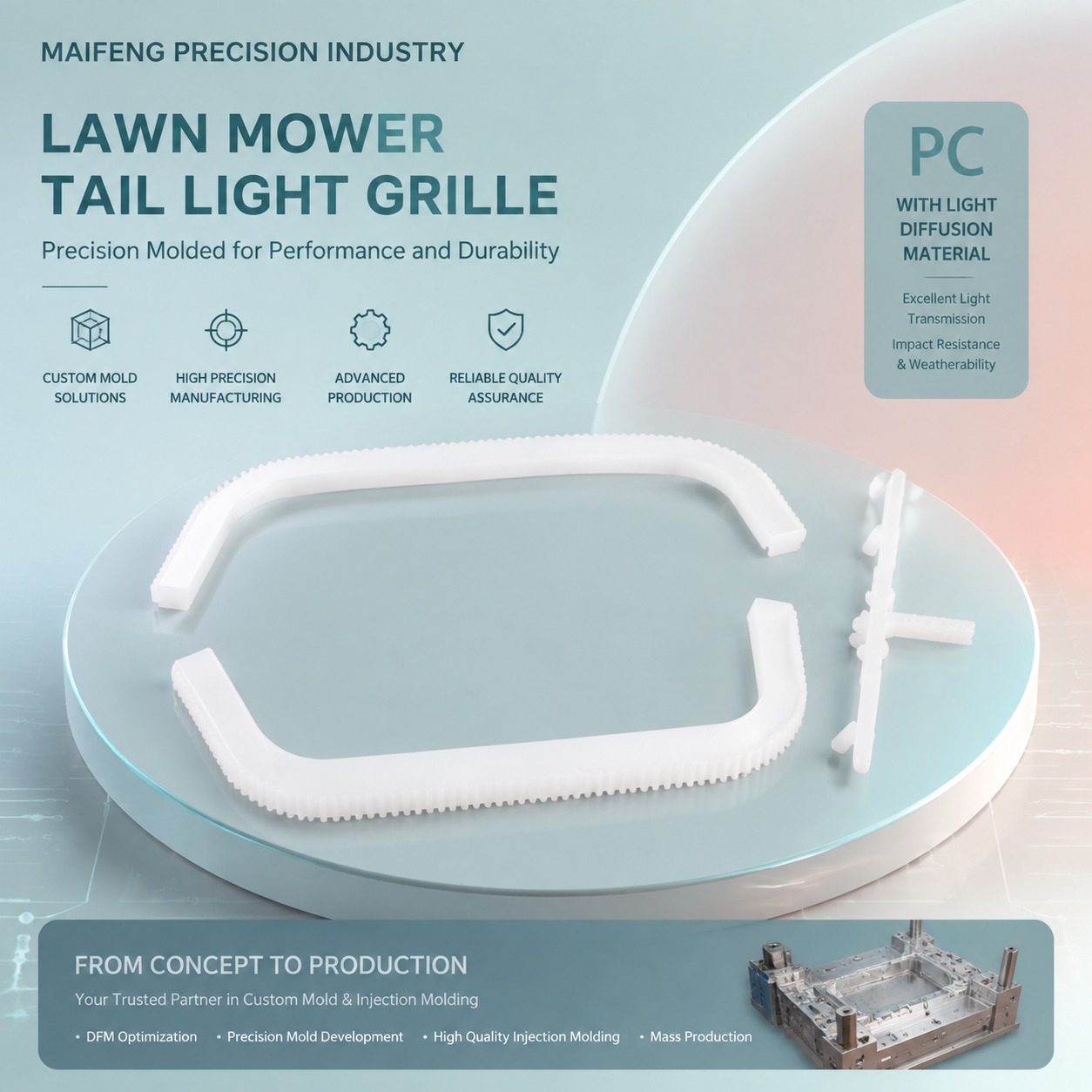
The difficult geometry on this part is not the outline, it is the tooth row. Dozens of small ribs run along the inner edge at a wall around a millimetre, and they sit at the far end of the flow path from the gate. That combination produces the two classic defects of a grille: a short shot at the last teeth to fill, and a burn mark where the air that was pushed ahead of the melt had nowhere to go.
Three things in the tool decide it. Venting is designed, not hoped for: vents at the parting line along the tooth row and a vented block at the end of the fill, with depth kept small enough that it flashes nowhere else on the part. The gate is placed so the frame fills from one side and the two flow fronts meet on a hidden rib rather than across the middle of the visible face — a weld line behind a tooth reads as a dark shadow the moment the lamp is switched on. And the tooth detail is cut into a replaceable block, because a single chipped tooth in a solid cavity block means either a repair that never quite matches or a new block.
Draft is the quiet failure mode. Each tooth needs enough draft per side to release without dragging; when it is short, the part comes out with polished-looking drag lines on the flank and a white stress mark at the root, and the operator finds it a week later when the teeth start snapping during assembly. Ejection is arranged the same way — pins land on the hidden face only, with no witness ring on the side the customer looks at.

PC is hygroscopic, and this is where most of the avoidable failures on a PC light part begin. Resin has to be dried to below 0.02% moisture before it goes into the barrel — typically three to four hours at 120 °C in a desiccant dryer, with the dew point actually checked rather than assumed. Wet resin shows up as silver streaks on the surface, and, more expensively, as hydrolysis that cuts molecular weight: the parts look acceptable, pass a visual check, and then crack at a clip or a screw boss weeks later. That is a defect that ships before it is found.
The window is narrow in the other direction too. Melt temperature sits in the high 200s to around 310 °C, and the mold runs hot — roughly 90 to 110 °C — because a cold tool on a thin diffuser part gives flow marks, poor gloss and high molded-in stress. Running hot costs cycle time, and that is a conversation worth having with the customer at quotation rather than discovering during PPAP.
Parts that will see solvent contact or snap assembly are annealed after molding, and the stress level is verified on molded parts rather than on test plaques: a short dip in a stress-crazing agent shows whether the frame is going to craze in service. Regrind is capped and recorded, and for a light diffusion part it is capped tighter than usual — a little dust or a mixed color lot in the regrind shifts the light output, and light output is the one thing this part is bought for.
A frame this shape does not warp like a flat panel; it twists. Corners with more mass cool later than the thin tooth row, the frame ends lift, and by the time it is clipped into the housing one end stands proud of the bodywork. The measurement that matters is therefore not a single dimension on the drawing but flatness checked the way the part is actually mounted — on a plate for the raw frame, and in a fixture that reproduces the housing for the assembly. Where warp persists, the fix is cooling layout and balanced packing first, and a cooling jig second; adding clips to pull the frame straight only transfers the stress to the teeth.
Fit is the other half of the problem. The tooth pattern has to line up with the lamp mask, the lip has to seat without a gap, and the retention — snap clips, hot plate welding or a compressed gasket — has to hold the frame without bowing it. An over-compressed gasket is a common cause of a grille that fits on the bench and gaps on the machine, because the frame is being bent to close the joint. Assembly force, gap at the ends and the appearance after three or four re-assemblies are all on the sample review sheet, not just the cavity dimensions.
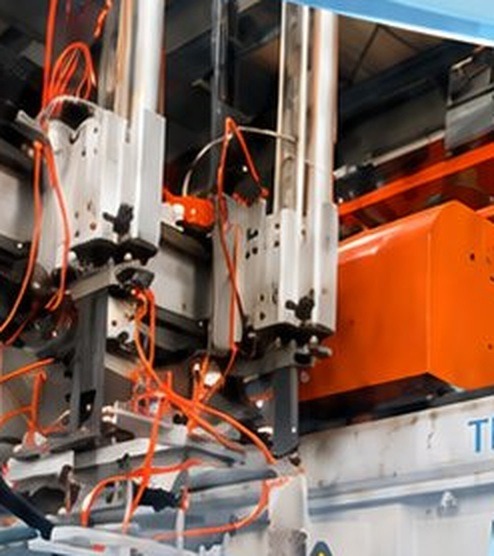
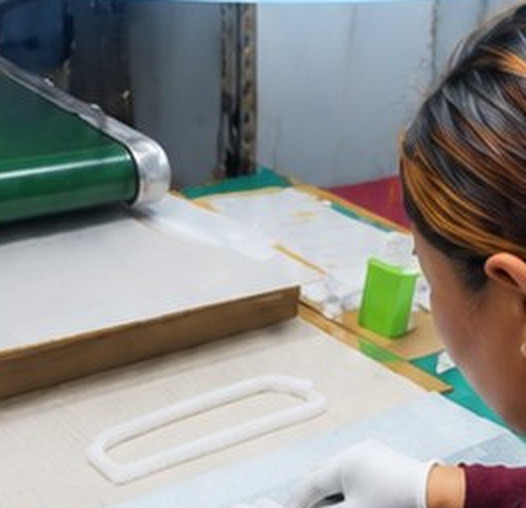
In service the part meets four things worth testing on molded samples rather than on a data sheet: UV exposure, thermal cycling between a cold shed and a hot deck, vibration from the machine, and impact from whatever the blade throws. The fifth is cleaning. PC has poor resistance to petrol, degreasers and many solvent-based cleaners, and a grille wiped down with the wrong aerosol will craze from the tooth roots outward — which is why the cleaning instruction belongs in the packing slip, and why a hard coat is worth considering when the mower is sold into a market where owners hose and spray everything.
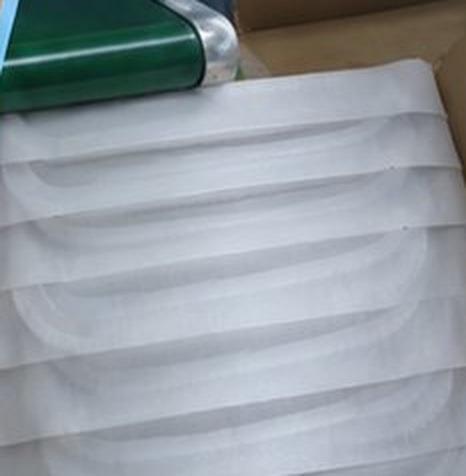
Packing follows the same logic as flatness. Frames are sleeved individually and laid flat rather than stacked on edge, because a bundle standing on end bows under its own weight over a long sea freight, and a bowed frame is blamed on the molder even when the parts left the factory straight.
From a drawing or a mating housing, our team can review the part for draft, rib filling and warp risk, then quote the tool, the process window and the inspection plan as one package — product structure review, custom mold design and manufacturing, single and dual color injection molding, and plastic part assembly under one roof.
Contact Us
📩 Email: betty@mold-std.com | 📱 WhatsApp: +86 15370753830
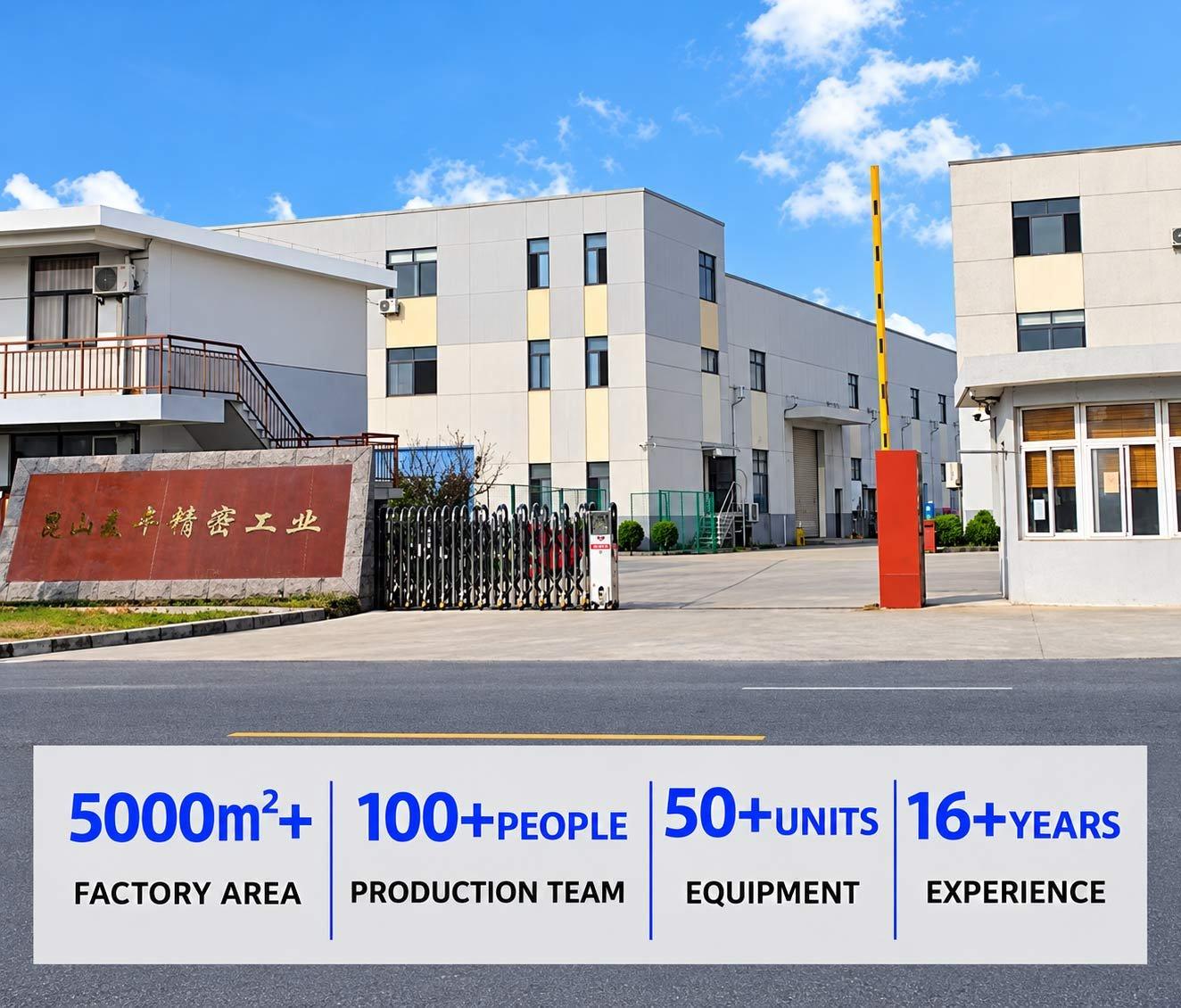
Kunshan Maifeng Precision Industry Co., Ltd. (MIF) has an investment of RMB 35 million and an independent factory of more than 5,000 m². Our manufacturing resources include 36 single- and dual-color injection molding machines from 40 to 700 tons and more than 50 sets of mold manufacturing and processing equipment. Supported by a service, management and production team of over 100 people, we provide product design, mold design and manufacturing, injection molding, and product assembly. Our parent company was established in 2008.
1. Product Design
Product structure design and optimization based on customer drawings and samples.
2. Mold Design
Mold concepts developed around product requirements, material and production needs.
3. Mold Manufacturing
Machining, polishing, assembly and related processes for custom molds.
4. Injection Molding
Single- and dual-color molding capabilities for custom production.
5. Product Assembly








 Chinese
 English