Car Taillight Assembly Base, Black Injection Molded Lamp Frame Accessory
This taillight base molds the lamp's chassis and its body mounting in one part. The clip row along the rail locates the lamp at many points so panel flex is absorbed and the visible gap stays true; spacing follows fitting trials on real panels and the clips cycle for service removal. The shell end carries the lens rim, reflector walls and bulb-holder posts, with a thick sealing rim that is cored and ribbed so it sets without sink — a sunk rim shows as a fogged lamp in the rain test. Resin is heat-resistant and UV-stabilized for the oven behind a lens, and the part is validated through thermal cycling assembled, not bare.
clip row sets the visible gap by distributed location and survives service removal
cored sealing rim holds lens compression without sink or fogging risk
thermal-cycle validated with the lamp assembled, resin UV-stabilized behind the lens
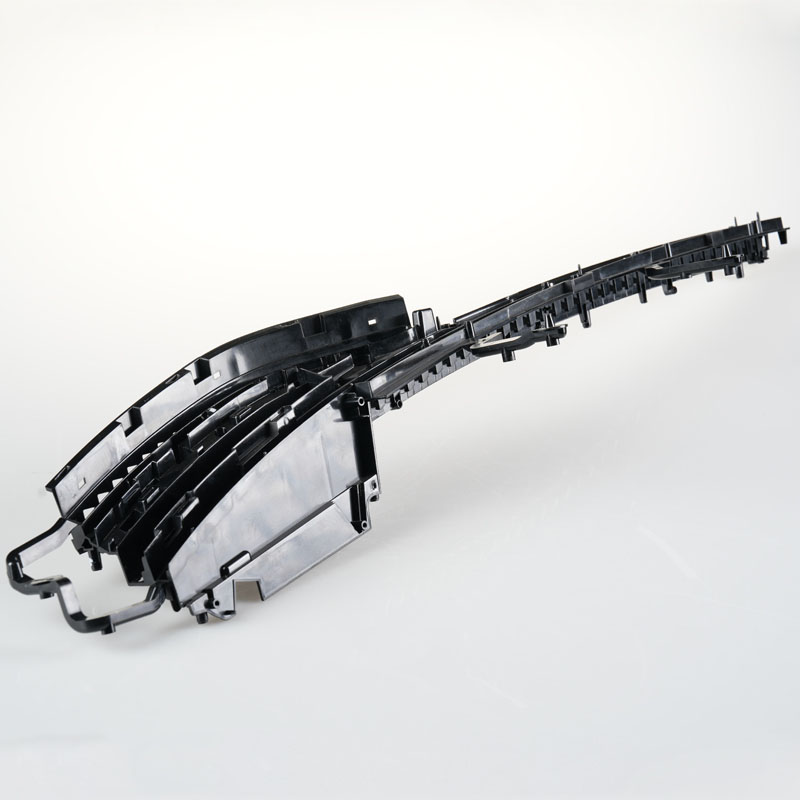
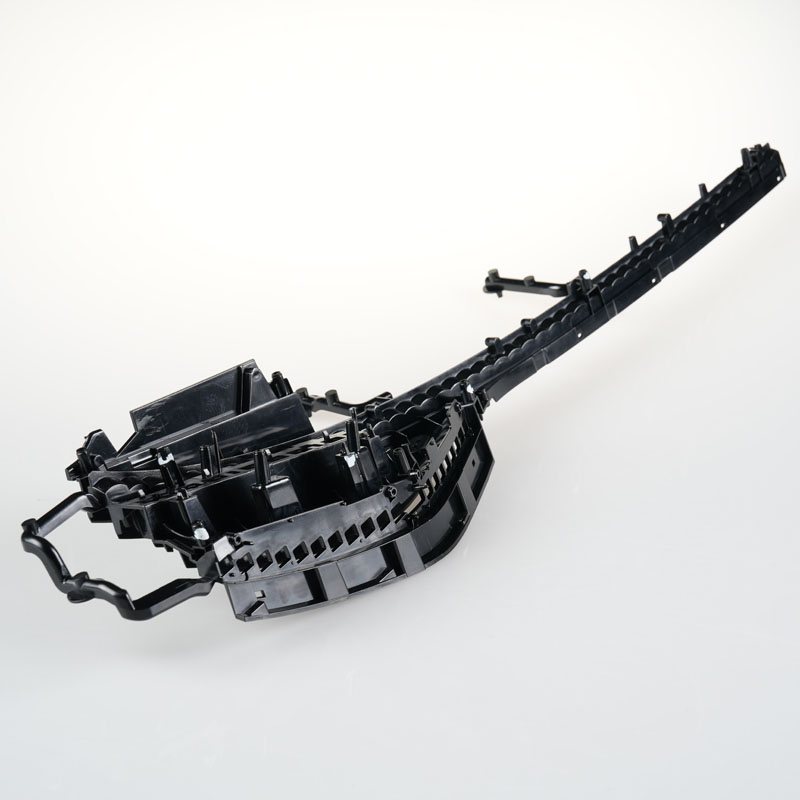
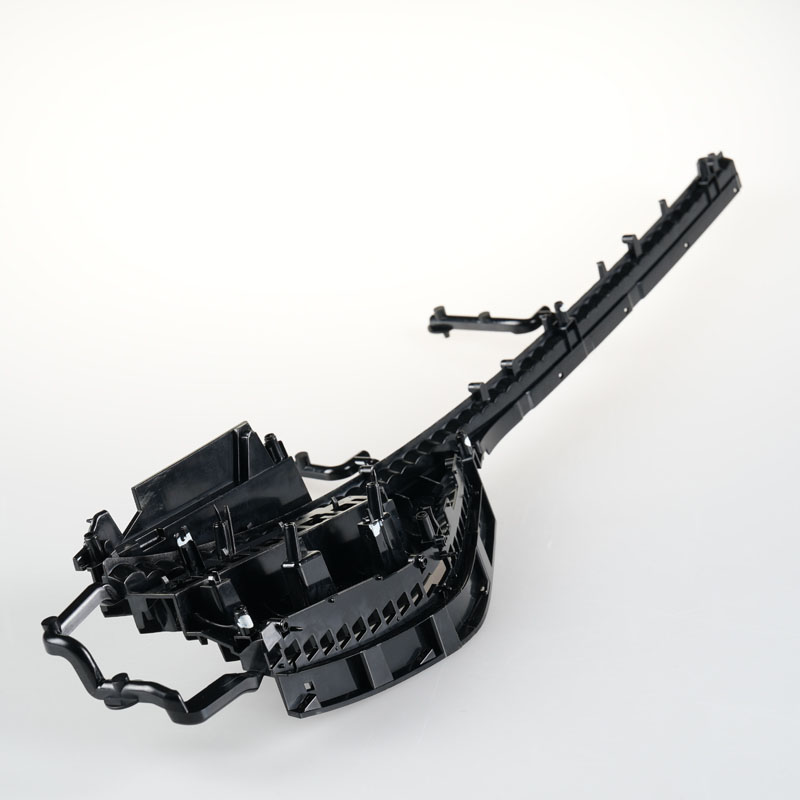
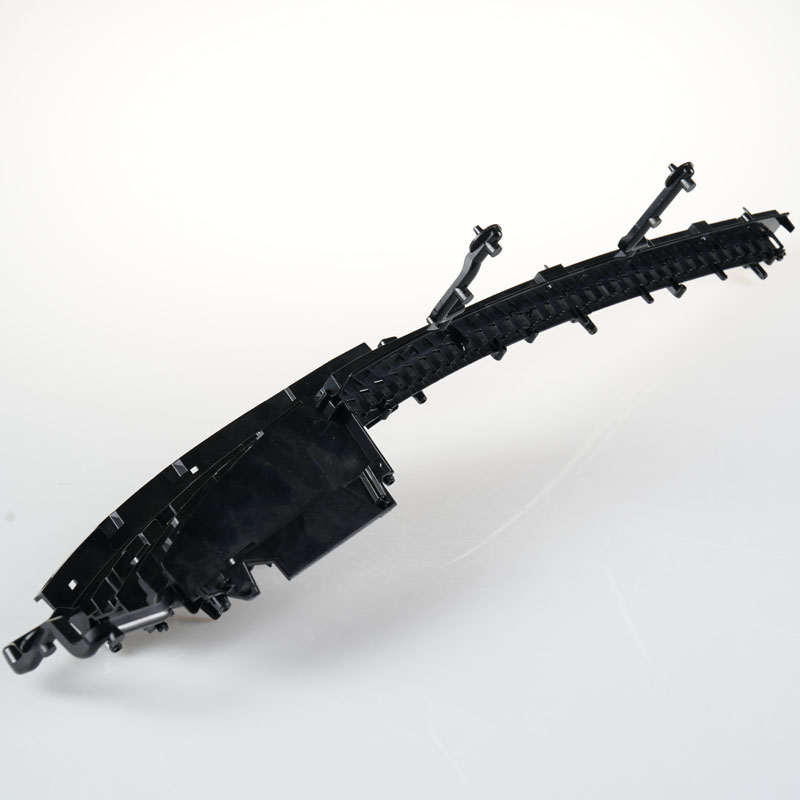
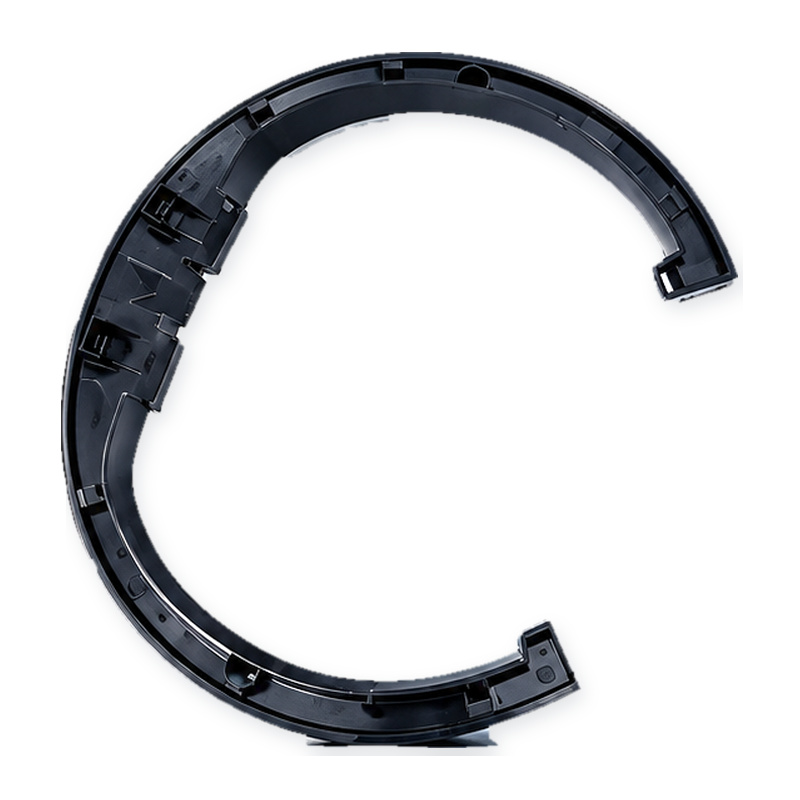
This black part is the internal base of a car taillight assembly. One end is a curved shell that carries the lens and the lamp module; from it runs a long rail lined with a dense row of small clips that snap the whole light into the body panel. Posts stick up along the rail for bulb holders and modules, and the geometry follows the quarter panel’s curve exactly, because the rail is what holds the lamp’s visible gap to the body.
The base is integrally injection molded in a black, heat-resistant resin. This page covers the clip row, the shell end, heat near the lamp, and what to confirm before quoting.
Shell end and rail: one molding, one install.
The Clip Row Does the Aligning
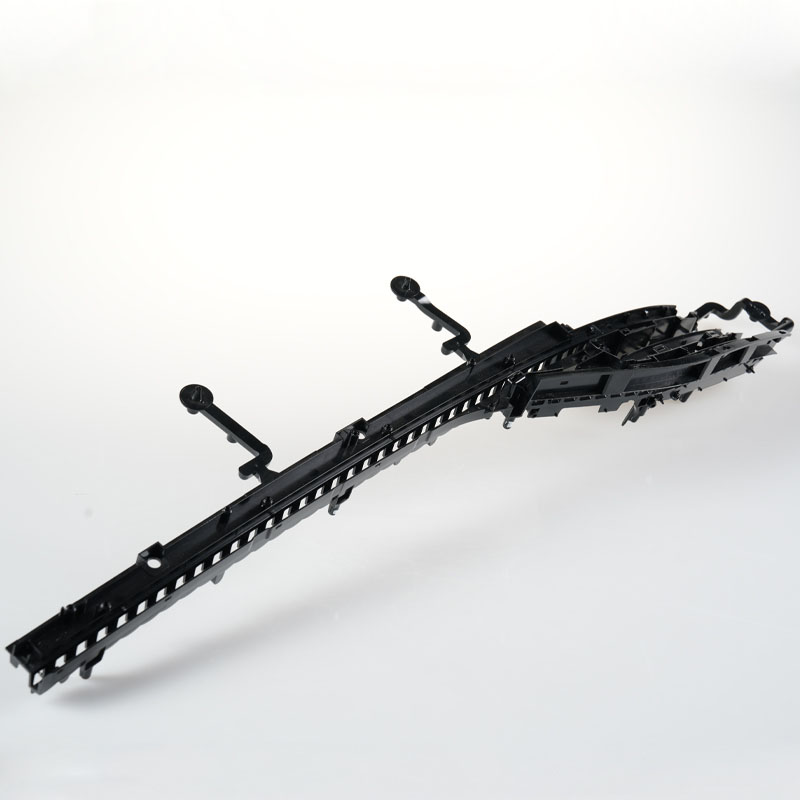
A taillight reads against the body as a visible gap, and that gap is set by the rail — not by the screws. The small clips along the rail engage the panel edge at many points, so the light is located by a distributed row instead of two or three fasteners, and a flex or bow in the panel is absorbed rather than transferred to the lamp face. Each clip is a small flexible hook, and the row is not evenly spaced: clips gather where the panel curve is strongest, per the fitting trials on actual body panels.
The clips also make the lamp serviceable. A rear light is removed more often than any other lamp — in a minor hit, the rail is expected to release and re-engage without replacing the base.
Along the rail: the clip row and the module posts.
Heat Is the Quiet Requirement
Tail lamps hold bulbs or LED drivers, and both push heat into whatever carries them. The resin is specified for continuous service at the lamp’s measured operating temperature, not the datasheet’s nominal one, and the posts that carry bulb holders are kept out of the direct radiant path while staying stiff enough to hold the holder square. Warpage from heat cycling shows up as a lens that gaps — visible, warranty-visible — so the base is validated through thermal cycling with the lamp built, not just as a bare part.
Anti-aging matters as much: the base sits behind a lens that turns it into an oven in summer sun, and the resin carries UV stabilization even though the customer never sees it.
The shell end: lens seat and the structure behind it.
What the Shell End Carries
The curved shell at one end is the chassis of the lamp. Its rim seats and seals the lens, its inner walls locate the reflector and the module boards, and its outer face meets the gasket to the body. Wall thickness here runs thicker than the rail, deliberately: the sealing rim needs stiffness to hold a consistent compression, and the extra material is cored and ribbed so it sets at the same rate as the thin sections — a thick rim that sinks distorts the seal and shows as a fogged lamp in the rain test.
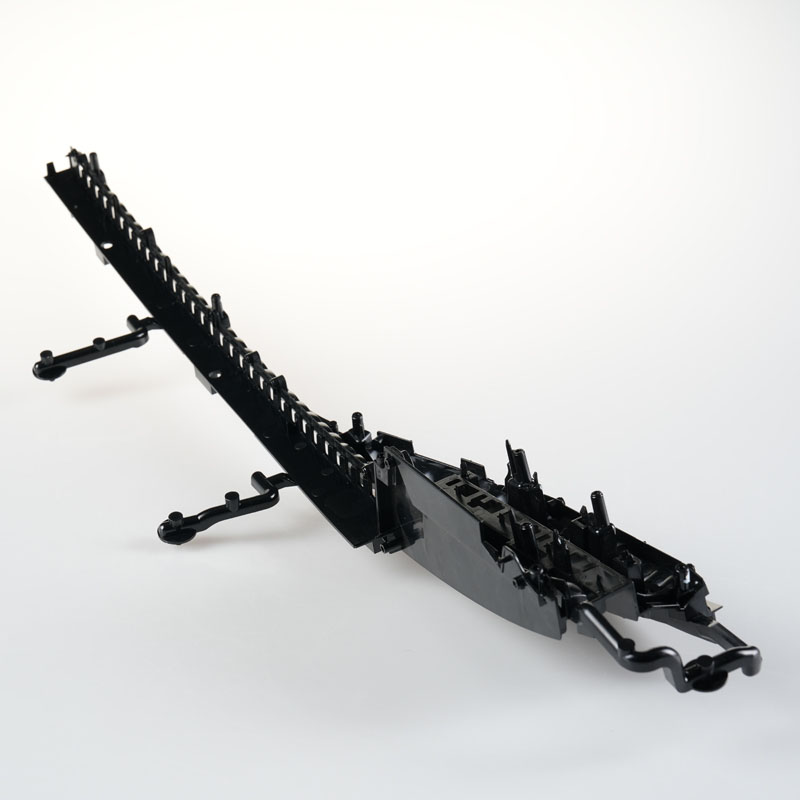
The whole base is one molding, which is the point: lens seat, module posts and clip rail cannot drift relative to each other because nothing is assembled.
Posts, walls and the sealing rim, all one part.
Information to Confirm Before Starting a Lamp Base Project
The body panel section and the visible-gap requirement, which set the clip row.
Lamp type and its heat output, measured at the base if possible.
Lens sealing method — gasket, hot-plate weld or glue — and the rim’s role.
Module positions and any electrical clips the base must carry.
Annual volume and the vehicle’s service expectation for lamp removal.
Kunshan Maifeng Precision Industry Co., Ltd. molds lamp bases like this one in house, from tooling through thermal-cycle validation with the lamp built, on machines from 90 to 700 tons. Send us the panel section and the lamp layout, and we will come back with a clip-layout proposal and a quotation.
Company Profile
About Us
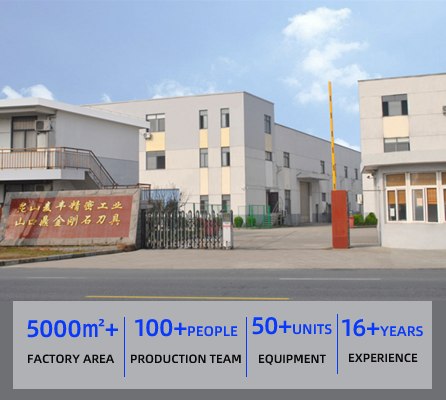
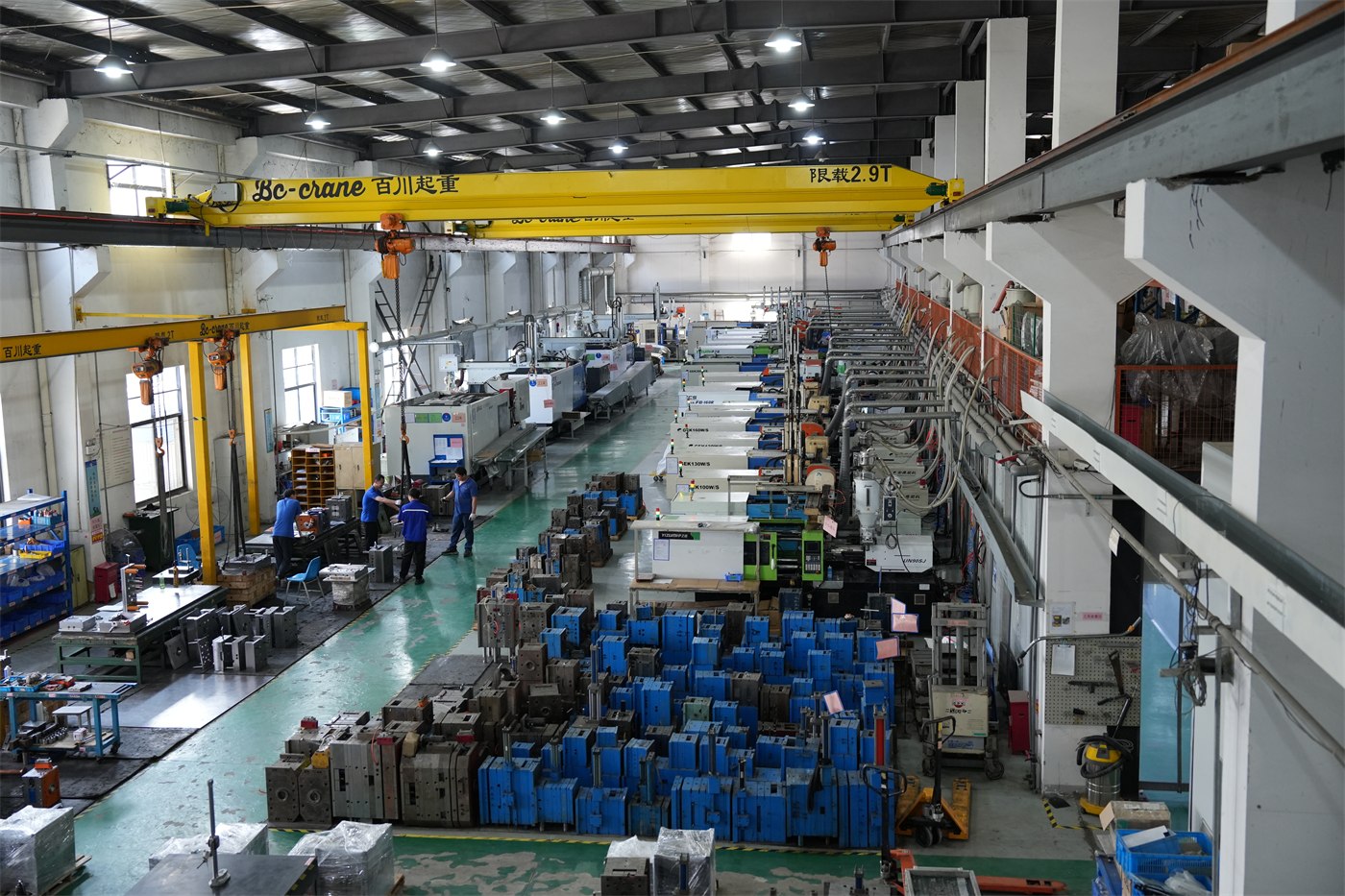
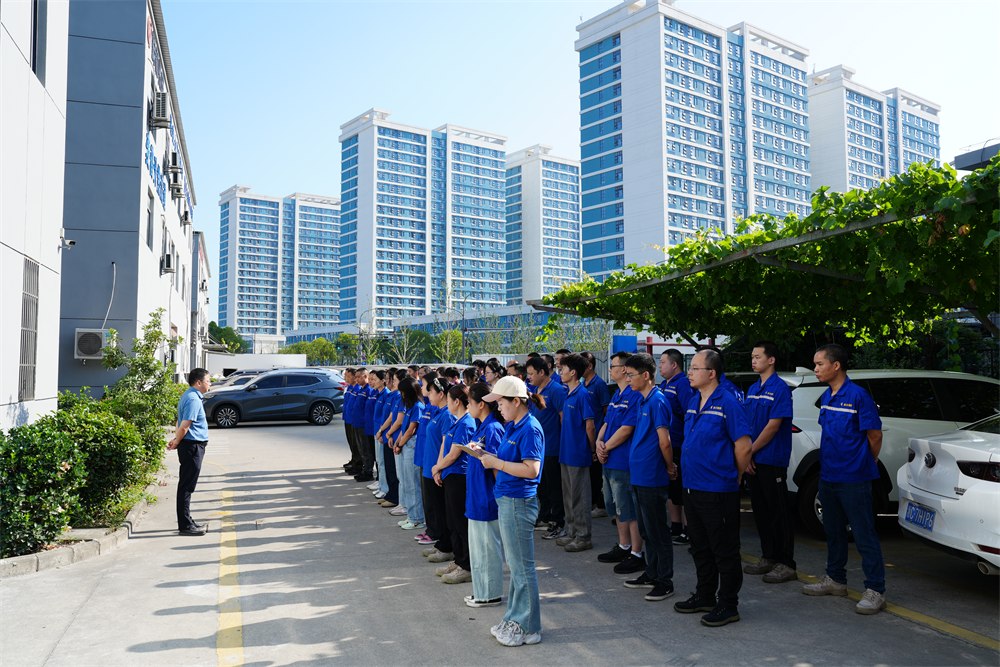
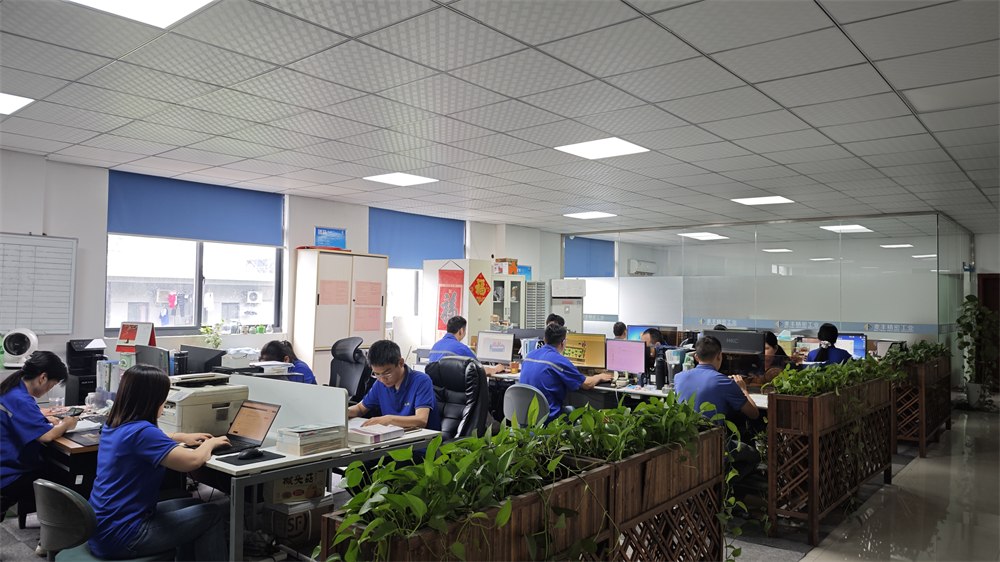
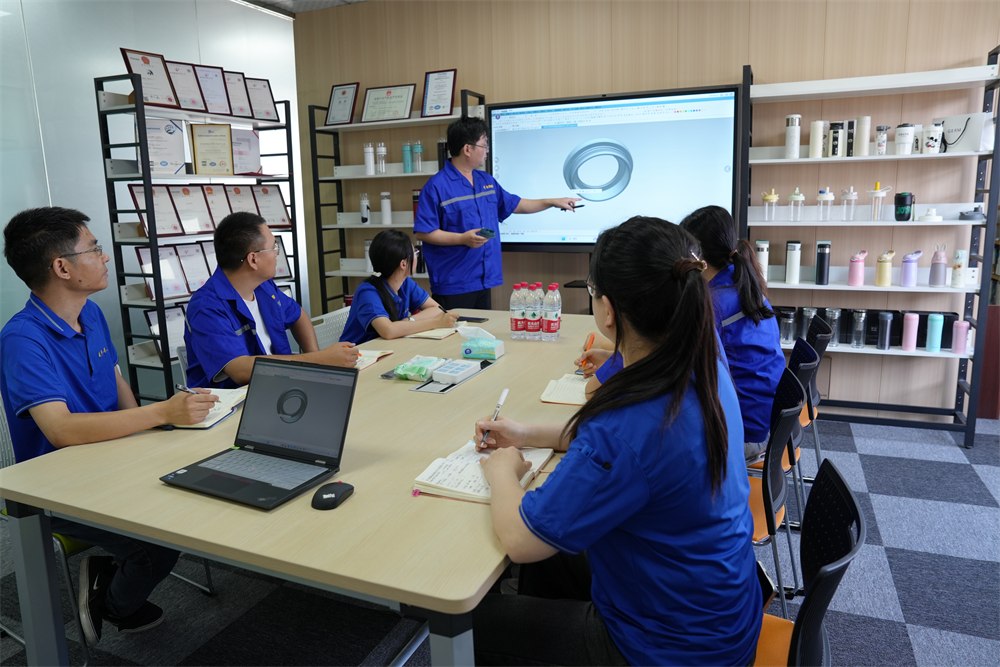
Kunshan Maifeng Precision Industry Co., Ltd. (MIF) has an investment of RMB 35 million and an independent factory of more than 5,000 m². The company operates 36 single- and dual-color injection molding machines from 90 to 700 tons, together with more than 50 sets of mold manufacturing and processing equipment. Our service, management and production team includes over 100 people.
Our parent company was established in 2008. We provide product design, mold design and manufacturing, injection molding and product assembly services for custom plastic parts, supporting both domestic and international customers.
1. Product Design Product structure design and optimization based on customer drawings and samples.
2. Mold Design Mold design developed around product geometry, material and production requirements.
3. Mold Manufacturing Machining, polishing, fitting and assembly for custom injection molds.
4. Injection Molding Single- and dual-color injection molding for project and order requirements.
5. Product Assembly Supporting assembly services for molded plastic components.
Custom glossy black PC protective cover for lawn mowers: an open-ring shell with snap clips molded in one shot and a class-A face that survives stones, sun and cleaning.
Custom PC light-diffusion tail light grille for lawn mowers: an even light band, a ribbed outer face, a sealed fixing flange and an optical surface finished to the agreed polish.
Custom clear PC tail light strip for mowers and outdoor equipment: compound curve, uniform wall, polished optical face and colour matched to your chip.
PC+ABS automotive wireless charging housing with an open coil window, four mounting ears and a stiffening rib, molded, inspected and packed for console assembly.
PC lawn mower tail light grille produced through custom mold development, precision injection molding and strict quality control for demanding outdoor applications.
PP handles and plastic parts for a 3rd generation magnetic wall mounted toilet brush, produced at Maifeng Precision through custom mold design, injection molding and careful inspection.
ABS nasal irrigator outer housing produced with custom multi-cavity molds, precision injection molding, careful trimming and dust-free packaging for personal care brands.
ABS nasal irrigator base produced with custom mold design, precision injection molding, strict inspection and dust-free packaging for personal care and medical device assemblies.
No matter what your automotive needs may be, we’re here to help. Contact us today to learn more about our
services and how we can assist you with all of your needs.
ISO 13485-certified medical injection molding in Class 10,000/100,000 cleanrooms: 36 single and dual-color machines, proven medical cases and trusted partners.
One-stop cup and bottle molding: dual-color lids, tea-separation cups and handles, QS food-contact licensed production with proven cases for global brands.
Contact Us
To grow into a top global mold & injection molding supplier
To grow into a top global mold & injection molding supplier, specializing in differentiated custom parts. We focus on structural development, streamlined production and consistent quality supply.






 English
 Chinese