Custom medical injection molded ten-point microneedle and plastic base housing using POM and PP materials, with mold design, clean production and assembly support.
POM ten-point microneedle strip and PP plastic base housing for medical accessory applications.
Custom mold development from drawings or samples, including trial production and mass production support.
Manufacturing information supplied for Class 10,000 cleanroom production requirements.
The ten-point microneedle and plastic base housing is a compact medical plastic component set that combines a white POM microneedle strip with a PP base structure. For this type of medical accessory, the manufacturing challenge is not only the small size of the features, but also the need for stable molding, clean handling, controlled assembly fit and repeatable appearance.
Kunshan Maifeng Precision supports custom medical injection molded products from customer drawings and samples. For projects such as microneedle carriers, plastic bases and supporting housings, our team can review product structure, design the mold, run trial production and support mass production under clean manufacturing requirements.
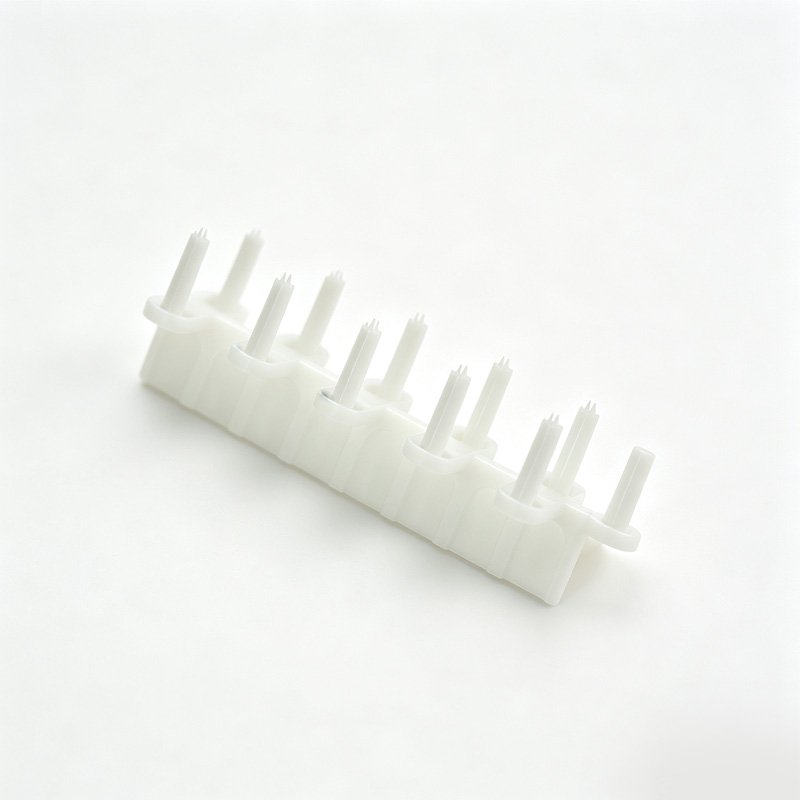
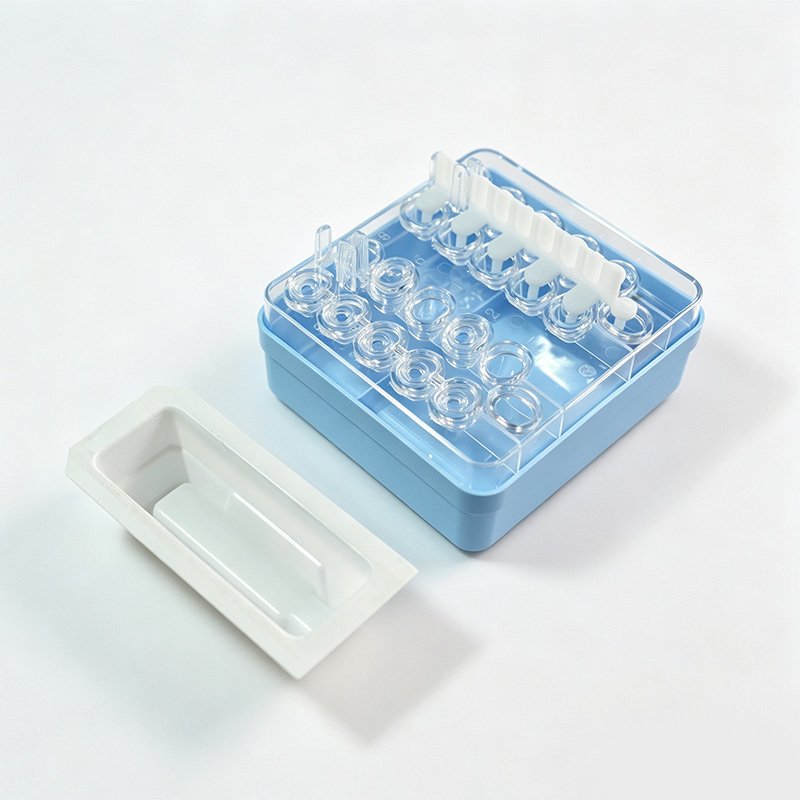
Ten-point microneedle strip with plastic base housing and transparent positioning features.
Medical Plastic Part Built Around Small-Feature Molding
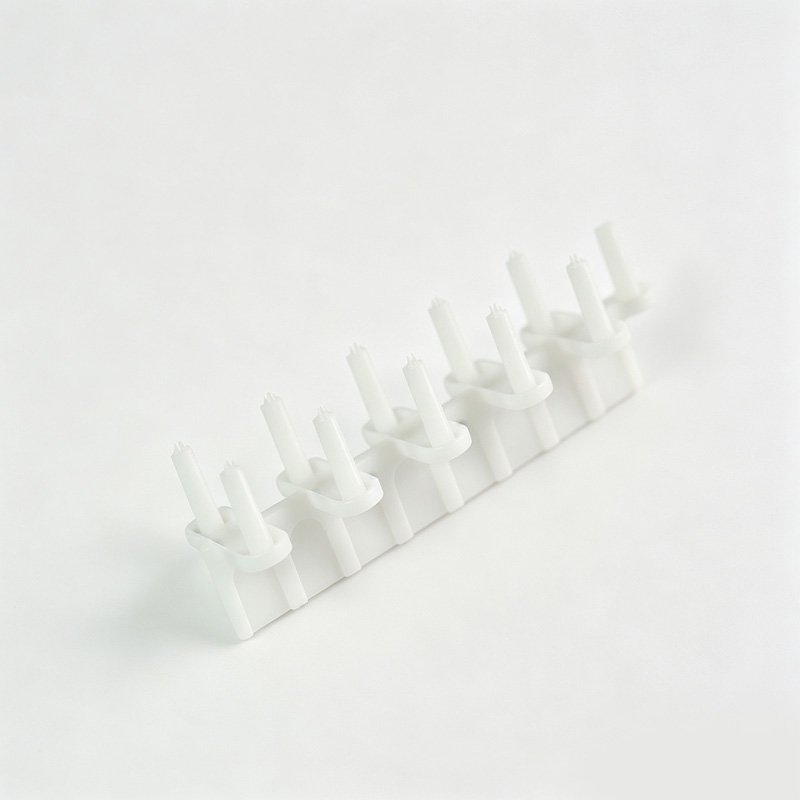
The microneedle strip contains multiple slim posts and small tip structures. These details require a mold design that can fill narrow sections consistently while maintaining release stability. The white microneedle component is specified in high-performance medical POM material, while the base is made from qualified PP material according to the supplied product information.
Because the component is small and feature-dense, early DFM review should focus on gate position, local flow balance, venting, ejection support and the relationship between the microneedle strip and its mating plastic base. These decisions help reduce short shot, deformation, flash and assembly variation before tooling moves too far forward.
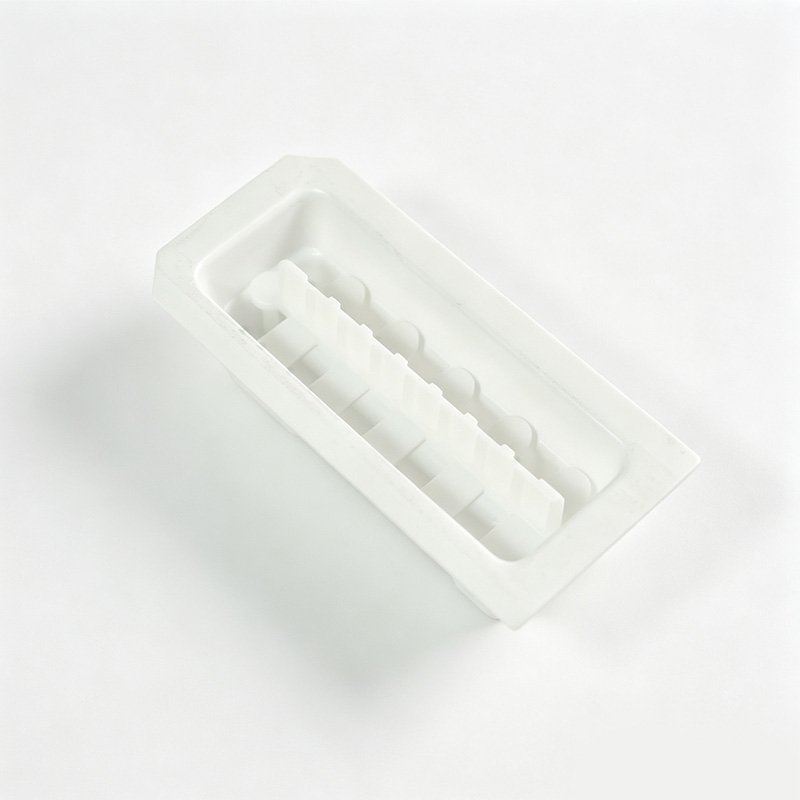
White POM microneedle strip with repeated small features.Angled view showing the slender posts and base connection.
POM Microneedle Strip and PP Base Housing
POM is used for the microneedle strip because the part needs fine molded definition and stable small structures. PP is used for the base housing, where the design needs a practical balance of moldability, light weight and assembly support. Final material grades, sterilization compatibility and application requirements should be confirmed by the customer according to the end-use specification.
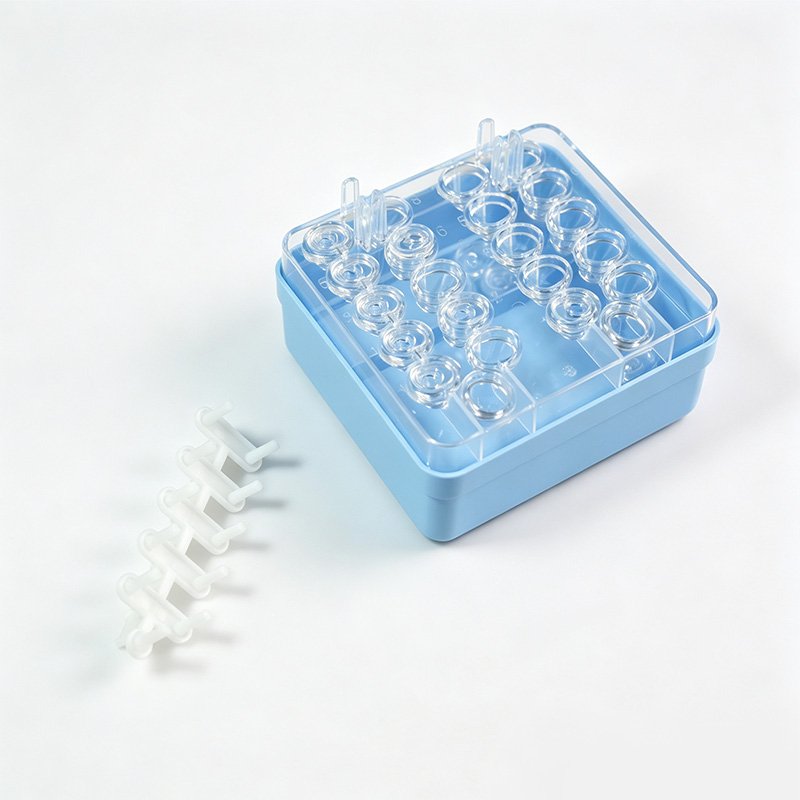
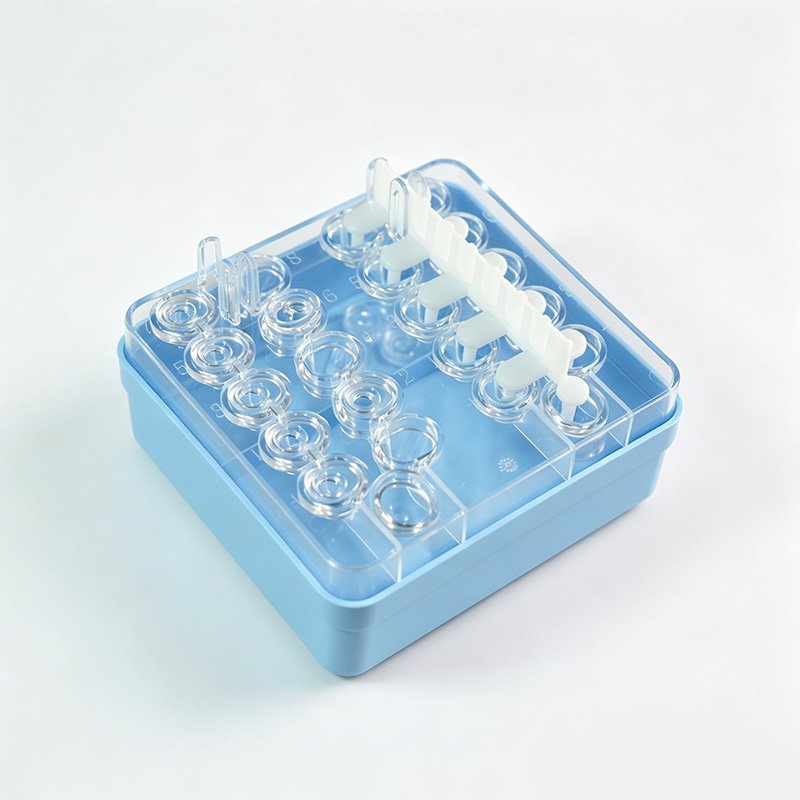
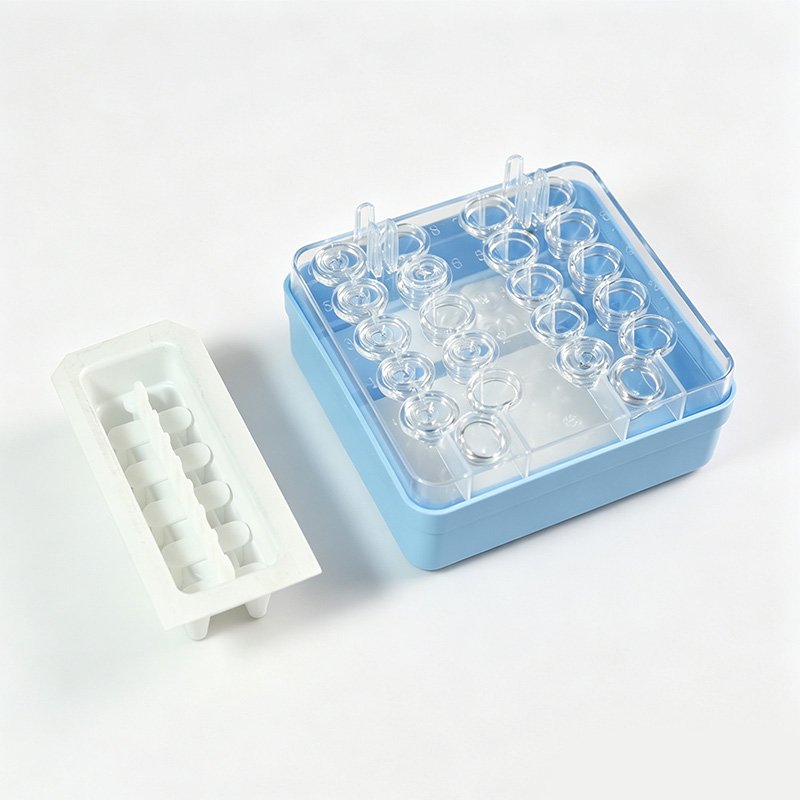
The product set shown here includes the white microneedle component, a blue plastic base, transparent cover or positioning features, and a tray-style plastic base part. The geometry suggests that the project depends on both individual part accuracy and the fit between multiple molded pieces.
Assembly view showing the microneedle strip positioned with the transparent and blue plastic base housing.
Clean Manufacturing and Custom Mold Support
The supplied product information states that parts are manufactured in a Class 10,000 cleanroom environment. For medical plastic accessories, clean production planning is closely connected with mold maintenance, material control, part collection, packaging preparation and operator handling. These details should be considered together, not treated as a final step after molding.
Maifeng can develop custom molds according to customer drawings and samples, then support trial production and mass production. For a ten-point microneedle and plastic base housing project, practical engineering review normally includes parting strategy, ejection marks, gate vestige control, dimensional consistency and how the molded parts will be handled after production.
Plastic base tray and microneedle assembly components used in the product set.
Product Demonstration
The video below gives a closer view of the molded microneedle strip and the plastic base housing. The short presentation is useful for checking visible geometry, component relationship and the overall product form before deeper DFM discussion.
Product demonstration video for the ten-point microneedle and plastic base housing.
What Buyers Should Confirm Before Tooling
Before mold design begins, buyers should confirm the final 3D data, material grade, cleanroom and packaging requirements, assembly relationship, dimensional inspection points and expected production volume. For medical plastic components, these early inputs help the mold and production team design around the real manufacturing constraints instead of correcting problems after trial runs.
Tray-style plastic base with internal support geometry.Complete product set showing base, cover and molded microneedle component.
Kunshan Maifeng Precision provides product structure review, mold design and manufacturing, precision injection molding and product assembly support for customized medical plastic components. If you are developing a similar microneedle carrier, diagnostic accessory, plastic base or small medical housing, drawings and samples can be used as the starting point for DFM and quotation review.
Company Profile
About Us
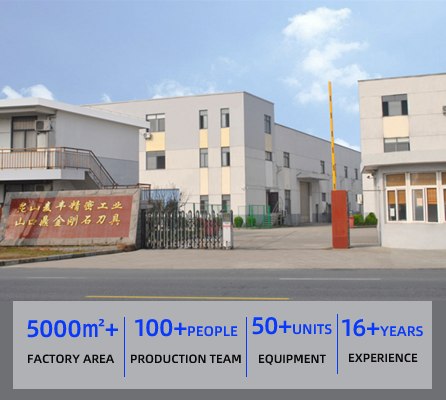
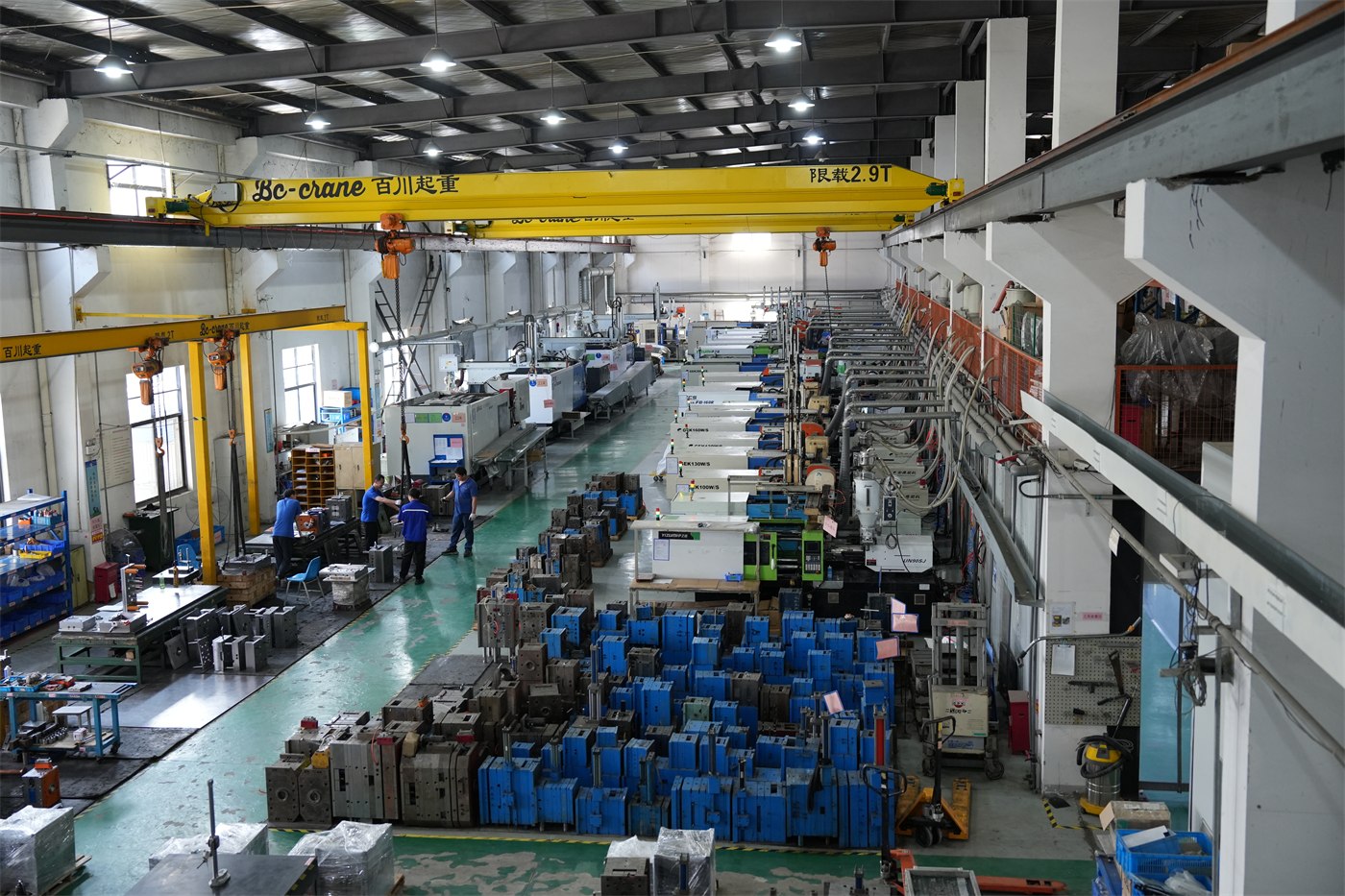
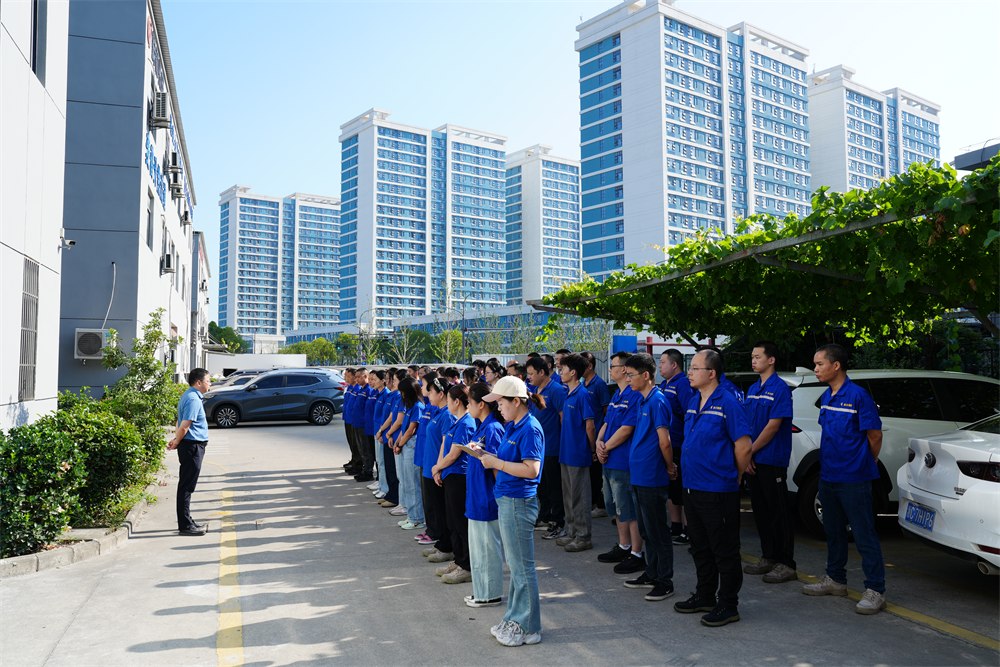
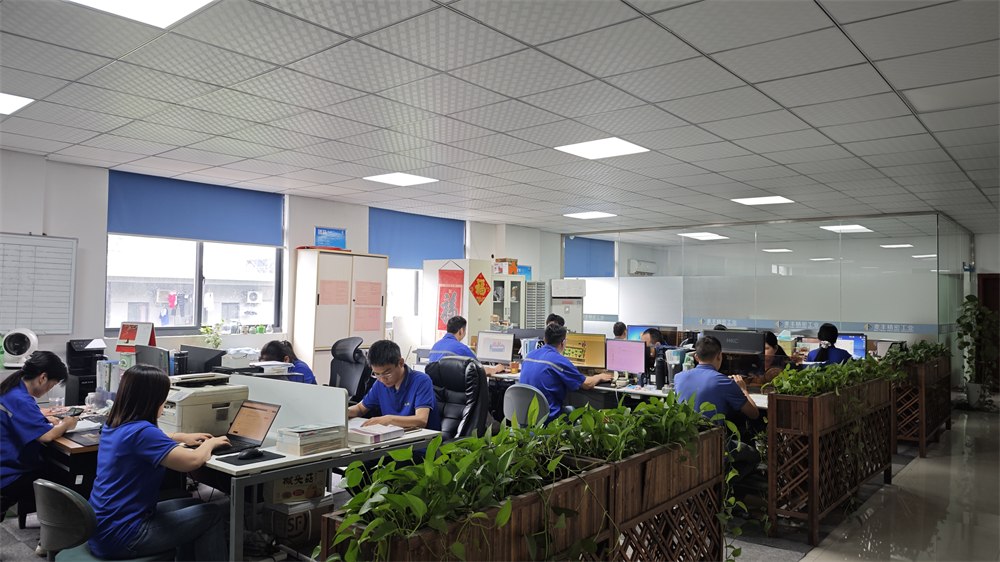
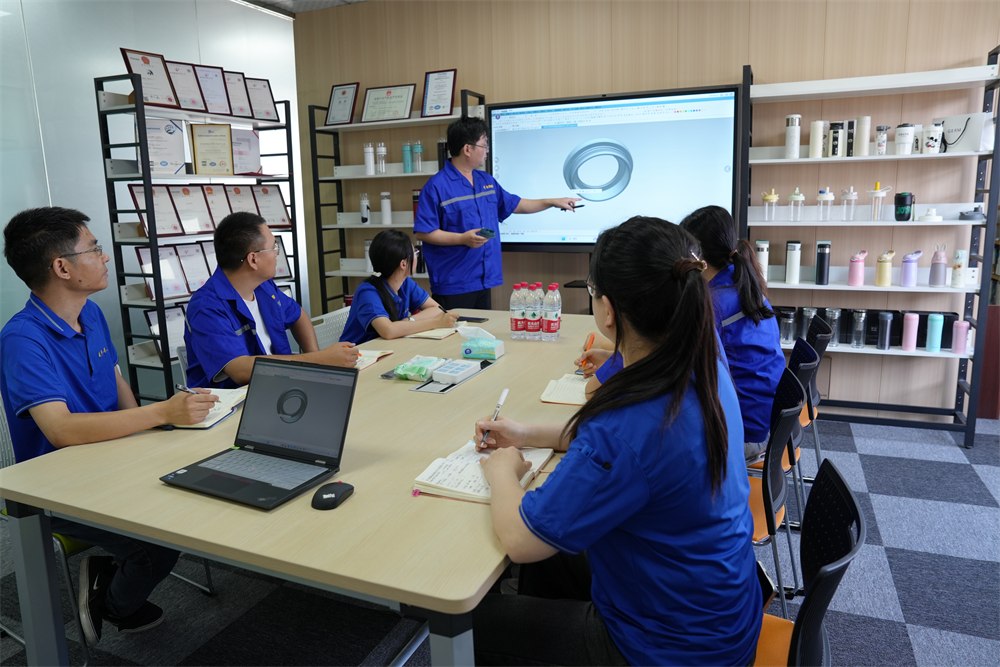
Kunshan Maifeng Precision Industry Co., Ltd. (MIF) has an investment of RMB 35 million and an independent factory of more than 5,000 m². Our manufacturing resources include 36 single- and dual-color injection molding machines from 90 to 700 tons and more than 50 sets of mold manufacturing and processing equipment. Supported by a service, management and production team of over 100 people, we provide product design, mold design and manufacturing, injection molding, and product assembly. Our parent company was established in 2008.
1. Product Design Product structure design and optimization based on customer drawings and samples.
2. Mold Design Mold concepts developed around product requirements, material and production needs.
3. Mold Manufacturing Machining, polishing, assembly and related processes for custom molds.
4. Injection Molding Single- and dual-color molding capabilities for custom production.
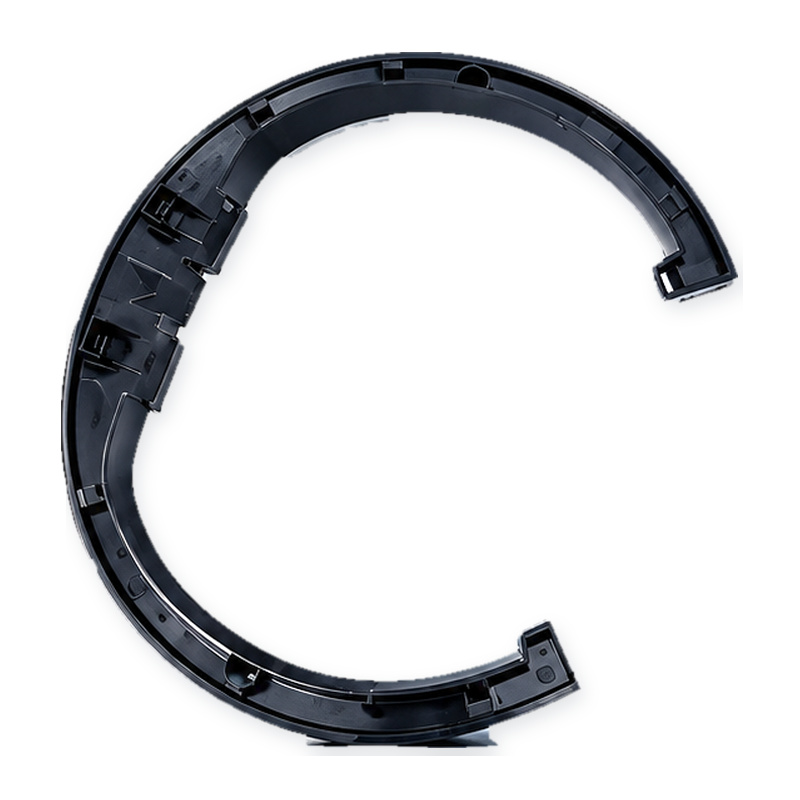
Custom glossy black PC protective cover for lawn mowers: an open-ring shell with snap clips molded in one shot and a class-A face that survives stones, sun and cleaning.
Custom PC light-diffusion tail light grille for lawn mowers: an even light band, a ribbed outer face, a sealed fixing flange and an optical surface finished to the agreed polish.
Custom clear PC tail light strip for mowers and outdoor equipment: compound curve, uniform wall, polished optical face and colour matched to your chip.
PC+ABS automotive wireless charging housing with an open coil window, four mounting ears and a stiffening rib, molded, inspected and packed for console assembly.
PC lawn mower tail light grille produced through custom mold development, precision injection molding and strict quality control for demanding outdoor applications.
PP handles and plastic parts for a 3rd generation magnetic wall mounted toilet brush, produced at Maifeng Precision through custom mold design, injection molding and careful inspection.
ABS nasal irrigator outer housing produced with custom multi-cavity molds, precision injection molding, careful trimming and dust-free packaging for personal care brands.
ABS nasal irrigator base produced with custom mold design, precision injection molding, strict inspection and dust-free packaging for personal care and medical device assemblies.
No matter what your automotive needs may be, we’re here to help. Contact us today to learn more about our
services and how we can assist you with all of your needs.
ISO 13485-certified medical injection molding in Class 10,000/100,000 cleanrooms: 36 single and dual-color machines, proven medical cases and trusted partners.
One-stop cup and bottle molding: dual-color lids, tea-separation cups and handles, QS food-contact licensed production with proven cases for global brands.
Contact Us
To grow into a top global mold & injection molding supplier
To grow into a top global mold & injection molding supplier, specializing in differentiated custom parts. We focus on structural development, streamlined production and consistent quality supply.






 English
 Chinese