Car Door Ambient Light Plastic Frame, Injection Molded Structural Part for Vehicle Door Lamp
This door ambient light set separates structure and optics: the black frame carries the mounting feet, the LED channel and the ribs that stiffen a metre-long strip against door-slam vibration, while the white window strip clicks over the apertures and turns edge-entering LED light into an even line. Two parts allow the optical grade for the window and a tough structural resin for the frame, each optimized for its own job. Straightness is won in the mold — balanced gates, symmetric ribs, flat cooling and flat storage — with final acceptance on the lit, installed line rather than a free-state flatness number. Resins carry aging and yellowing resistance for a sunlit door cavity.
black structural frame and white optical window as separate parts, each in its proper resin
straightness won in the mold and accepted on the lit, installed line
mounting feet rated for door-slam vibration with yellowing-resistant window resin
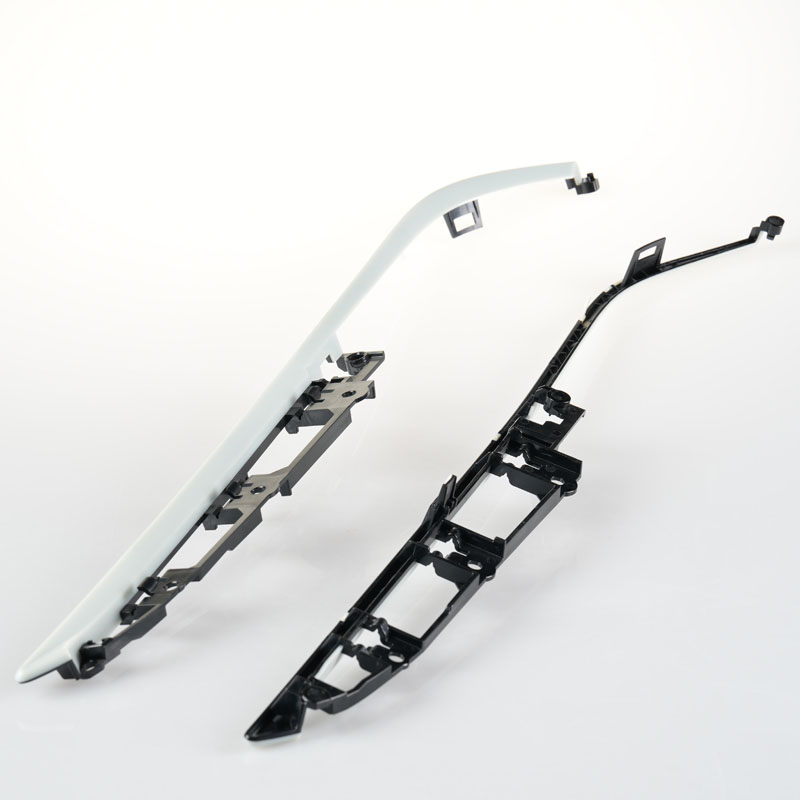
This pair of long, slim frames is the structure behind a car door’s ambient light — the thin line of light that runs along a door’s shoulder. Each set is two parts: a black frame that carries the clips and mounts to the door carrier plate, and a white light-window strip that sits in front of the LED and glows evenly along its length. The black part is structure; the white part is the light’s face.
Both parts are precision injection molded, the frame in black resin, the window in a light-transmitting grade. This page covers how the pair works together, the lattice of windows, the mounting, and what we need before quoting.
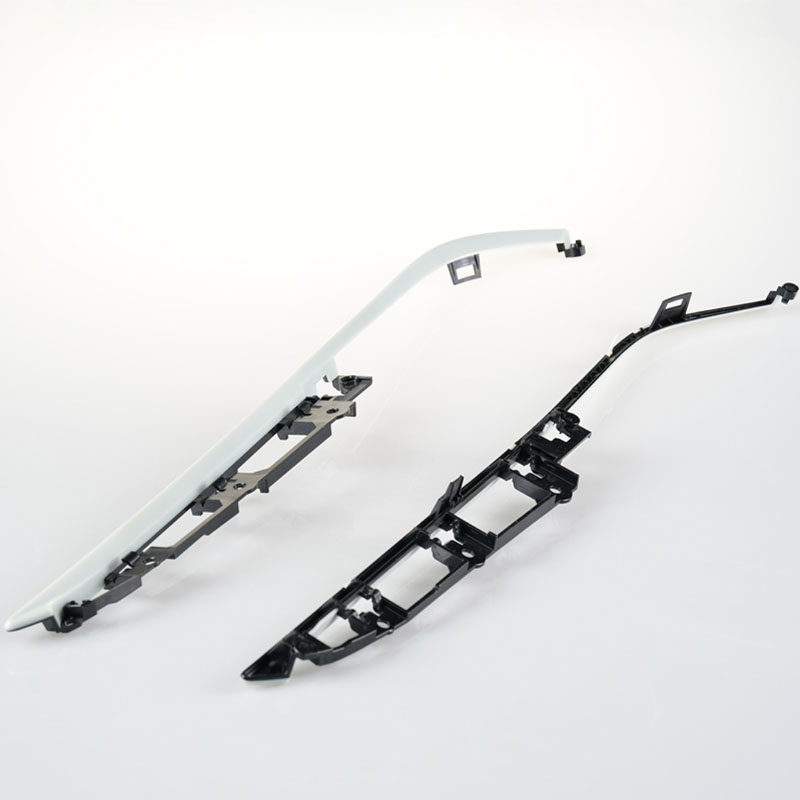
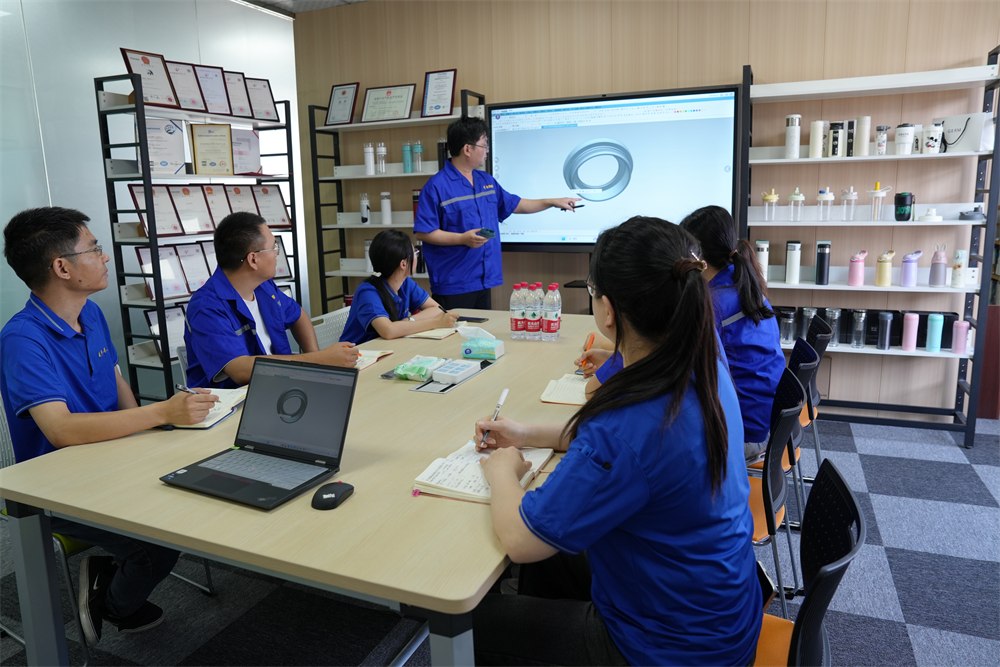
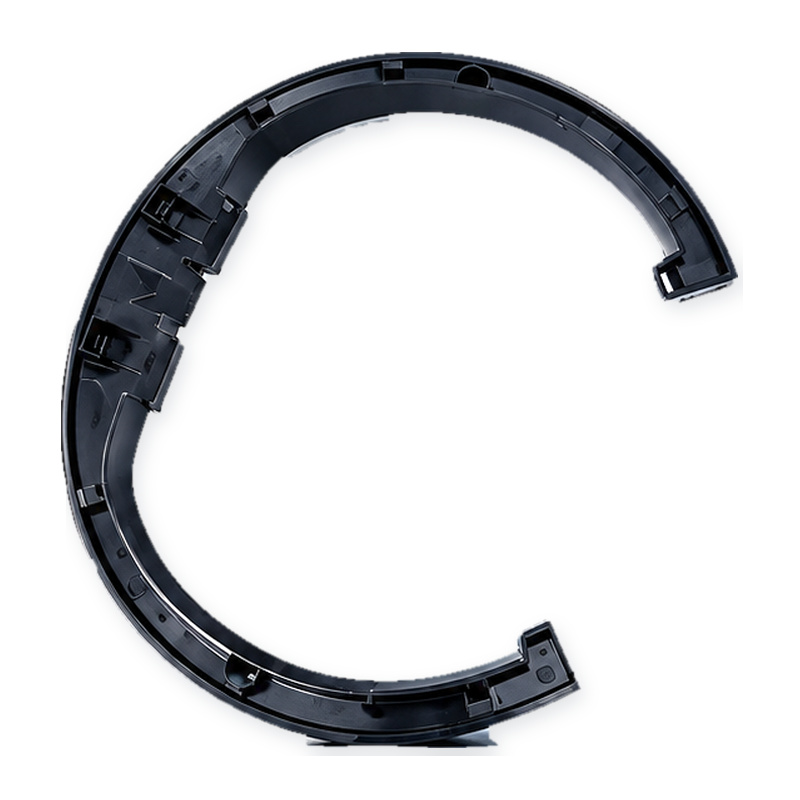
The pair: black carrier frame and white light window.Introducing the automotive door interior decorative trim strip in our workshop.
Two Parts, Two Jobs
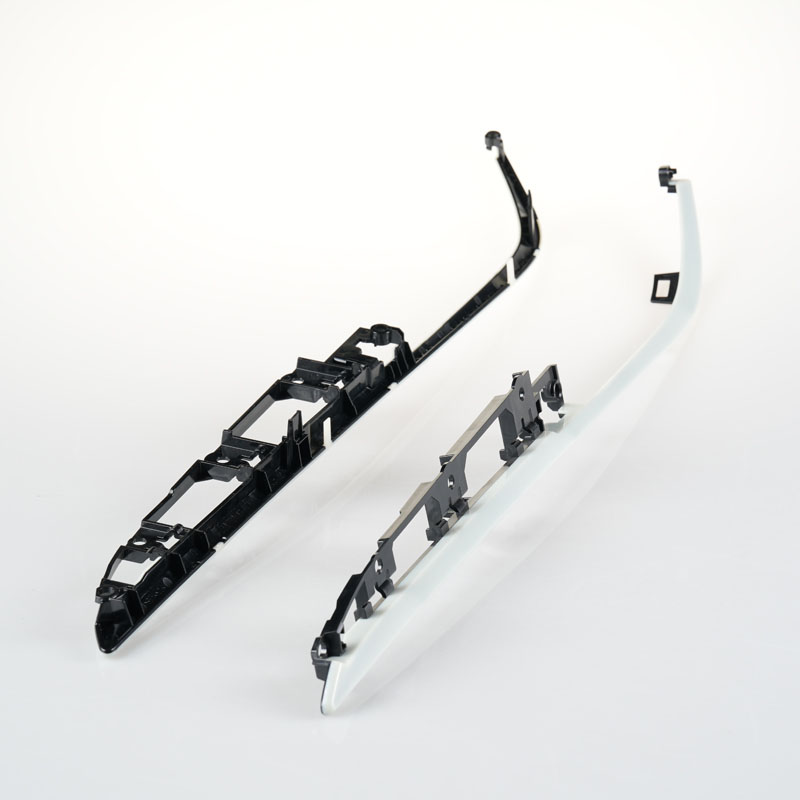
The black frame is the mounting structure. Its ladder of rectangular openings is not decoration — each opening is a light aperture, and the ribs between them are the stiffening that keeps a metre-long strip straight in a door panel that is itself never perfectly flat. The white strip clicks into the frame over the apertures and does the optical work: LED light enters its edge and leaves through the window faces as a soft line.
Two parts instead of one is a deliberate choice. A single two-color molding would lock the optical material to the structural one; as separate parts, the white window can be molded in the optical grade that transmits and diffuses properly, and the frame in the cheap, tough structural resin that survives door slam cycles. Each material gets to be good at its own job.
The ladder of apertures, ribs stiffening a long strip.
A Long Thin Part That Must Stay Straight
Everything about a door light frame argues for warp: long, thin, asymmetric, full of openings. The straightness problem is solved in the mold and in handling. Gates are set so shrinkage balances along the length, the ribs are symmetric about the strip’s axis, and the parts cool flat in the tool longer than instinct suggests. After molding they are stored flat, never coiled or stacked on edge, because a strip that leaves the tool straight can pick up a set in the box.
The honest expectation is a strip that reads straight in the door even if it measures a slight bow free-state — the clips pull it into the carrier, and the acceptance check is the lit, installed line, not a flatness number on paper.
End clips and the seated window strip.
Mounting and the Door Environment
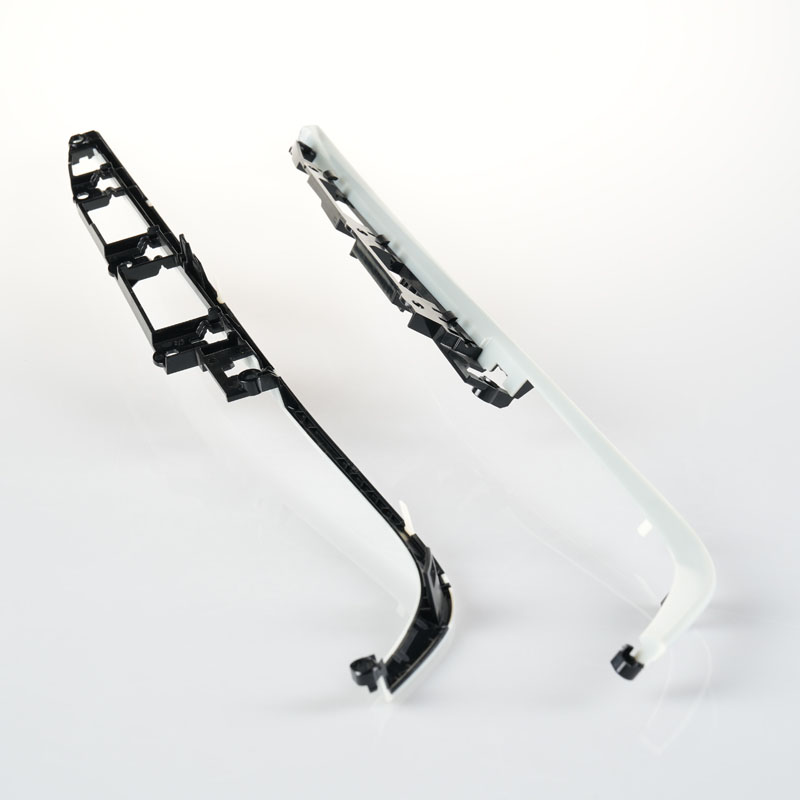
The frames clip to the door carrier plate through feet at the ends and along the back, engaging holes that the carrier drawing gives. Doors are a brutal environment for clips — every slam shakes the panel — so the feet are dimensioned for retention under vibration, not just for insertion. The resin carries temperature and aging resistance for a cavity that sees direct sun through glass, and the white window keeps its light colour over that exposure instead of yellowing.
The LED channel along the frame’s edge is sized with the customer’s strip — its width and position set how the light enters the window, which is the whole optical game.
The backs: mounting feet and the LED channel.
Information to Confirm Before Starting a Door Ambient Light Frame Project
The LED strip specification — width, position and output — which sets the optical design.
The carrier plate’s hole pattern and the door section the frames must follow.
The lit uniformity requirement, judged with the assembly installed.
Colour targets for both parts, including yellowing resistance for the window.
Left and right variants, since door frames come as mirrored pairs.
Kunshan Maifeng Precision Industry Co., Ltd. molds door ambient light frames like this pair in house — structural and optical parts from dedicated tools, checked lit and installed — on machines from 90 to 700 tons. Send us the LED spec and the carrier drawing, and we will come back with an aperture proposal and a quotation.
Company Profile
About Us
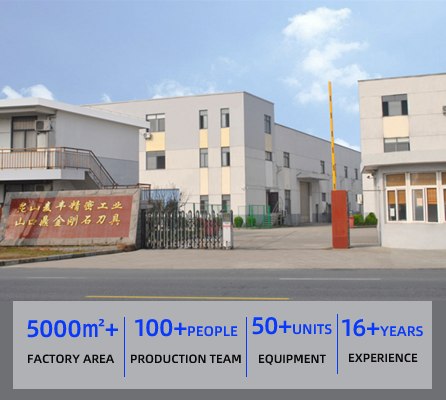
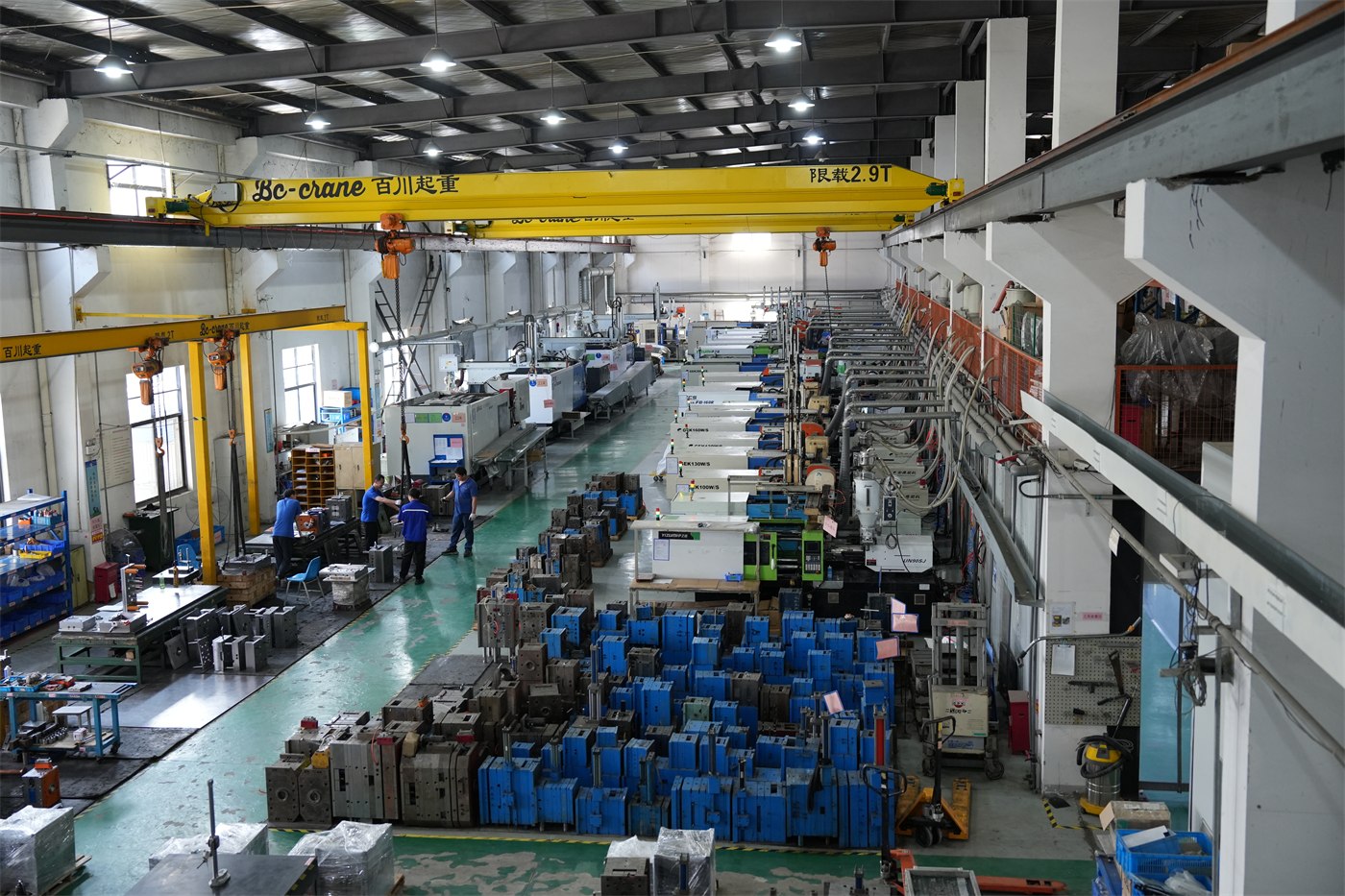
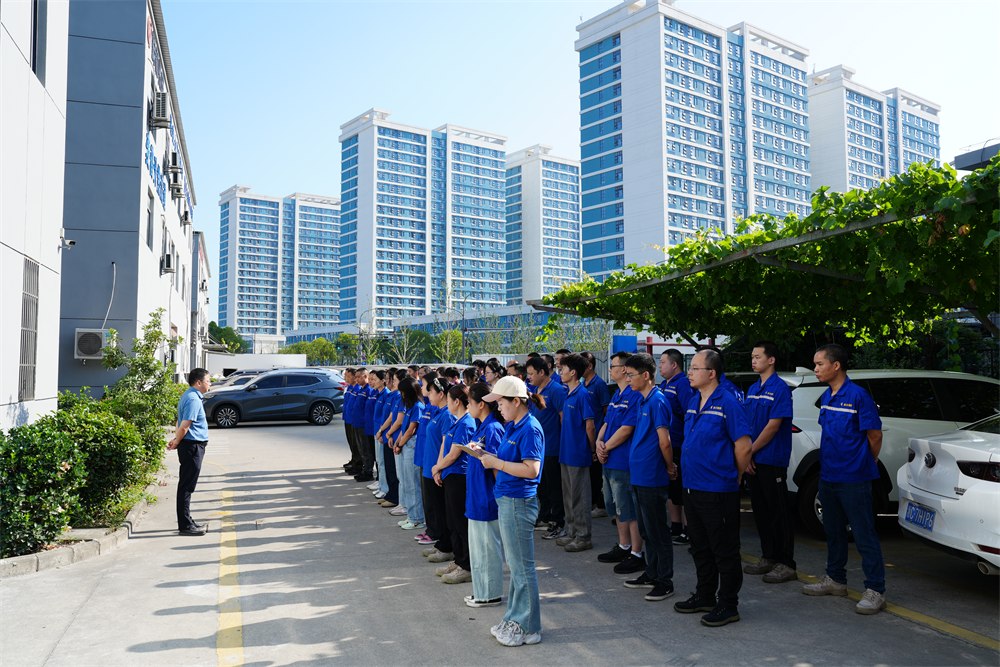
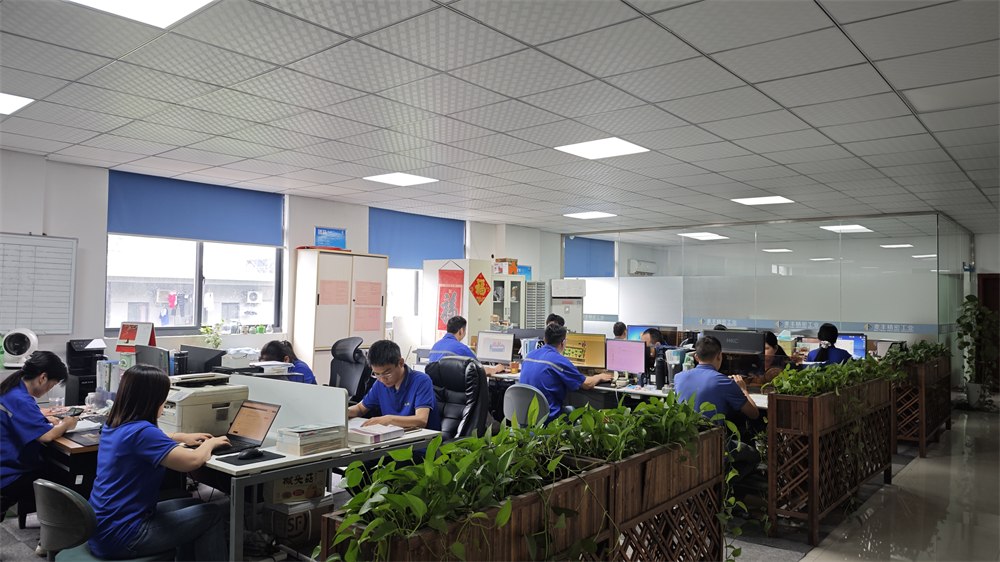
Kunshan Maifeng Precision Industry Co., Ltd. (MIF) has an investment of RMB 35 million and an independent factory of more than 5,000 m². The company operates 36 single- and dual-color injection molding machines from 90 to 700 tons, together with more than 50 sets of mold manufacturing and processing equipment. Our service, management and production team includes over 100 people.
Our parent company was established in 2008. We provide product design, mold design and manufacturing, injection molding and product assembly services for custom plastic parts, supporting both domestic and international customers.
1. Product Design
Product structure design and optimization based on customer drawings and samples.
2. Mold Design
Mold design developed around product geometry, material and production requirements.
3. Mold Manufacturing
Machining, polishing, fitting and assembly for custom injection molds.
4. Injection Molding
Single- and dual-color injection molding for project and order requirements.
5. Product Assembly
Supporting assembly services for molded plastic components.
Custom glossy black PC protective cover for lawn mowers: an open-ring shell with snap clips molded in one shot and a class-A face that survives stones, sun and cleaning.
Custom PC light-diffusion tail light grille for lawn mowers: an even light band, a ribbed outer face, a sealed fixing flange and an optical surface finished to the agreed polish.
Custom clear PC tail light strip for mowers and outdoor equipment: compound curve, uniform wall, polished optical face and colour matched to your chip.
PC+ABS automotive wireless charging housing with an open coil window, four mounting ears and a stiffening rib, molded, inspected and packed for console assembly.
PC lawn mower tail light grille produced through custom mold development, precision injection molding and strict quality control for demanding outdoor applications.
PP handles and plastic parts for a 3rd generation magnetic wall mounted toilet brush, produced at Maifeng Precision through custom mold design, injection molding and careful inspection.
ABS nasal irrigator outer housing produced with custom multi-cavity molds, precision injection molding, careful trimming and dust-free packaging for personal care brands.
ABS nasal irrigator base produced with custom mold design, precision injection molding, strict inspection and dust-free packaging for personal care and medical device assemblies.
No matter what your automotive needs may be, we’re here to help. Contact us today to learn more about our
services and how we can assist you with all of your needs.
ISO 13485-certified medical injection molding in Class 10,000/100,000 cleanrooms: 36 single and dual-color machines, proven medical cases and trusted partners.
One-stop cup and bottle molding: dual-color lids, tea-separation cups and handles, QS food-contact licensed production with proven cases for global brands.
Contact Us
To grow into a top global mold & injection molding supplier
To grow into a top global mold & injection molding supplier, specializing in differentiated custom parts. We focus on structural development, streamlined production and consistent quality supply.






 English
 Chinese