This transparent visual shell for electric nasal irrigators is integrally molded in a high-transparency resin, with locating buckles formed on the inner wall so the dome clips on without fasteners. Clarity is held by process: drying, melt handling, a no-regrind policy and maintained cavity polish, because on a curved uninterrupted surface any flow line is visible from several angles at once. Buckles get local structure behind them without thickening the visible face, and engagement depth is tuned to avoid the stress whitening that shows instantly in a clear part. Optical inspection, rim flatness and buckle retention are verified before shipping. Buckle layout is built to the mating body drawing.
clarity held by process controls: drying, melt handling, no regrind and maintained polish
buckles carry local structure behind the wall without clouding the visible face
engagement depth tuned against stress whitening, which a clear part cannot hide
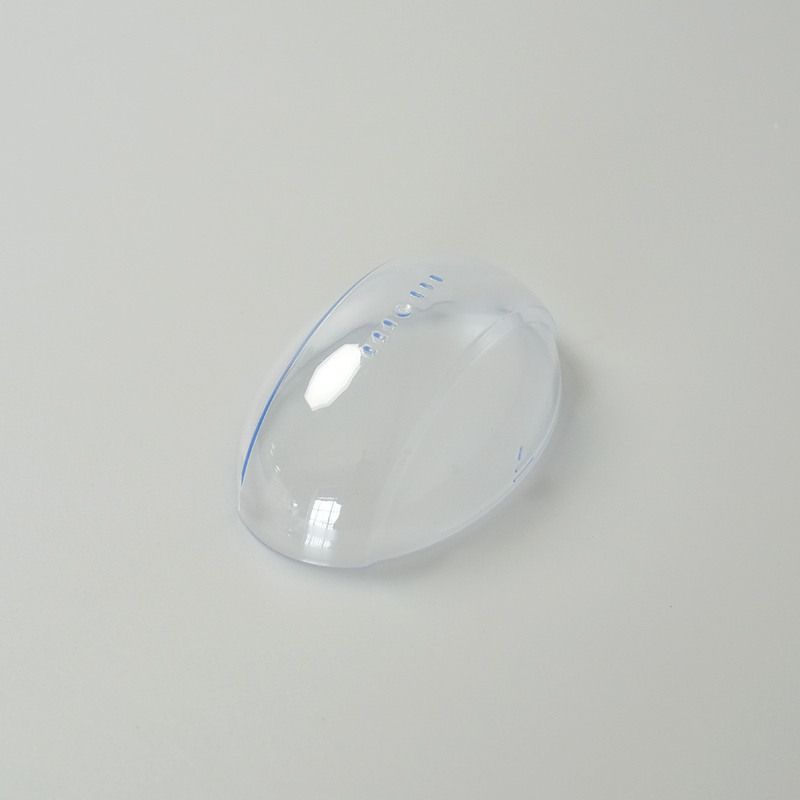
A visual shell has one job that no other part on the device can do: let the user see inside without letting anything leak out. The dome shown here is the transparent cover of an electric nasal irrigator, moulded in a high-clarity resin with locating buckles formed on its inner wall, and its whole value rests on two properties that fight each other: optical clarity and structural accuracy.
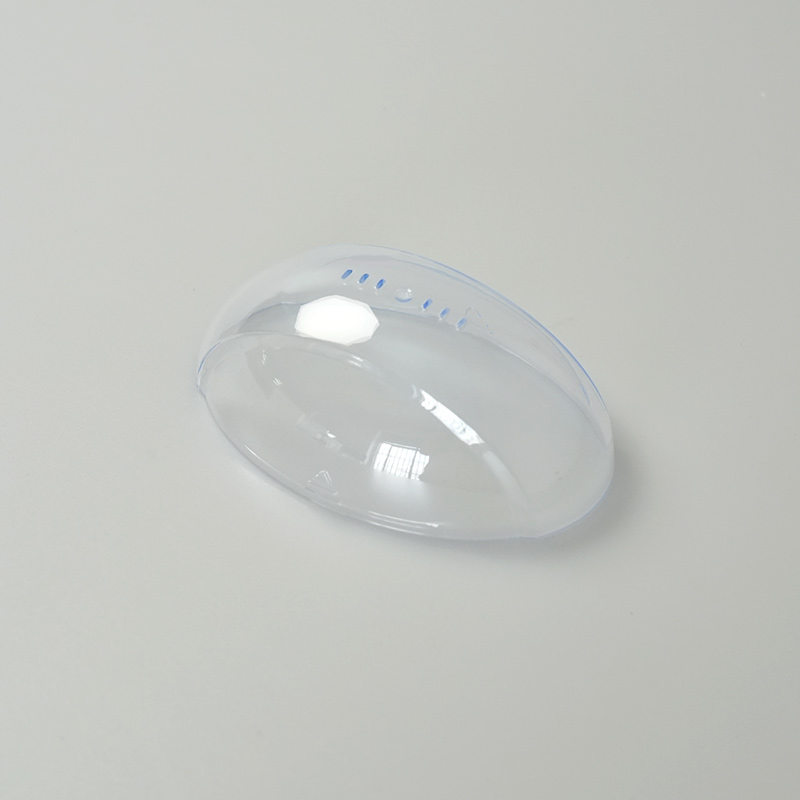
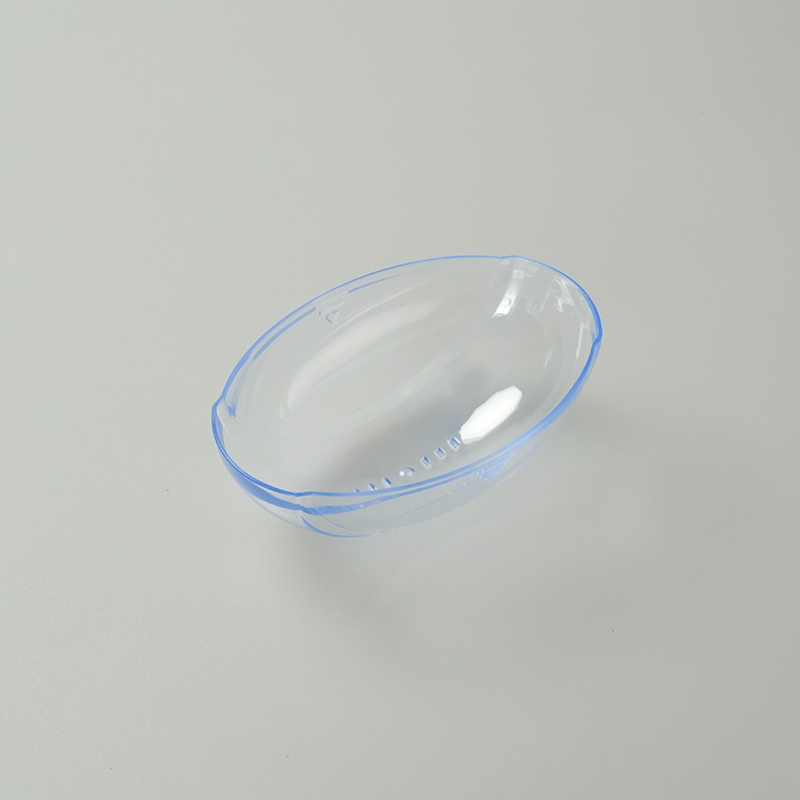
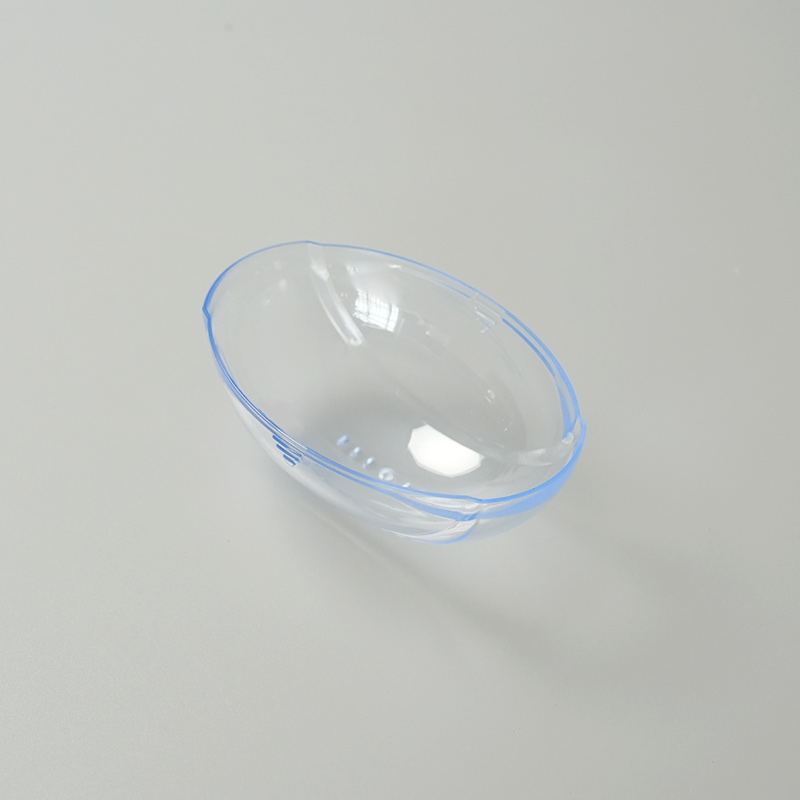
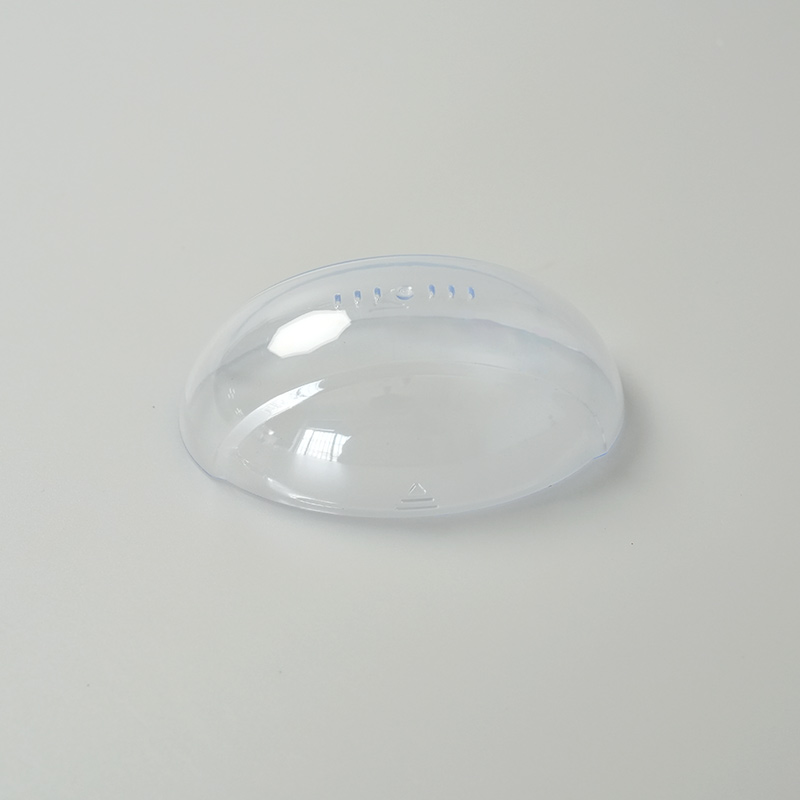
Five views show the dome from every side. There is almost nothing to it, which is the point. A cover this clean and this simple is one of the harder parts on the device to mould well.
The closed dome. High-clarity resin, polished cavity, and no room for streaks or haze anywhere on the surface.
Clarity Is a Process, Not a Resin Choice
Buying a high-transparency resin is the easy half. The other half is everything the melt touches on the way into the part. Moisture shows as streaks. Regrind contamination shows as specks. A cavity that is polished on day one and maintained casually produces parts that cloud gradually, lot by lot, until someone notices. Drying, melt handling, regrind policy and cavity polish are all process controls here, checked rather than assumed.
The dome shape makes it harder, not easier. A curved, thin, uninterrupted surface reflects light across its whole face, so a flow line that would hide in a flat panel is visible from several angles at once. Gating is laid out so the flow front stays single and steady across the dome.
The open rim. The locating buckles on the inner wall clip the dome onto the device without fasteners.
Buckles on a Thin, Clear Wall
The locating buckles moulded on the inner wall are the mechanical half of the part, and they carry a contradiction. Clips want local thickness and stiffness; clarity wants uniform, thin walls. The compromise is formed ribs and bosses behind the buckles that add local structure without thickening the visible face, and the buckle geometry itself is set by the mating body so the dome seats square, because a clear cover mounted at a slight angle shows it immediately.
Clip retention on a transparent part also gets checked differently. Stress whitening, invisible on a white housing, shows as a hazy ring around a clear buckle the first time it is pressed too hard, so the engagement depth is tuned for a fit that holds without stressing the material past its limit.
The profile. Uniform wall across the curve keeps the optical quality even from every viewing angle.The exterior. Any mark left in the cavity steel is reproduced here and reads as a streak.The rim. Its seating face is moulded flat and true, since it carries the seal to the body.
What Gets Checked Before Shipping
Optical inspection under strong light against a master: streaks, specks and haze are reject criteria. Dome roundness and rim flatness, which decide how it seals. Buckle engagement and stress whitening, checked on assembled samples. Wall thickness across the curve, sampled, since thin spots read as optical distortion before they read as weakness.
Information to Confirm Before Starting a Visual Shell Project
The mating body drawing, since buckle positions and the rim seating face are built to it.
Clarity specification with a master sample, and what counts as a reject, agreed in writing.
Resin preference, including any UV or cleaning-chemical exposure the dome will see.
Whether internal components must be visible during operation, which sets distortion limits.
Annual volume, which justifies the cavity polish maintenance the part depends on.
Kunshan Maifeng Precision Industry Co., Ltd. reviews transparent component designs before quoting, builds the injection molds in house, and molds single-color and dual-color parts on 36 machines from 90 to 700 tons. Send us the mating drawing and the clarity specification, and we will come back with a feasibility comment and a tooling proposal.
Company Profile
About Us
Kunshan Maifeng Precision Industry Co., Ltd. (MIF) has an investment of RMB 35 million and an independent factory of more than 5,000 m². The company operates 36 single- and dual-color injection molding machines from 90 to 700 tons, together with more than 50 sets of mold manufacturing and processing equipment. Our service, management and production team includes over 100 people.
Our parent company was established in 2008. We provide product design, mold design and manufacturing, injection molding and product assembly services for custom plastic parts, supporting both domestic and international customers.
1. Product Design Product structure design and optimization based on customer drawings and samples.
2. Mold Design Mold design developed around product geometry, material and production requirements.
3. Mold Manufacturing Machining, polishing, fitting and assembly for custom injection molds.
4. Injection Molding Single- and dual-color injection molding for project and order requirements.
5. Product Assembly Supporting assembly services for molded plastic components.
Custom glossy black PC protective cover for lawn mowers: an open-ring shell with snap clips molded in one shot and a class-A face that survives stones, sun and cleaning.
Custom PC light-diffusion tail light grille for lawn mowers: an even light band, a ribbed outer face, a sealed fixing flange and an optical surface finished to the agreed polish.
Custom clear PC tail light strip for mowers and outdoor equipment: compound curve, uniform wall, polished optical face and colour matched to your chip.
PC+ABS automotive wireless charging housing with an open coil window, four mounting ears and a stiffening rib, molded, inspected and packed for console assembly.
PC lawn mower tail light grille produced through custom mold development, precision injection molding and strict quality control for demanding outdoor applications.
PP handles and plastic parts for a 3rd generation magnetic wall mounted toilet brush, produced at Maifeng Precision through custom mold design, injection molding and careful inspection.
ABS nasal irrigator outer housing produced with custom multi-cavity molds, precision injection molding, careful trimming and dust-free packaging for personal care brands.
ABS nasal irrigator base produced with custom mold design, precision injection molding, strict inspection and dust-free packaging for personal care and medical device assemblies.
No matter what your automotive needs may be, we’re here to help. Contact us today to learn more about our
services and how we can assist you with all of your needs.
ISO 13485-certified medical injection molding in Class 10,000/100,000 cleanrooms: 36 single and dual-color machines, proven medical cases and trusted partners.
One-stop cup and bottle molding: dual-color lids, tea-separation cups and handles, QS food-contact licensed production with proven cases for global brands.
Contact Us
To grow into a top global mold & injection molding supplier
To grow into a top global mold & injection molding supplier, specializing in differentiated custom parts. We focus on structural development, streamlined production and consistent quality supply.












 English
 Chinese



