Waterway Integrated Base for Medical Nasal Irrigator
This waterway-integrated base for electric nasal irrigators is injection molded in white PP as one oval piece. Two cylindrical towers on the deck serve as the waterway connections, and a figure-eight central opening grips the pump housing at two diameters so it cannot rotate in service. Rib bays and cored screw posts locate the pump, circuit board and upper housing. The mold is gated at the rim underside so flow crosses the deck evenly, and port bores, opening geometry and flange outline are verified on first articles. Customizable to the customer's pump outline and housing interface.
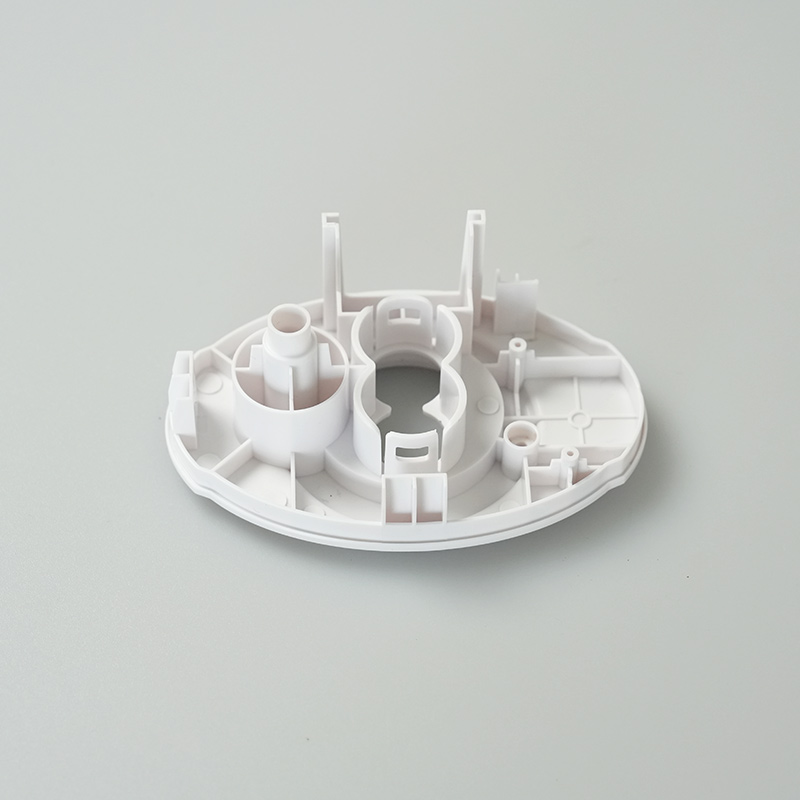
two waterway towers bored for hose fittings, cooled directly to keep the port bores round
figure-eight central opening grips the pump housing at two diameters and blocks rotation
ribs at half wall thickness divide the deck into component bays without sink marks
This white oval base sits at the bottom of an electric nasal irrigator. It carries the pump, seals the two waterway ports and gives the upper housing something to land on. Every internal component in the machine starts from this part, so the position of each rib and post matters more than it looks.
The base is injection molded as a single piece of white resin. Two cylindrical towers rise from the deck and act as the waterway connections; a central opening shaped like a figure eight clears the pump body; short ribs and posts around the edge locate the upper shell. The rest of this page walks through how those features are molded and what we check before the parts ship.
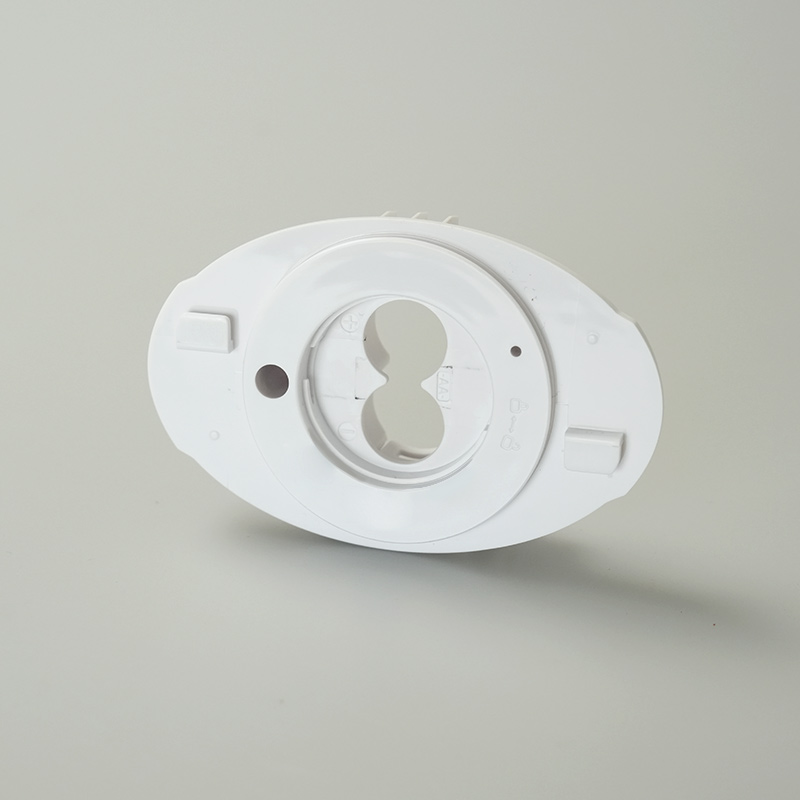
Top view of the waterway base showing the two upright port towers and the deck ribs.
Waterway Ports and the Central Opening
The two towers are the water path. One connects to the pump outlet, the other returns to the reservoir, and both are bored to accept a silicone hose or a mating fitting. Because the towers stand above the deck, they work as tall cores inside the cavity; the mold cools them directly, and the cooling layout decides whether the port tips stay round or drift oval as the resin shrinks.
Between the towers sits the figure-eight opening. It is not decorative. The pump housing drops through it, and the two lobes grip the housing at two different diameters, so the pump cannot rotate in service. The wall around the opening is kept near nominal thickness: a heavy ring there would sink on the visible deck and slow the cycle for no gain.
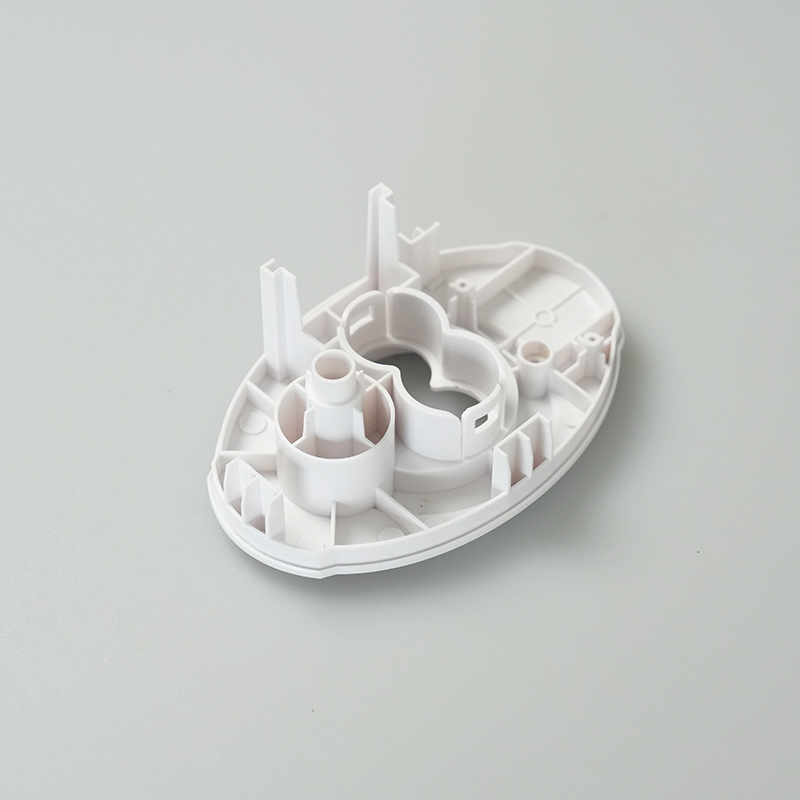
Angled view showing the port towers, the pump opening and the channels moulded into the deck.
Ribs, Posts and Assembly Carriers
Around the perimeter, short ribs divide the deck into bays. Each bay holds one component: the pump on the centreline, the circuit board toward the rear, the weight or battery wherever the customer’s layout puts it. The ribs are about half the nominal wall thickness, so they fill from the main flow front without giving sink marks on the underside.
Two taller posts near the front edge do a different job. They pass through the upper housing and take screws, which means they see axial load every time the machine is opened for service. We core the posts to keep their section near the wall thickness and blend them into the deck with a fillet; solid thick posts would leave sinks exactly where the two shells meet.
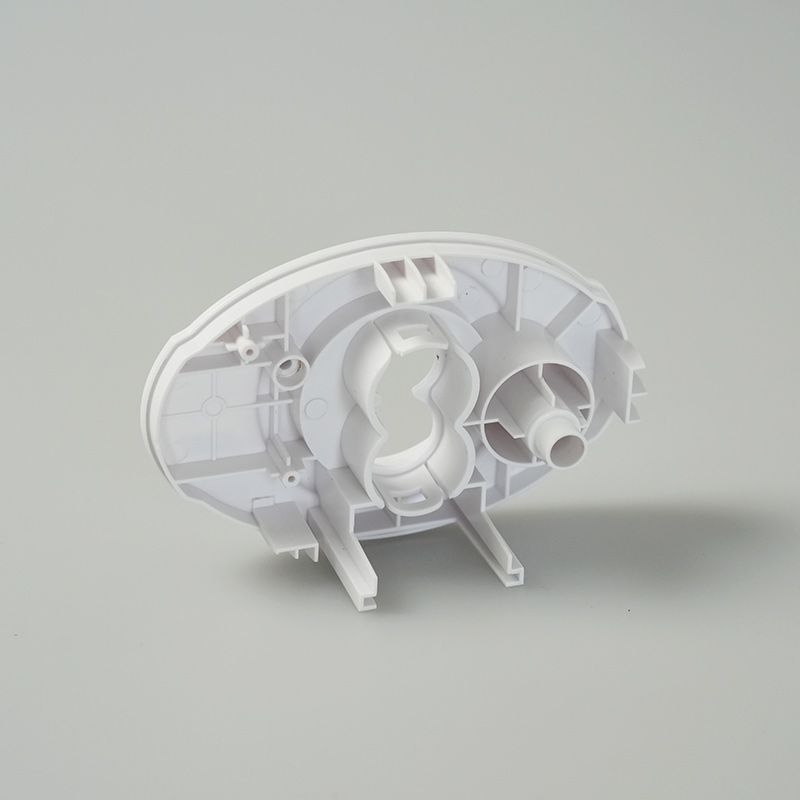
Core-side view of the base showing the internal ribs, the post and the port openings.
Tooling: Parting Line, Gates and Ejection
The oval shell splits at the outside edge of the flange, which keeps the parting line on a surface the user rarely sees. The part is gated on the underside near the rim, so the flow front travels across the deck, up through the figure-eight opening and out to the far rim. Gating next to the ports would jet resin straight up the tall cores and trap air at the opposite end of the deck.
Ejection is the quiet difficulty here. The deck is deep and the ribs grip the core, so the part wants to hang up. Stripper geometry plus a generous draft on the ribs solves it. The towers are polished in the draw direction; a rough tower would scuff the housing every time the machine is assembled.
Mold open and robot take-out of the white waterway bases, followed by the packing bench and the carton.
Resin and Dimensional Control
White PP keeps the part light and shrugs off the saline solution that passes through the machine. PP also shrinks more than ABS, so the mold is cut to compensated dimensions and the first shots are measured, not assumed. The customer’s drawing calls out the port bores, the figure-eight opening and the flange outline; those three control the assembly, and everything else follows them.
One trade-off is worth stating. PP costs less and is chemically indifferent to saline, but it is softer than the ABS some customers ask for. Where the deck carries a heavy pump, we thicken the local rib network rather than the whole wall, which keeps the cycle under control.
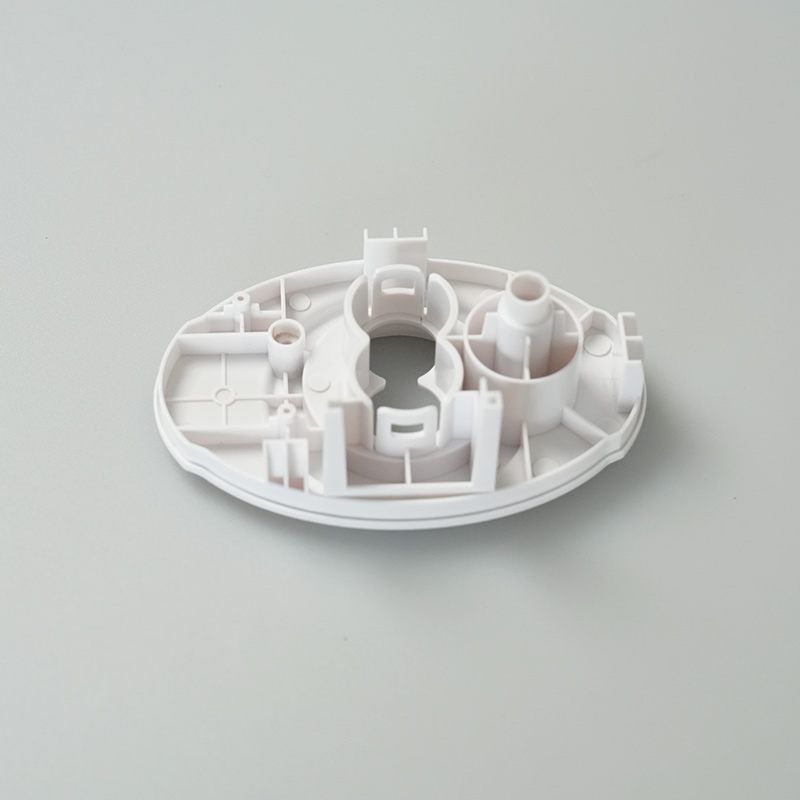
Top view of the deck showing the figure-eight pump opening and the two waterway towers.Underside view of the oval base showing the smooth outer shell and the central clearance hole.
Information to Confirm Before Starting a Nasal Irrigator Base Project
The port bore diameters and the fitting the hoses will use, so the tower cores can be sized once.
The pump outline drawing, because the figure-eight opening must grip it at two diameters.
The resin specification, including any medical-grade or colorant requirement for the white finish.
The upper housing interface: screw positions, post heights and the flange outline it seals against.
Expected annual volume, which decides whether a single-cavity prototype mold or a multi-cavity production mold makes sense.
Kunshan Maifeng Precision Industry Co., Ltd. reviews base and waterway part designs before quoting, builds the injection molds in house, and molds single-color and dual-color parts on 36 machines from 90 to 700 tons. Send us the 3D model of the base and the pump outline, and we will come back with a feasibility comment and a tooling proposal.
Company Profile
About Us
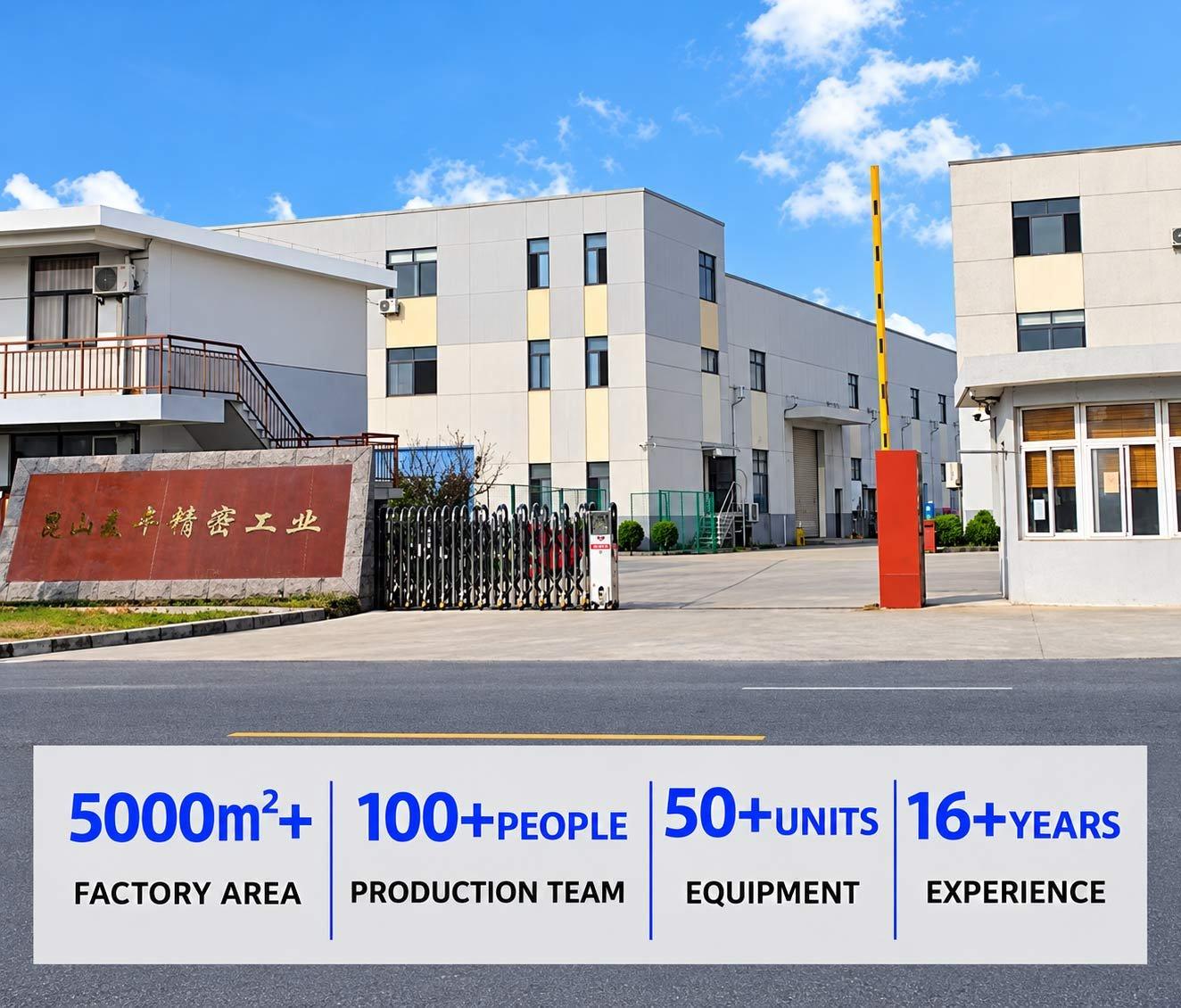
Kunshan Maifeng Precision Industry Co., Ltd. (MIF) has an investment of RMB 35 million and an independent factory of more than 5,000 m². The company operates 36 single- and dual-color injection molding machines from 90 to 700 tons, together with more than 50 sets of mold manufacturing and processing equipment. Our service, management and production team includes over 100 people.
Our parent company was established in 2008. We provide product design, mold design and manufacturing, injection molding and product assembly services for custom plastic parts, supporting both domestic and international customers.
1. Product Design Product structure design and optimization based on customer drawings and samples.
2. Mold Design Mold design developed around product geometry, material and production requirements.
3. Mold Manufacturing Machining, polishing, fitting and assembly for custom injection molds.
4. Injection Molding Single- and dual-color injection molding for project and order requirements.
5. Product Assembly Supporting assembly services for molded plastic components.
Custom glossy black PC protective cover for lawn mowers: an open-ring shell with snap clips molded in one shot and a class-A face that survives stones, sun and cleaning.
Custom PC light-diffusion tail light grille for lawn mowers: an even light band, a ribbed outer face, a sealed fixing flange and an optical surface finished to the agreed polish.
Custom clear PC tail light strip for mowers and outdoor equipment: compound curve, uniform wall, polished optical face and colour matched to your chip.
PC+ABS automotive wireless charging housing with an open coil window, four mounting ears and a stiffening rib, molded, inspected and packed for console assembly.
PC lawn mower tail light grille produced through custom mold development, precision injection molding and strict quality control for demanding outdoor applications.
PP handles and plastic parts for a 3rd generation magnetic wall mounted toilet brush, produced at Maifeng Precision through custom mold design, injection molding and careful inspection.
ABS nasal irrigator outer housing produced with custom multi-cavity molds, precision injection molding, careful trimming and dust-free packaging for personal care brands.
ABS nasal irrigator base produced with custom mold design, precision injection molding, strict inspection and dust-free packaging for personal care and medical device assemblies.
No matter what your automotive needs may be, we’re here to help. Contact us today to learn more about our
services and how we can assist you with all of your needs.
ISO 13485-certified medical injection molding in Class 10,000/100,000 cleanrooms: 36 single and dual-color machines, proven medical cases and trusted partners.
One-stop cup and bottle molding: dual-color lids, tea-separation cups and handles, QS food-contact licensed production with proven cases for global brands.
Contact Us
To grow into a top global mold & injection molding supplier
To grow into a top global mold & injection molding supplier, specializing in differentiated custom parts. We focus on structural development, streamlined production and consistent quality supply.











 English
 Chinese



