Custom PP Toolbox, Heavy-Duty Injection Molded Tool Case
This heavy-duty tool case is molded in PP as a deep tub and a ribbed lid that close on a full-perimeter tongue-and-groove rim, with a continuous hinge at the back, two draw latches at the front and a carry handle in the lid. The rib pattern gives the case its stiffness without a metal frame, while the matte cavity finish hides handling marks and the molded feet let loaded cases stack without sliding.
ribbed tub and lid that hold their stiffness without a metal frame, with molded feet for stacking
continuous hinge and two draw latches, fitted and checked on every case before packing
molding, inspection and export packing in one plant, with carton and pallet pattern to the buyer's spec
A tool case gets treated worse than almost anything else in a workshop. It is dropped off a tailgate, stacked under heavier cases, left on a damp floor and opened and closed a dozen times a day, and it is still expected to keep the tools inside exactly where they were put. The case on this page is a two-piece PP molding: a deep tub, a lid with a full-perimeter rim, a hinge along the back, two draw latches at the front and a carry handle molded into the lid.
It is built for hand tools, measuring instruments and hardware kits. The tooling is what decides how useful it is — the outer size, the height of the tub, whether the case carries a lift-out tray or a foam insert, and where the internal dividers land. This page covers the material, the rib structure that stands in for a metal frame, the closure, how the two halves are molded, how each case is checked, and how it is packed for export.
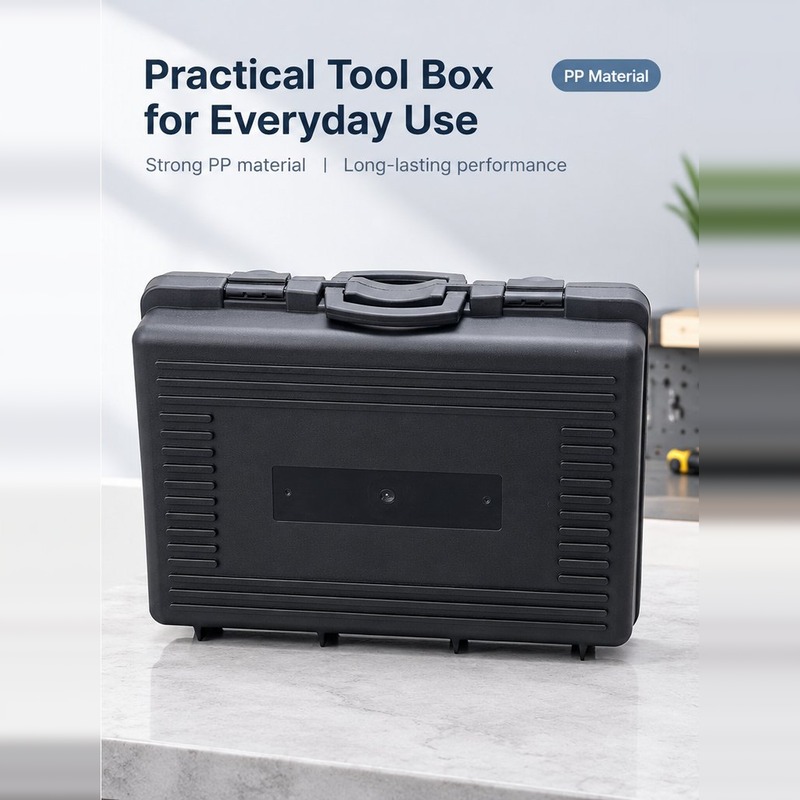
The closed case: two draw latches, a molded carry handle and horizontal ribs across the front panel.
Why the Case Is Molded in PP
PP is the default material for a case at this duty level, for practical reasons rather than fashionable ones. It keeps a useful part of its impact strength at low temperature, it resists oils, coolants and most workshop chemicals, it does not absorb water, and it is light — a large case that is heavy when empty is a case that stays on the shelf. It also takes its texture and its color straight from the tool, so a scratched matte panel shows far less than a gloss ABS shell would.
The costs are real, and worth stating before a tool is cut. PP is less stiff than ABS or PC, which is why both halves of this case are ribbed: remove the ribs and the same wall thickness feels like a bucket. It also shrinks more than an engineering plastic, and it shrinks unevenly, so a large flat panel wants to bow and a lid wants to twist. Those are tool and process problems rather than material faults, and they are solved with rib layout, cooling, packing pressure and a checking fixture — not by adding wall thickness.
The Ribs Are the Structure
Look at the outside of the case and you see horizontal ribs running across the front; look inside the open lid and you see a grid. Both carry load. The outer ribs stiffen the tub against the squeeze of a stack; the lid grid stops the lid from oil-canning when something heavy is set on top of it, and it keeps the lid flat enough that the rim still meets the tub after a few hundred openings.
Rib geometry is where a toolmaker earns the money. A rib that is too thick sinks the visible face opposite it, and on a black textured panel that sink reads as a flat, slightly glossy patch under a raking light. A rib without enough draft drags and scuffs on ejection. A rib that stops short of the wall creates a stress riser exactly where the case takes its hardest hit. The pattern in this tool is held to roughly half the wall thickness at the root, fully drafted, filleted at the base, and gated so the flow front reaches the far corners of the panel at the same time.
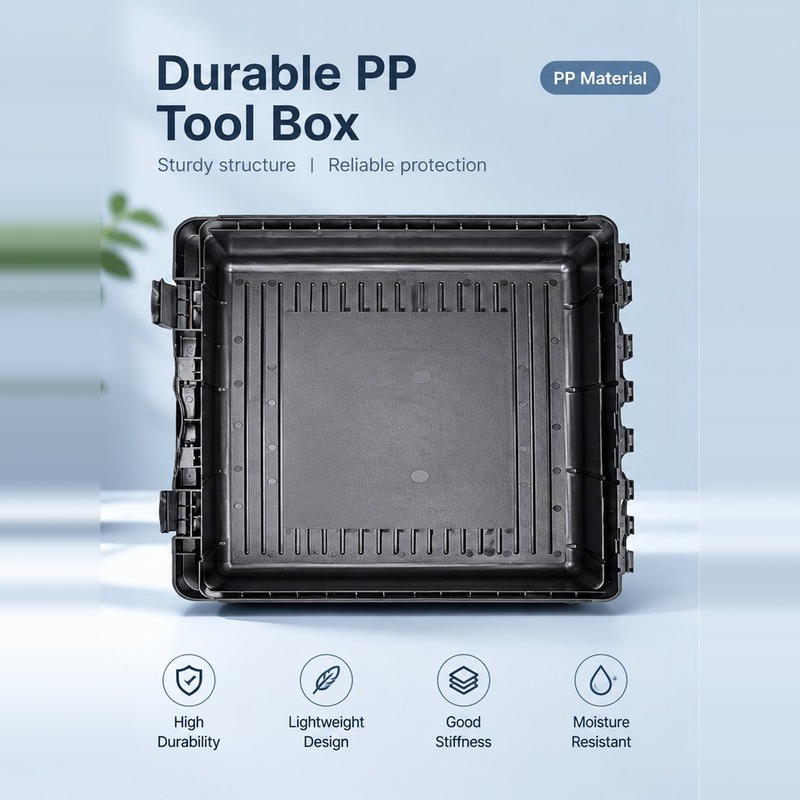
The open case, lid on the left: a rib grid in the lid and a deep, clean tub with a tongue-and-groove rim.
The base carries four molded feet. They lift the case off a wet floor, they let one case sit squarely on the lid of another instead of sliding across it, and they take the wear that would otherwise land on the bottom panel.
Hinge, Latches and the Closing Line
The hinge runs the full length of the back. That is not a luxury on a case this size: a short hinge lets the lid rack when it is opened with one hand, and a lid that racks ends up riding on one corner of the rim and standing proud on the other. This tool uses molded knuckles with a pin; where a customer prefers a single molded piece, PP’s fatigue resistance is good enough to carry a living hinge, at the cost of a shorter service life and a stricter gate position.
Two draw latches pull the lid down at the front. Two, rather than one in the middle, because a single latch bows a long lid and leaves both corners open. The rim is a tongue-and-groove: the tongue on the lid drops into the groove in the tub and takes the sideways load, so the latches only have to hold the lid down, not locate it. If the case has to keep water and dust out, a gasket sits in the groove and the closure becomes a sealing problem — groove depth, gasket compression, latch preload — which is a different design conversation, and one worth having before the tool is cut rather than after.
Opening the case on the workshop floor: the hinged lid, the tub interior, and the wrapped cases on their way to the container.
A case that does not close squarely is the first defect a buyer notices, and it is almost always a flatness problem rather than a latch problem. The rim has to be flat within a tolerance the tool can actually hold, the two halves have to be molded from the same cavity set, and the assembly has to be checked closed — a lid measured on its own tells you very little about how it will sit on a tub.
From Tool to Part
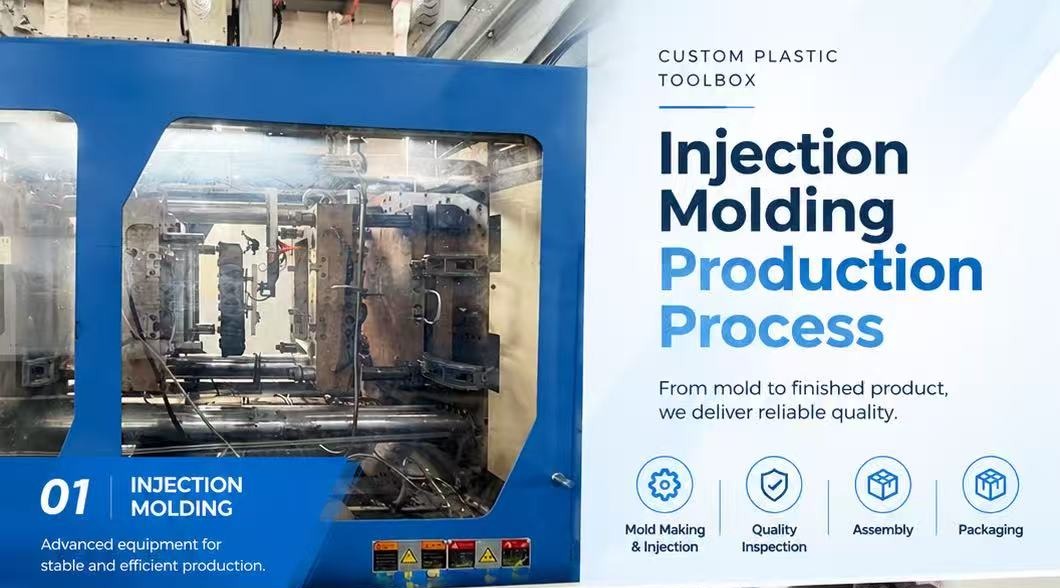
The case body coming off the molding machine, followed by inspection, assembly and packing.
Both halves come from the same tool family, with the cavity finished to the texture the customer chooses — a fine matte in the photos, which hides handling marks and keeps the panel from looking greasy after a day in a van. The gate sits on a face that is not seen when the case is closed, and the ejector marks are confined to the inside of the tub, where the tray or the tools cover them.
On a part this size, cooling dominates the cycle, and cooling is also what controls warpage. The body runs on one of the plant’s 36 machines in the 40–700 ton range, with mold temperature held steady across the shift: a mold that drifts hot in the afternoon produces lids that are slightly more bowed than the ones made in the morning, and those lids will not mix in a carton without a complaint. Hinge pins and latches are fitted after molding, and the assembled case is opened and closed once before it reaches inspection.
Molding the case body and bagging finished cases at the end of the line.
Inspection Before a Case Leaves the Floor
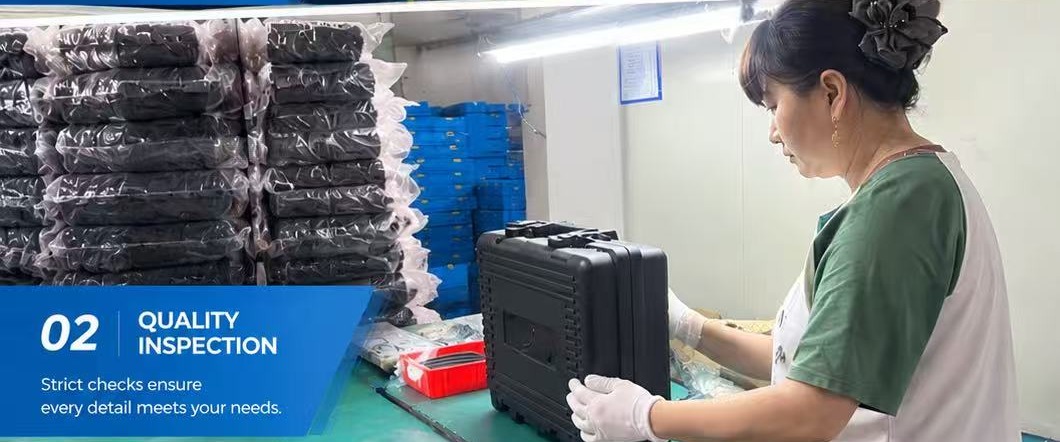
Closing and checking each case by hand before it is bagged, with wrapped stock stacked behind.
The first-article report on a project like this covers the outer envelope, wall thickness at the rib roots, latch engagement, hinge pin retention, color against the approved master, and flatness of the rim on a surface plate. In production, the checks are chosen for the failures that actually reach a customer: a latch that does not catch, a lid that stands proud on one corner, a hinge pin that walks out of its knuckle, a case that is a millimeter too tall for the carton the buyer specified.
Every case is opened and closed by hand before packing, and dimensional checks run on a sampling basis through the shift. Where a customer needs a drop or compression test to a named standard, the load and the drop height are written into the drawing, because a case that survives an empty drop can still fail with a 15 kg tool kit inside it.
Packing for Export
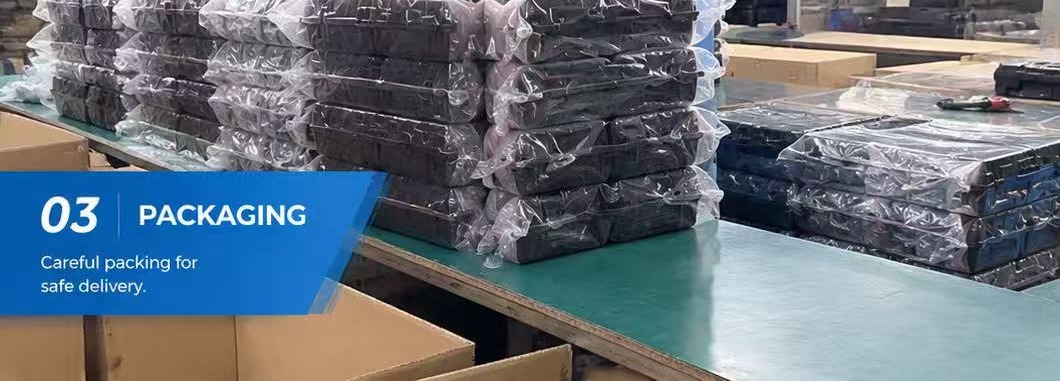
Bagged cases stacked on pallets, ready for cartons and container loading.
Finished cases are bagged individually, packed in export cartons on a fixed count per carton, then stacked and stretch-wrapped on pallets for container loading. Bagging is the step that keeps a textured black panel from being scuffed by the case above it in the carton, and it is also what keeps dust out of the tub during a month at sea.
Two details are worth settling early. The first is the carton: a case designed to the millimeter can still be uneconomic to pack if the carton size forces an awkward count or a carton that is too heavy to handle. The second is the hardware: PP does not rust, but a metal hinge pin and metal latch springs can, and a desiccant bag or a light oil film costs almost nothing against a claim on a container of spotted cases.
What Can Be Customized
Size and capacity — outer envelope and tub depth, tooled to the largest item that has to fit.
Color and texture — black as standard, with custom color matching and a matte or fine-texture cavity finish.
Interior — lift-out tray, fixed or adjustable dividers, foam insert, or a document pocket in the lid.
Closure — draw latches, a gasket in the rim for dust and splash resistance, and a padlock loop where the case has to be locked.
Branding — a molded-in logo in the tool, or pad printing and labels applied after molding.
Packing — poly bag, carton count, pallet pattern and labeling to the customer’s shipping requirement.
Information to Confirm Before Starting a Tool Case Project
Outer dimensions, internal clear height, and the largest tool or instrument that has to fit.
Load, stack height, and any drop or compression standard the case has to pass.
Hinge type — pinned knuckles or a one-piece living hinge — and the latch type.
Interior layout: tray, dividers, foam or document pocket, with the parts that go into them.
Annual volume, colors, branding method, and the carton and labeling requirement.
Kunshan Maifeng Precision Industry Co., Ltd. builds molds for cases like this in house, molds PP on 36 machines from 40 to 700 tons, assembles the hinge and latches, and packs to the customer’s carton specification. Send a drawing, or a sample case with the interior layout you need, and we will come back with a tooling proposal, a material comment and a packing plan.
Company Profile
About Us
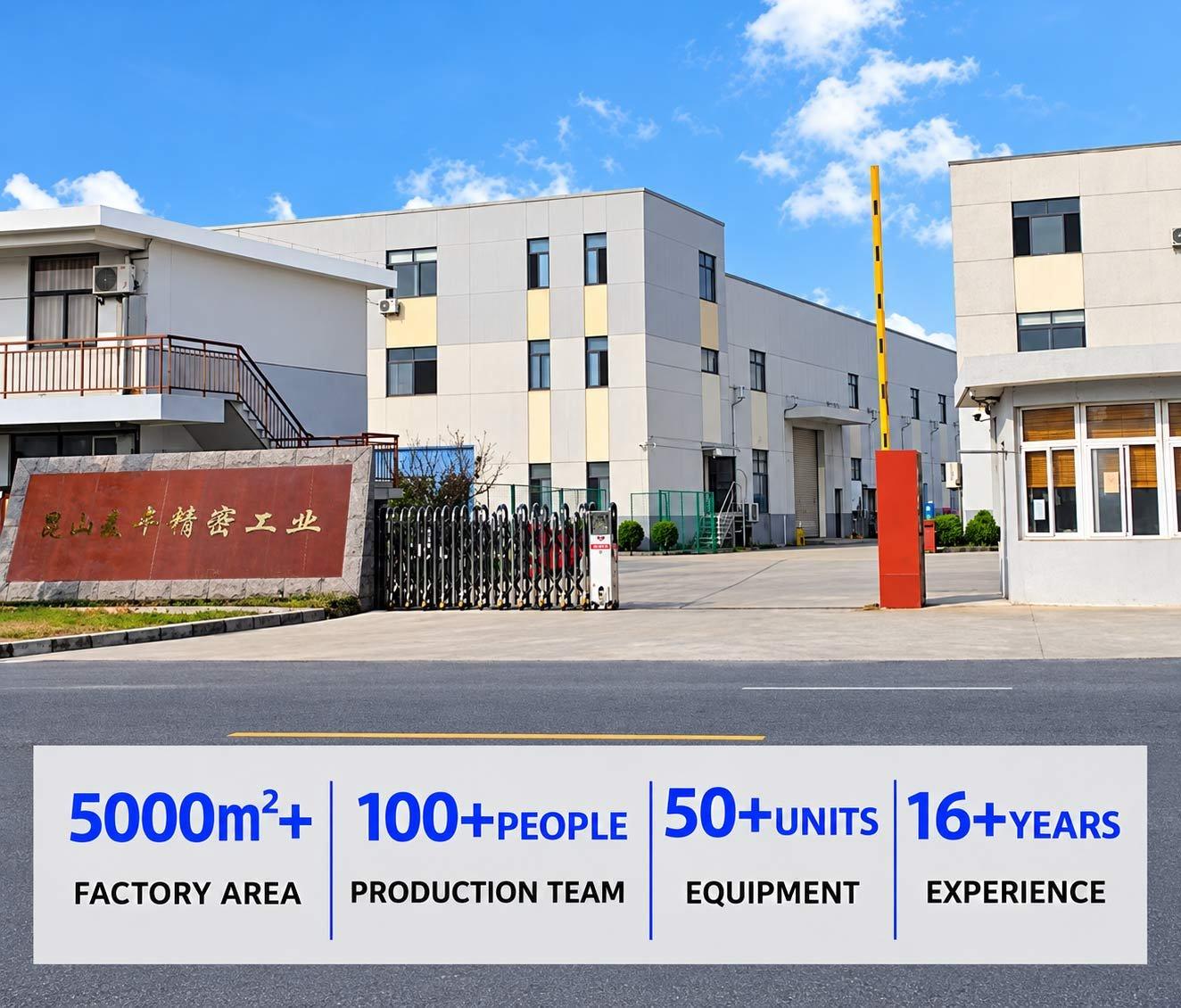
Kunshan Maifeng Precision Industry Co., Ltd. (MIF) has an investment of RMB 35 million and an independent factory of more than 5,000 m². The company operates 36 single- and dual-color injection molding machines from 40 to 700 tons, together with more than 50 sets of mold manufacturing and processing equipment. Our service, management and production team includes over 100 people.
Our parent company was established in 2008. We provide product design, mold design and manufacturing, injection molding and product assembly services for custom plastic parts, supporting both domestic and international customers.
1. Product Design
Product structure design and optimization based on customer drawings and samples.
2. Mold Design
Mold design developed around product geometry, material and production requirements.
3. Mold Manufacturing
Machining, polishing, fitting and assembly for custom injection molds.
4. Injection Molding
Single- and dual-color injection molding for project and order requirements.
5. Product Assembly
Supporting assembly services for molded plastic components.
Custom glossy black PC protective cover for lawn mowers: an open-ring shell with snap clips molded in one shot and a class-A face that survives stones, sun and cleaning.
Custom PC light-diffusion tail light grille for lawn mowers: an even light band, a ribbed outer face, a sealed fixing flange and an optical surface finished to the agreed polish.
Custom clear PC tail light strip for mowers and outdoor equipment: compound curve, uniform wall, polished optical face and colour matched to your chip.
PC+ABS automotive wireless charging housing with an open coil window, four mounting ears and a stiffening rib, molded, inspected and packed for console assembly.
PC lawn mower tail light grille produced through custom mold development, precision injection molding and strict quality control for demanding outdoor applications.
PP handles and plastic parts for a 3rd generation magnetic wall mounted toilet brush, produced at Maifeng Precision through custom mold design, injection molding and careful inspection.
ABS nasal irrigator outer housing produced with custom multi-cavity molds, precision injection molding, careful trimming and dust-free packaging for personal care brands.
ABS nasal irrigator base produced with custom mold design, precision injection molding, strict inspection and dust-free packaging for personal care and medical device assemblies.
No matter what your automotive needs may be, we’re here to help. Contact us today to learn more about our
services and how we can assist you with all of your needs.
ISO 13485-certified medical injection molding in Class 10,000/100,000 cleanrooms: 36 single and dual-color machines, proven medical cases and trusted partners.
One-stop cup and bottle molding: dual-color lids, tea-separation cups and handles, QS food-contact licensed production with proven cases for global brands.
Contact Us
To grow into a top global mold & injection molding supplier
To grow into a top global mold & injection molding supplier, specializing in differentiated custom parts. We focus on structural development, streamlined production and consistent quality supply.











 Chinese
 English



