Industrial Power Tool Overmolded Handle Housing, Two-color Injection Molded Shell
This power tool handle ships as two clamshell halves, each a yellow hard shell with a soft TPE grip overmolded in a second shot inside the same tool. Bond comes from material adhesion plus a few through-holes that let the soft layer pierce through and lock at the highest-wear spots, and the second-shot temperature window is locked on the process sheet because adhesion tracks TPE temperature more than anything else. Inside, ribs at about half the wall thickness bridge the screw bosses and carry reaction torque; the parting face is a compression lip that seals when the screws are torqued, and the cord exit carries a molded strain relief. Grip zones sit on each side to match the real hand position.
TPE grip overmolded in the same tool and bonded by adhesion with through-hole locks at wear spots
rib-and-boss frame carries motor reaction torque without sink on the gloss outside faces
parting face designed as a compression seal, cord exit with a molded strain relief
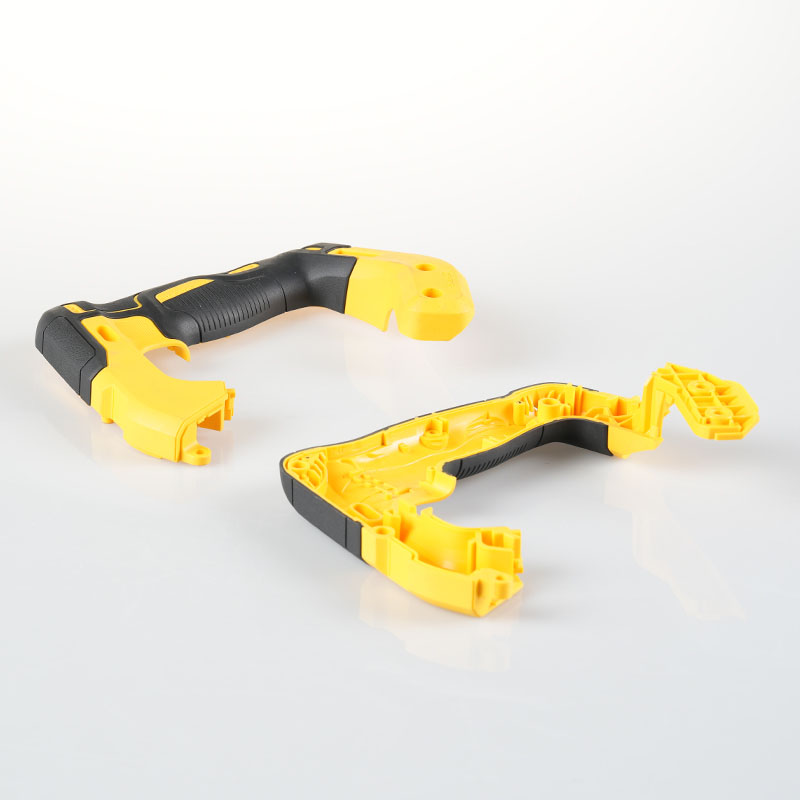
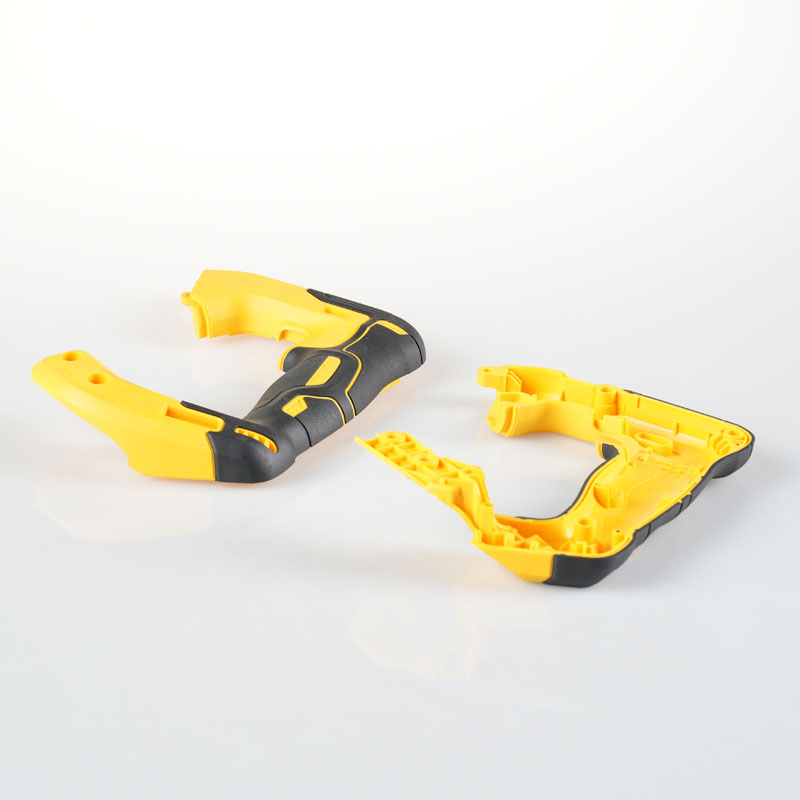
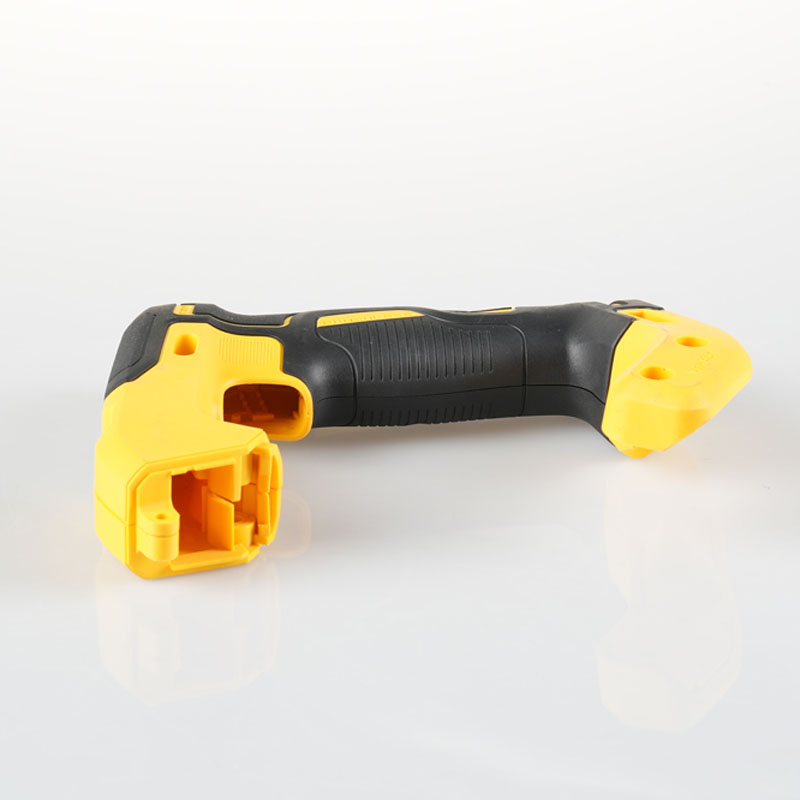
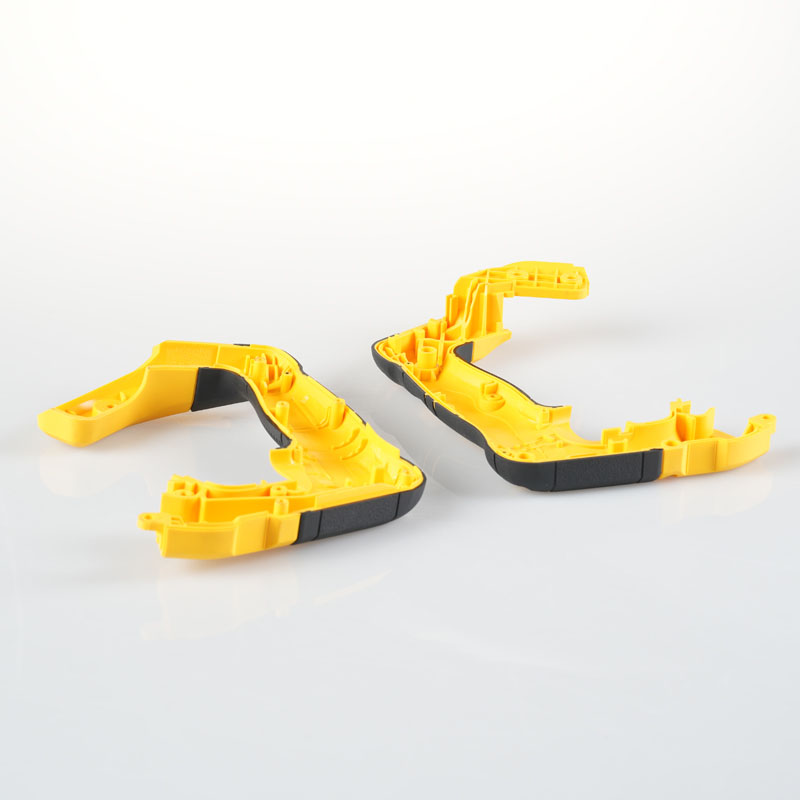
This is the handle set of a handheld power tool, shown the way it actually ships: two clamshell halves. Each half is a yellow hard shell with a soft black grip overmolded onto the palm side. Bolt the halves together around the motor and switch gear, and the two shells become one handle — the structure the operator holds, the trigger sits in, and the motor torque reacts against.
The halves are molded in a second operation: first the yellow body, then the dark elastomer bonded onto it in the same tool. This page covers the overmolding, what the ribs inside do, how the halves seal, and what to confirm before starting.
The pair of halves, grips already overmolded.
The Soft Grip Is Bonded, Not Glued
The black layer under the fingers is a TPE overmolded onto the yellow body in a second shot inside the same mold. Bond comes from the material itself: the TPE is chosen for adhesion to the substrate resin, and the yellow surface it lands on is molded warm and clean so the two melt faces knit. There is no primer and no mechanical anchoring except where the geometry helps — a few small through-holes let the soft material pierce through and lock like rivets at the highest-wear spots.
Delamination is the failure mode we test for. Grip samples go through torsion and peel checks, and the honest part of the story is that adhesion varies with TPE temperature more than with anything else, so the second-shot temperature window is locked on the process sheet and audited.
Grip coverage sits where the palm closes, not everywhere.
What the Ribs and Bosses Carry
Inside, the yellow shell is all structure. Screw bosses line the parting face so the halves pull tight around the motor housing; ribs bridge the bosses to the walls so screw torque does not warp the shell; slots and stands locate the switch, the cord anchor and the carbon-brush holders. On a tool this size the handle is also the motor mount — reaction torque under load passes through these ribs every start and stop, and a rib cracked at a boss is a handle that rattles long before it breaks.
Rib thickness again runs about half the wall, and the visible outside faces are the reason: the yellow shell is gloss-molded on the outside, and any sink over a boss shows immediately in this colour.
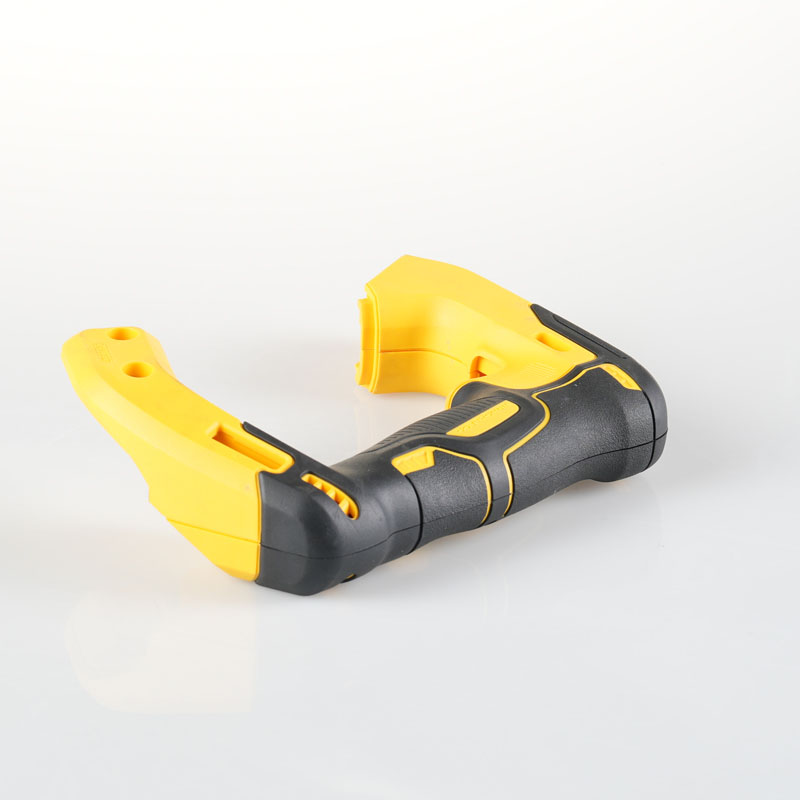
The halves closed: one handle, seam along the parting face.
Sealing and the Parting Face
Power tools live with dust and the occasional knock, so the parting face between the halves is designed as a seal: a narrow, flat land with a compression lip molded along it, closing on itself when the screws are torqued. The screw pattern matters here — bosses spaced so the lip compresses evenly, not just where a screw happens to fit. The cord exit gets its own strain-relief feature molded into the rear shell, because a pulled cord is a daily event, not an accident.
The two halves are mirror tools, not one shared cavity, which lets the grip sit differently on each side to match the actual hand position. That is a small cost in tooling for a real gain in how the tool feels.
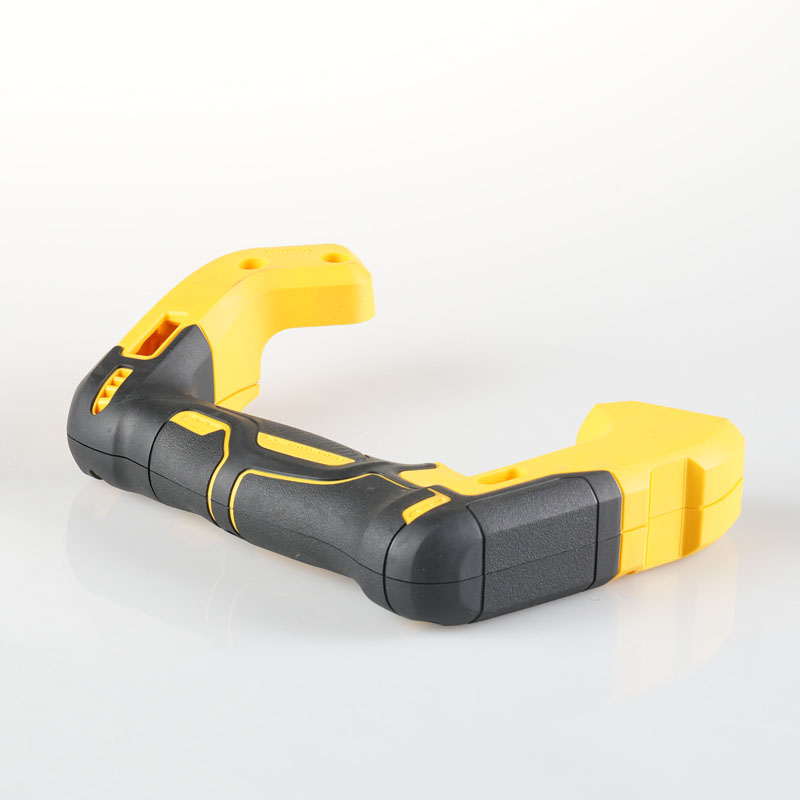
The grip side, with the TPE pads in the working zones.
Information to Confirm Before Starting a Power Tool Handle Project
The internal layout drawing — motor, switch, brush holders and cord exit — which sizes the ribs and bosses.
Screw sizes and the torque the parting face must seal against.
Grip zones and durometer for the TPE, with a hand-feel sample for approval.
Colour standards for both shots, referenced to your existing tool family.
Drop-test and torque-reaction requirements, if the tool carries a certification plan.
Kunshan Maifeng Precision Industry Co., Ltd. molds two-shot handles like this set in house, from mold build through overmolding trials to volume runs on machines from 90 to 700 tons. Send us the internal layout drawing and the grip specification, and we will come back with a mold proposal and a quotation.
Company Profile
About Us
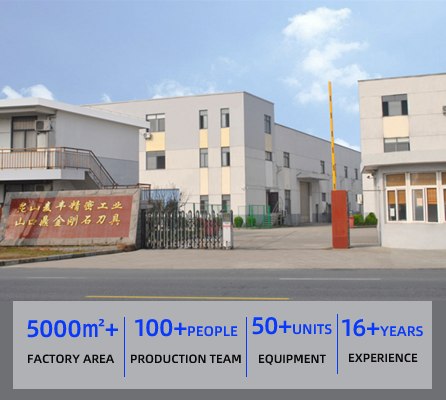
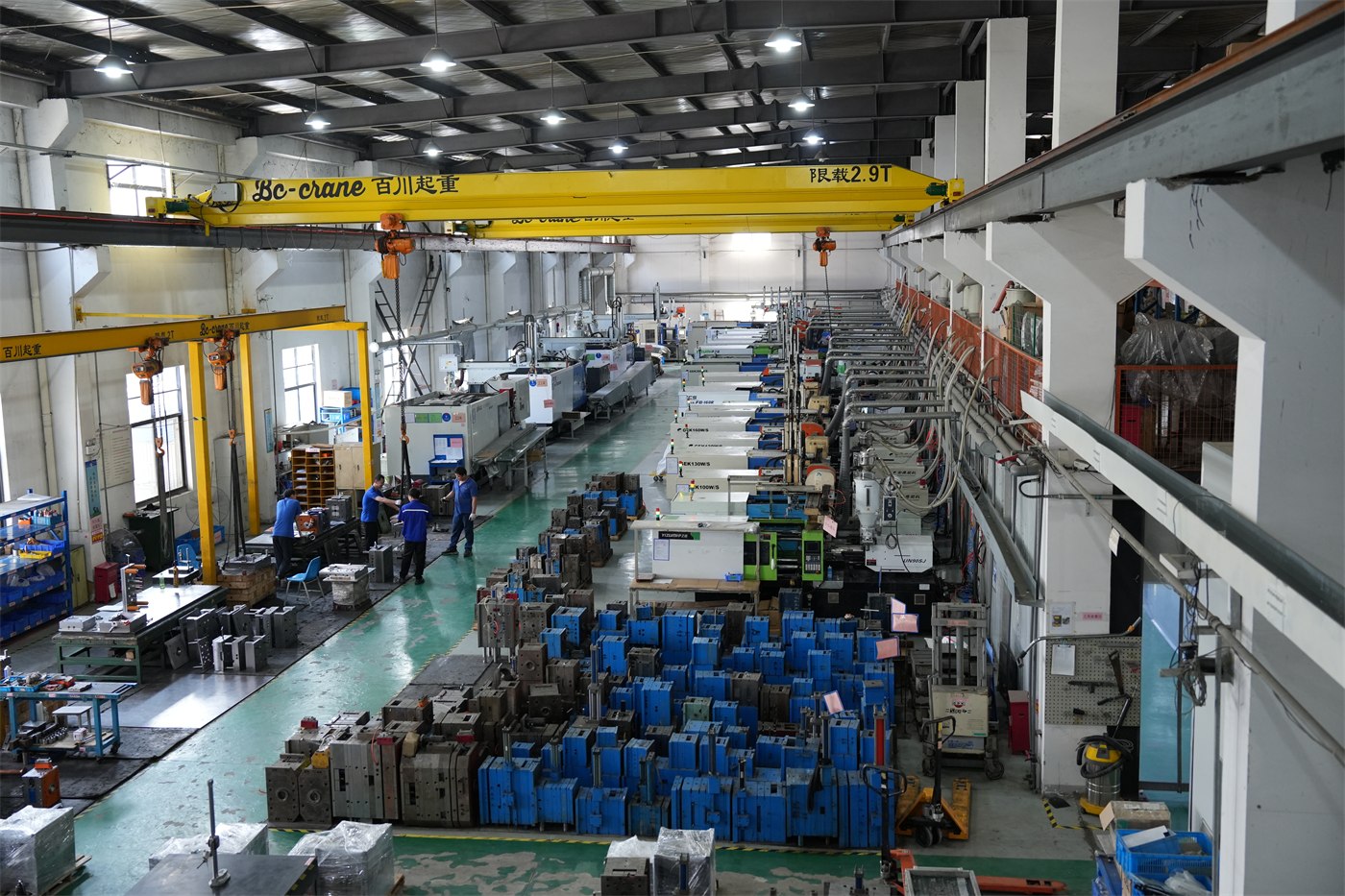
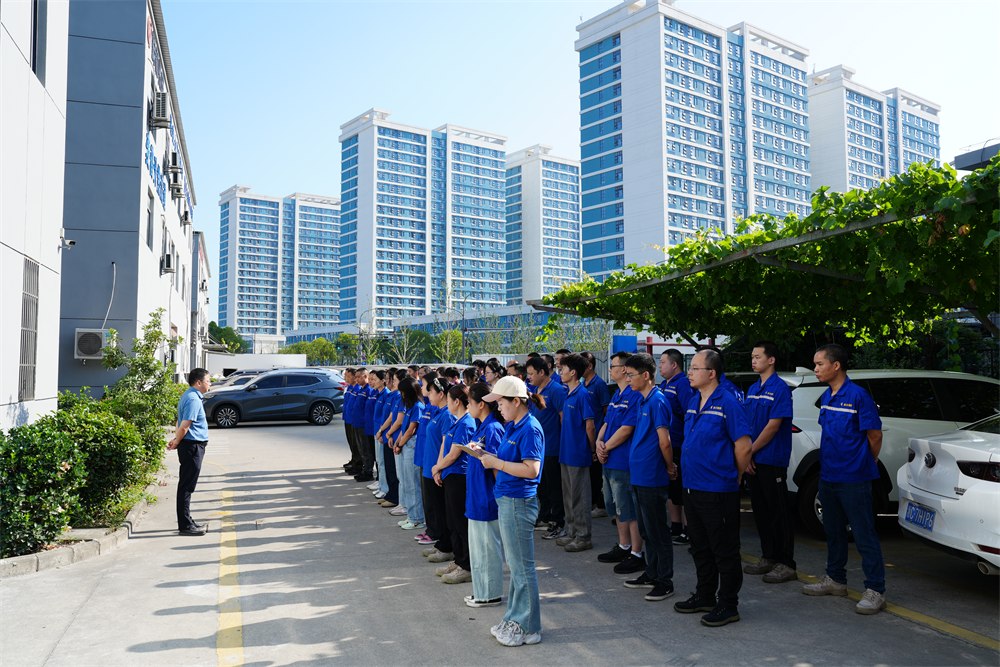
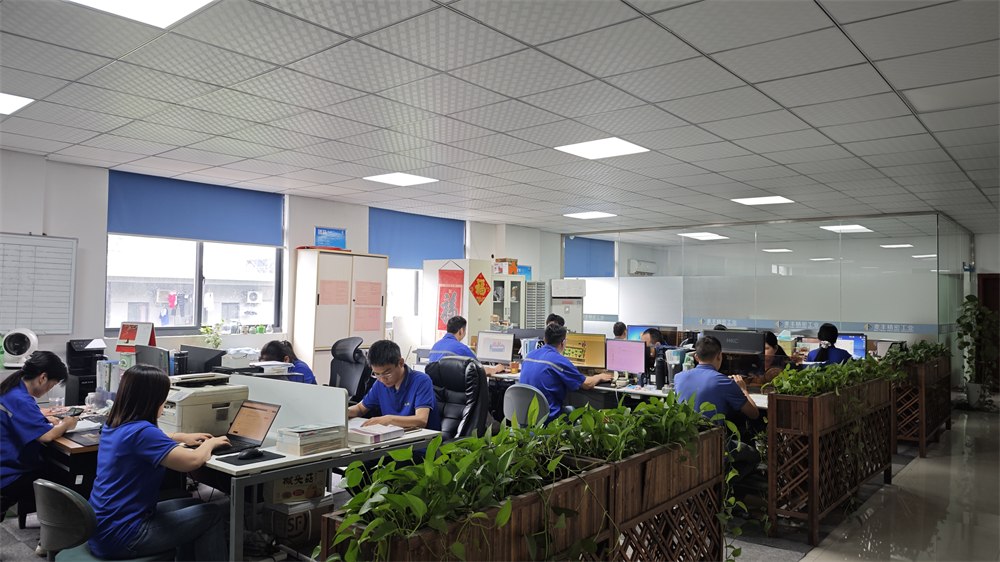
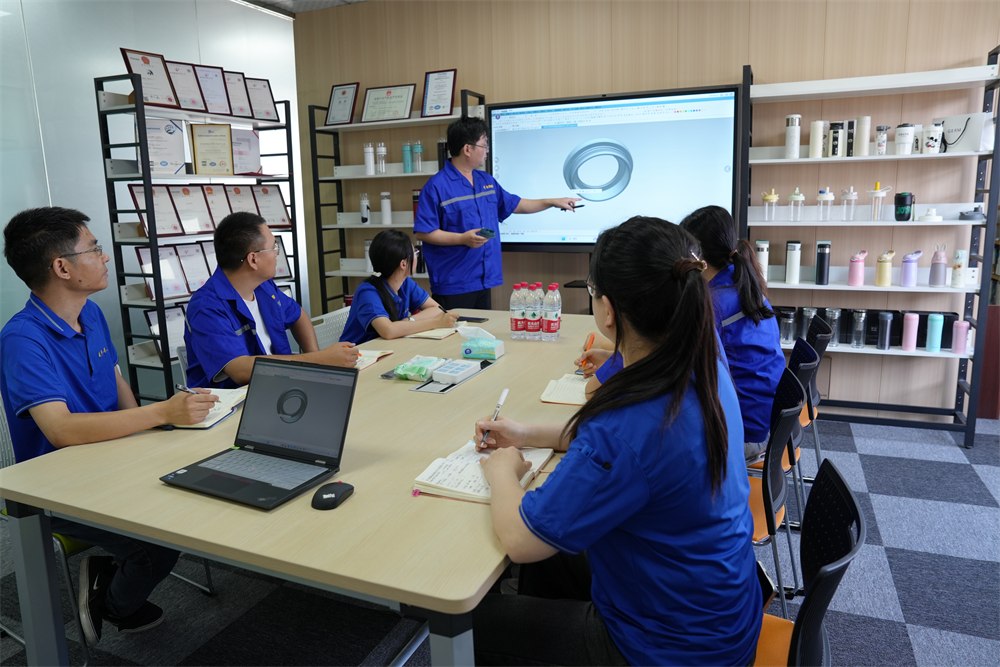
Kunshan Maifeng Precision Industry Co., Ltd. (MIF) has an investment of RMB 35 million and an independent factory of more than 5,000 m². The company operates 36 single- and dual-color injection molding machines from 90 to 700 tons, together with more than 50 sets of mold manufacturing and processing equipment. Our service, management and production team includes over 100 people.
Our parent company was established in 2008. We provide product design, mold design and manufacturing, injection molding and product assembly services for custom plastic parts, supporting both domestic and international customers.
1. Product Design
Product structure design and optimization based on customer drawings and samples.
2. Mold Design
Mold design developed around product geometry, material and production requirements.
3. Mold Manufacturing
Machining, polishing, fitting and assembly for custom injection molds.
4. Injection Molding
Single- and dual-color injection molding for project and order requirements.
5. Product Assembly
Supporting assembly services for molded plastic components.
Custom glossy black PC protective cover for lawn mowers: an open-ring shell with snap clips molded in one shot and a class-A face that survives stones, sun and cleaning.
Custom PC light-diffusion tail light grille for lawn mowers: an even light band, a ribbed outer face, a sealed fixing flange and an optical surface finished to the agreed polish.
Custom clear PC tail light strip for mowers and outdoor equipment: compound curve, uniform wall, polished optical face and colour matched to your chip.
PC+ABS automotive wireless charging housing with an open coil window, four mounting ears and a stiffening rib, molded, inspected and packed for console assembly.
PC lawn mower tail light grille produced through custom mold development, precision injection molding and strict quality control for demanding outdoor applications.
PP handles and plastic parts for a 3rd generation magnetic wall mounted toilet brush, produced at Maifeng Precision through custom mold design, injection molding and careful inspection.
ABS nasal irrigator outer housing produced with custom multi-cavity molds, precision injection molding, careful trimming and dust-free packaging for personal care brands.
ABS nasal irrigator base produced with custom mold design, precision injection molding, strict inspection and dust-free packaging for personal care and medical device assemblies.
No matter what your automotive needs may be, we’re here to help. Contact us today to learn more about our
services and how we can assist you with all of your needs.
ISO 13485-certified medical injection molding in Class 10,000/100,000 cleanrooms: 36 single and dual-color machines, proven medical cases and trusted partners.
One-stop cup and bottle molding: dual-color lids, tea-separation cups and handles, QS food-contact licensed production with proven cases for global brands.
Contact Us
To grow into a top global mold & injection molding supplier
To grow into a top global mold & injection molding supplier, specializing in differentiated custom parts. We focus on structural development, streamlined production and consistent quality supply.






 Chinese
 English