This replaceable-head toilet brush splits into three moulded parts. The handle shell is a light rigid moulding with a soft blue end cap overmoulded where the hand grips. The dark inner spine carries clip nodes spaced along its length, and the replaceable cleaning head slides on in one push and pulls off without tools. The head is a moulded body that carries cleaning compound inside, released when water reaches it. Head engagement force, shell-to-spine fit and material durability in damp, chemically active conditions are all controlled at the tooling stage. Colours, head format and connection geometry can be adapted to a customer design.
separate inner spine carries the clip loads so the handle shell can stay thin and light
replaceable head locks over moulded nodes in one push and releases along the axis without tools
cleaning head is a moulded body designed around the compound it carries, not a cut block
A replaceable-head toilet brush lives in the worst corner of the house for plastics. It stands in damp air, it meets cleaning chemicals every time it is used, and the head is meant to be thrown away and swapped while the handle stays. The set shown here splits into three moulded parts along exactly that line: a handle and outer shell that last, an inner spine that carries the load, and a cleaning head that is replaced.
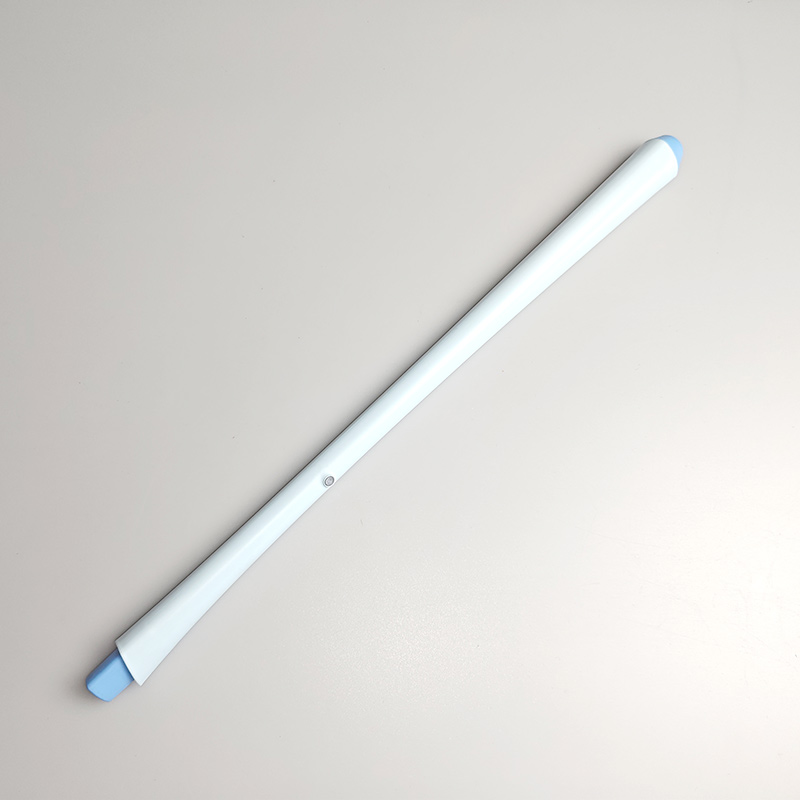
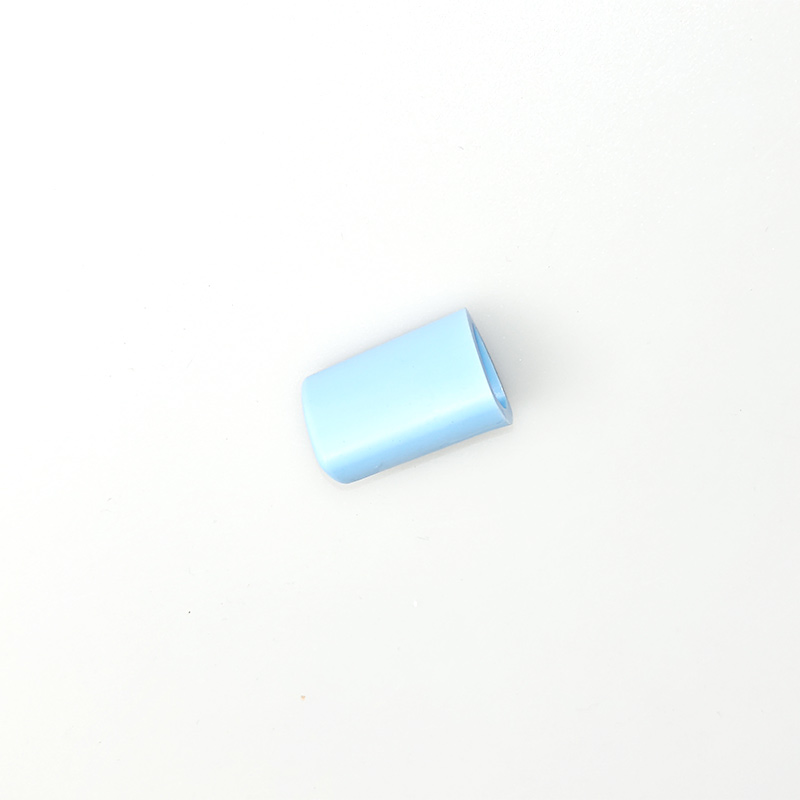
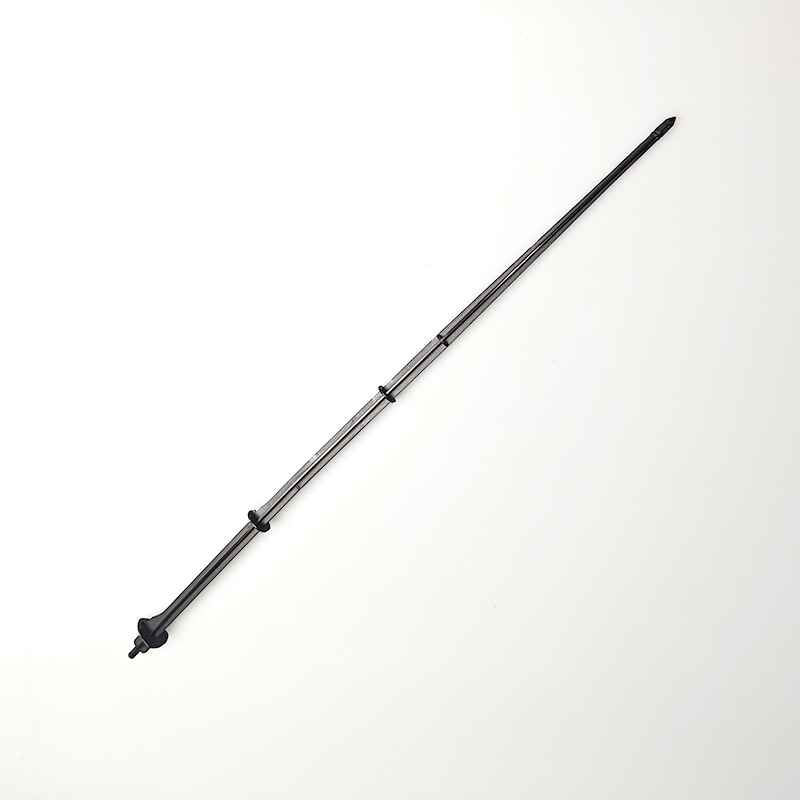
The photographs show the three pieces separately. The long outer shell moulds in a light resin with a soft blue end cap. The replacement head is a compact blue block that loads onto the spine. The spine itself is a dark slender moulding with clip nodes spaced along its length, and it is the part the head actually grips.
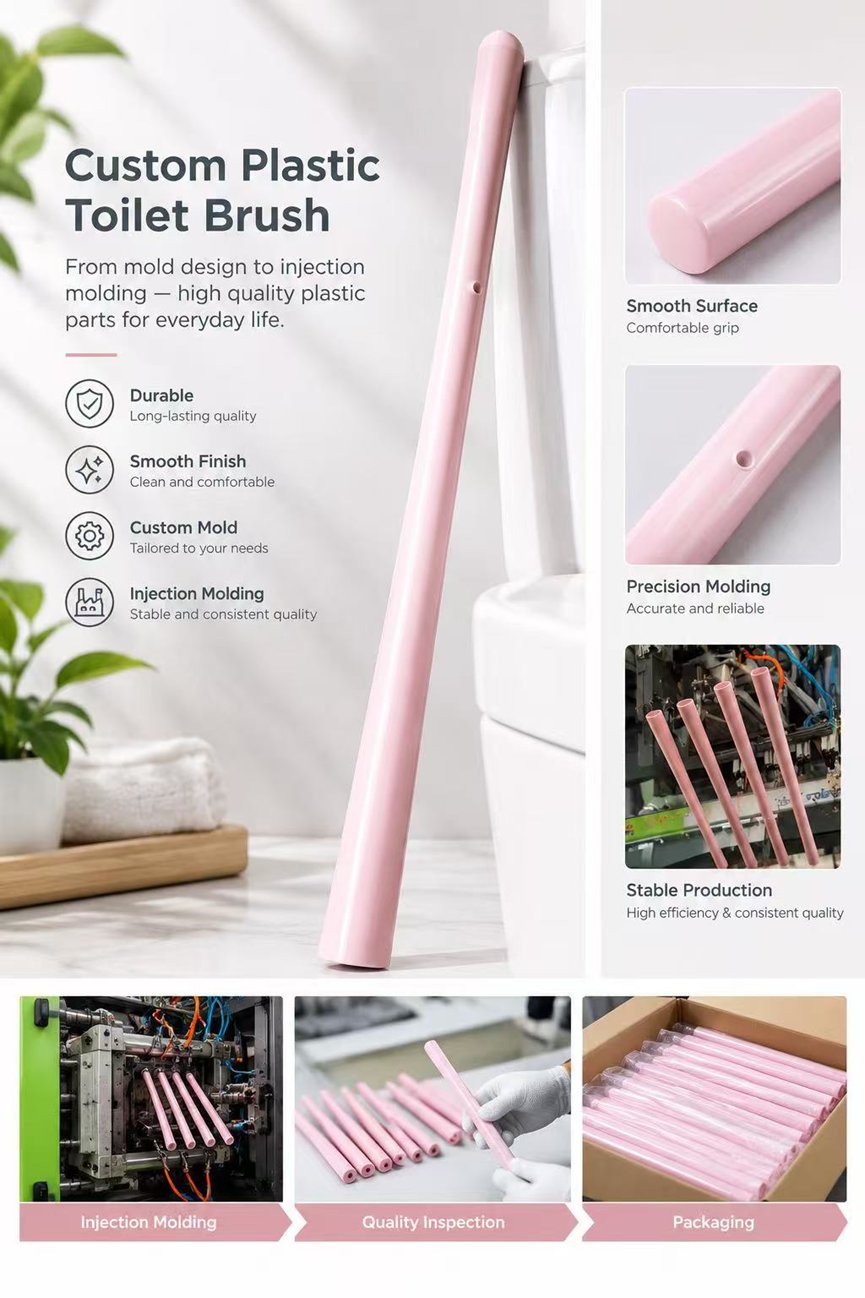
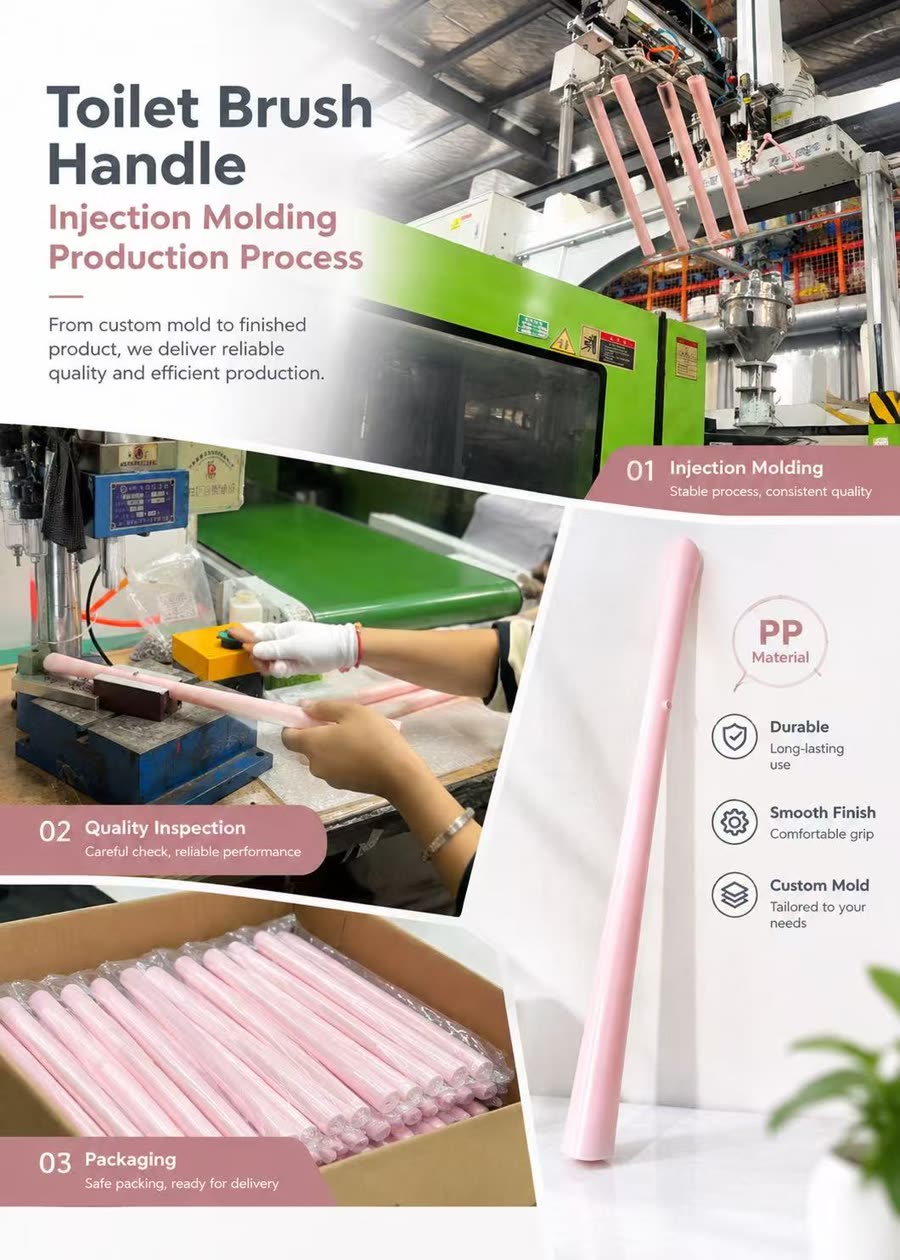
The same part family moulded in pink: the shell and its surface detail, then the three stages it passes through — injection moulding, inspection and packing. Colour is a master match, not a fixed pink.The handle shell. The soft blue end is the grip the hand actually holds, and the shell slides over the inner spine.
How the Replaceable Head Attaches
The head does not screw on and it is not glued. It slides onto the inner spine and locks over the clip nodes spaced along it, which is what lets a user snap a fresh head on with one push and pull the spent one off without tools. The spacing of those nodes sets how the head sits under load: it must not rock when the brush is pressed against a rim, and it must release along the axis rather than by peeling a corner.
That connection is the whole reason the spine exists as a separate moulding. Clips moulded into a hollow handle would need the handle wall to flex, and a wall thick enough to be rigid is exactly the wall that will not flex. A slim dedicated spine gives the clip arms somewhere to live and keeps the forces in parts designed to take them.
How the magnetic connection behaves in the hand: the brush parks on its wall holder, and the spent head is released and dropped straight into the bin without being touched.The replacement head. It loads onto the spine in one push and carries the cleaning compound inside the moulded body.
Moulding the Cleaning Head
The head is more than a block of foam. It is a moulded part that carries cleaning compound inside it, released when water reaches it, so the compound and the resin have to agree with each other. The moulding around the compound is shaped so the head keeps its form in the packet, breaks down in use at a controlled rate, and holds together long enough not to shed material into the bowl.
On the tooling side, the head is a soft, compliant moulding, which changes the ejection problem. A flexible part grips the cavity and stretches rather than releases, so the draft angles, ejection layout and demould temperature are set for a material that does not behave like the rigid shell parts. Getting this wrong shows up as heads that come off the tool warped or torn.
The inner spine. The clip nodes along its length are what the replaceable head locks onto.
The Handle and the Spine
The outer shell is a straight moulding with a soft end cap overmoulded where the hand grips. The shell itself carries almost none of the brushing load; that belongs to the spine inside. Separating the jobs this way lets the shell be moulded thin and light while the spine is stiff where it has to be, and the two are moulded in different resins suited to their own jobs rather than one compromise resin serving both.
Assembly fit between the two is the detail that decides whether the brush feels solid. A shell that rattles on the spine reads as cheap in the hand even when nothing is functionally wrong, so the interference and the clip points between shell and spine are held to the drawing rather than left to assembly adjustment.
The handle through its three stages: moulded in PP on a multi-cavity tool, checked and finished at the bench, then sleeved and cased. One handle or a full carton, same route.The same route on camera: the robot stripping four handles off the tool at the top of the stroke, the secondary press closing a hole at the bench, and the sleeved handles going into the carton.
Materials That Live Next to Water and Cleaner
Every part here meets standing moisture and surfactants repeatedly. The rigid parts use resins that keep their colour and their clip snap after months in a damp bathroom, and the soft grip material is chosen so it does not go tacky or separate from the shell it is bonded to. The head is the one part designed to be consumed, and its material is picked for the release behaviour of the cleaning compound as much as for moulding.
The Set as It Is Sold
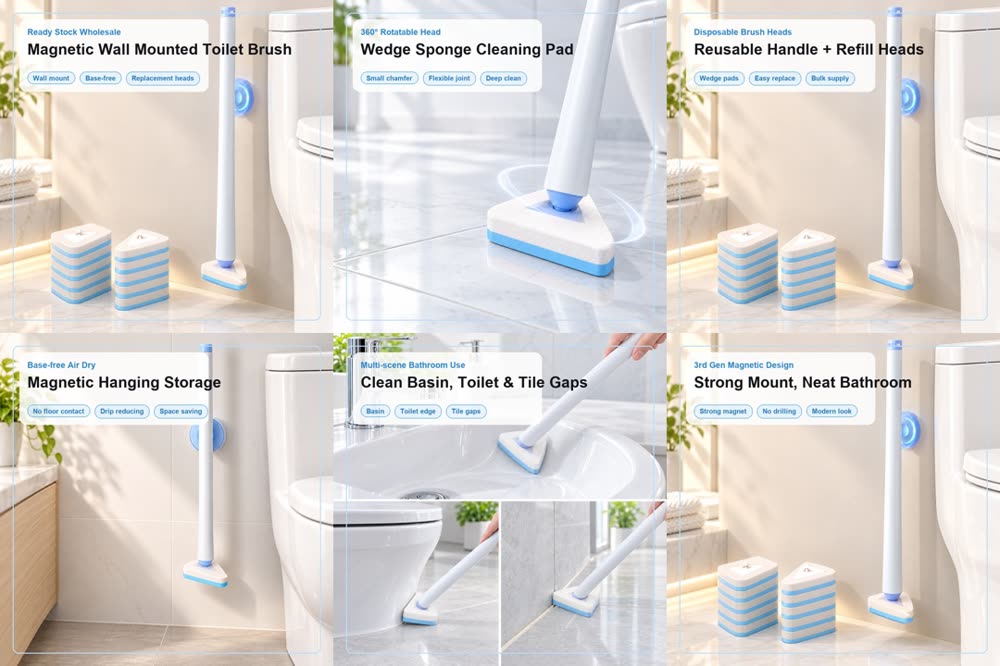
The handle is not the whole delivery. What leaves the floor is a set: the handle with its magnetic end, the wall pad it parks on, and the head either fitted to the spine or packed separately as refills. Because the brush hangs instead of standing, there is no base to mould, no tray holding standing water, and nothing standing on the floor to be knocked over — the part that would normally be moulded in the heaviest grade is simply not there.
Six views of the same set: the wall mount, the wedge head on its flexible joint, the refill packs, hanging storage with no floor contact, the head reaching under a rim, and the magnetic pad on tile.
What Gets Checked Before Shipping
Head engagement and pull-off force on the real spine, sampled across the lot. Clip retention after repeated cycles, since a connection that loosens by the tenth swap defeats the replaceable concept. Shell-to-spine fit, checked by feel and by measuring the gap. Colour and surface appearance of the handle, and a soak test on the head to confirm it holds together in water for the stated period.
Information to Confirm Before Starting a Replaceable Brush Project
The cleaning head specification, including the compound supplier, since the head moulding is designed around it.
Whether the handle, spine and head are supplied as a set or the head is sold separately as refills.
Colour specification for the rigid parts and the soft grip, with masters to match.
Target number of head swap cycles the connection must survive.
Annual volumes for the handle and for refill heads separately, since they usually run in very different quantities.
Kunshan Maifeng Precision Industry Co., Ltd. reviews cleaning tool designs before quoting, builds the injection molds in house, and molds single-color and dual-color parts on 36 machines from 40 to 700 tons. Send us the head specification and the handle layout, and we will come back with a feasibility comment and a tooling proposal.
Company Profile
About Us
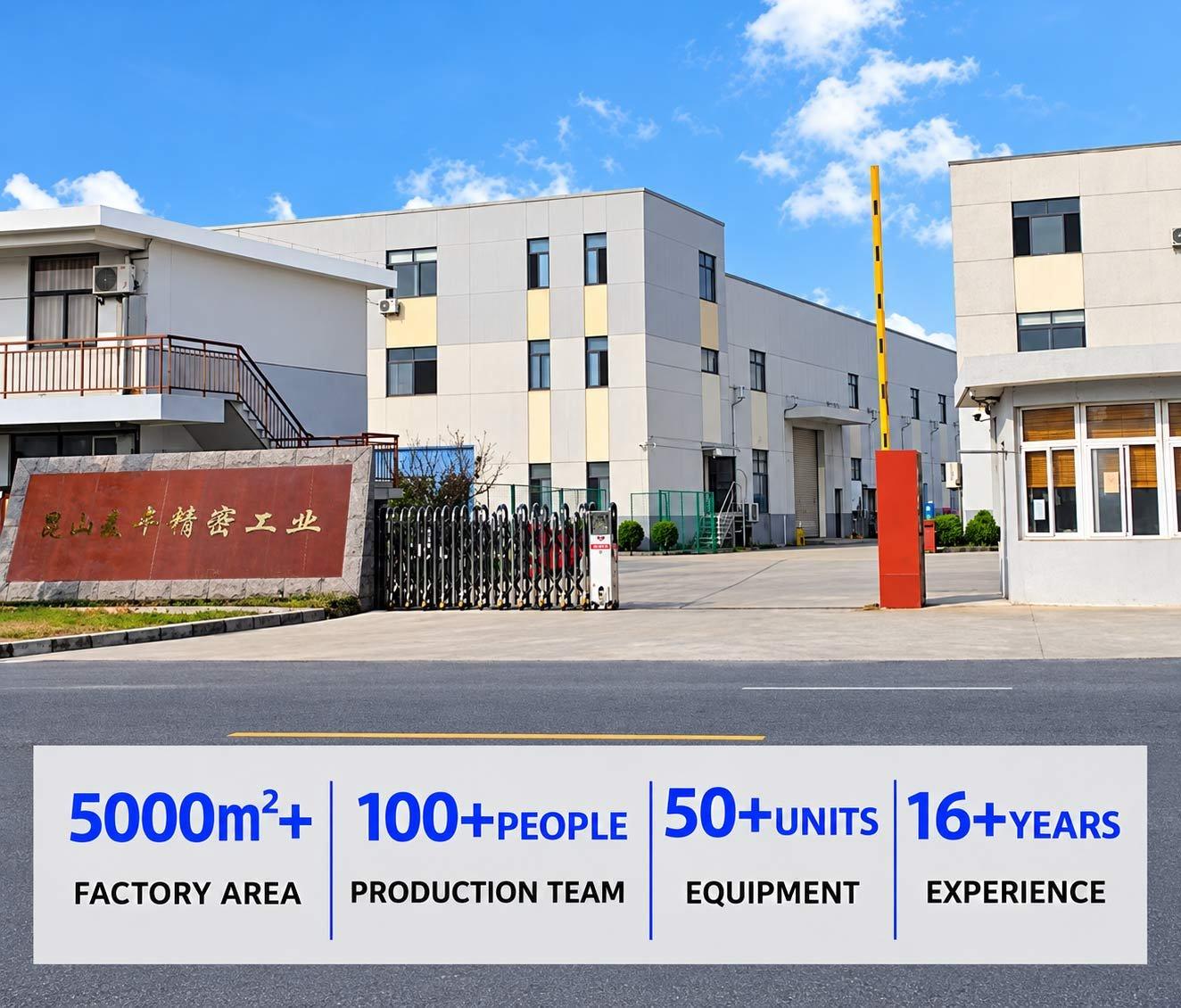
Kunshan Maifeng Precision Industry Co., Ltd. (MIF) has an investment of RMB 35 million and an independent factory of more than 5,000 m². The company operates 36 single- and dual-color injection molding machines from 40 to 700 tons, together with more than 50 sets of mold manufacturing and processing equipment. Our service, management and production team includes over 100 people.
Our parent company was established in 2008. We provide product design, mold design and manufacturing, injection molding and product assembly services for custom plastic parts, supporting both domestic and international customers.
1. Product Design Product structure design and optimization based on customer drawings and samples.
2. Mold Design Mold design developed around product geometry, material and production requirements.
3. Mold Manufacturing Machining, polishing, fitting and assembly for custom injection molds.
4. Injection Molding Single- and dual-color injection molding for project and order requirements.
5. Product Assembly Supporting assembly services for molded plastic components.
Custom glossy black PC protective cover for lawn mowers: an open-ring shell with snap clips molded in one shot and a class-A face that survives stones, sun and cleaning.
Custom PC light-diffusion tail light grille for lawn mowers: an even light band, a ribbed outer face, a sealed fixing flange and an optical surface finished to the agreed polish.
Custom clear PC tail light strip for mowers and outdoor equipment: compound curve, uniform wall, polished optical face and colour matched to your chip.
PC+ABS automotive wireless charging housing with an open coil window, four mounting ears and a stiffening rib, molded, inspected and packed for console assembly.
PC lawn mower tail light grille produced through custom mold development, precision injection molding and strict quality control for demanding outdoor applications.
PP handles and plastic parts for a 3rd generation magnetic wall mounted toilet brush, produced at Maifeng Precision through custom mold design, injection molding and careful inspection.
ABS nasal irrigator outer housing produced with custom multi-cavity molds, precision injection molding, careful trimming and dust-free packaging for personal care brands.
ABS nasal irrigator base produced with custom mold design, precision injection molding, strict inspection and dust-free packaging for personal care and medical device assemblies.
No matter what your automotive needs may be, we’re here to help. Contact us today to learn more about our
services and how we can assist you with all of your needs.
ISO 13485-certified medical injection molding in Class 10,000/100,000 cleanrooms: 36 single and dual-color machines, proven medical cases and trusted partners.
One-stop cup and bottle molding: dual-color lids, tea-separation cups and handles, QS food-contact licensed production with proven cases for global brands.
Contact Us
To grow into a top global mold & injection molding supplier
To grow into a top global mold & injection molding supplier, specializing in differentiated custom parts. We focus on structural development, streamlined production and consistent quality supply.











 Chinese
 English



