This semiconductor wafer carrier box is injection molded in semi-transparent PP as one piece, with four corner feet that let boxes stack foot-to-base without the rim ever touching the wafers below. A shallow outward lip stiffens the open mouth against bowing and doubles as a gloved handhold. Uniform walls, generous corner radii and balanced cavity-and-core cooling keep the wide rim flat; first articles are checked on a surface plate at four corners and four mid-points. Antistatic and conductive PP grades are available when the working area demands them. Interior dimensions follow the customer's wafer size.
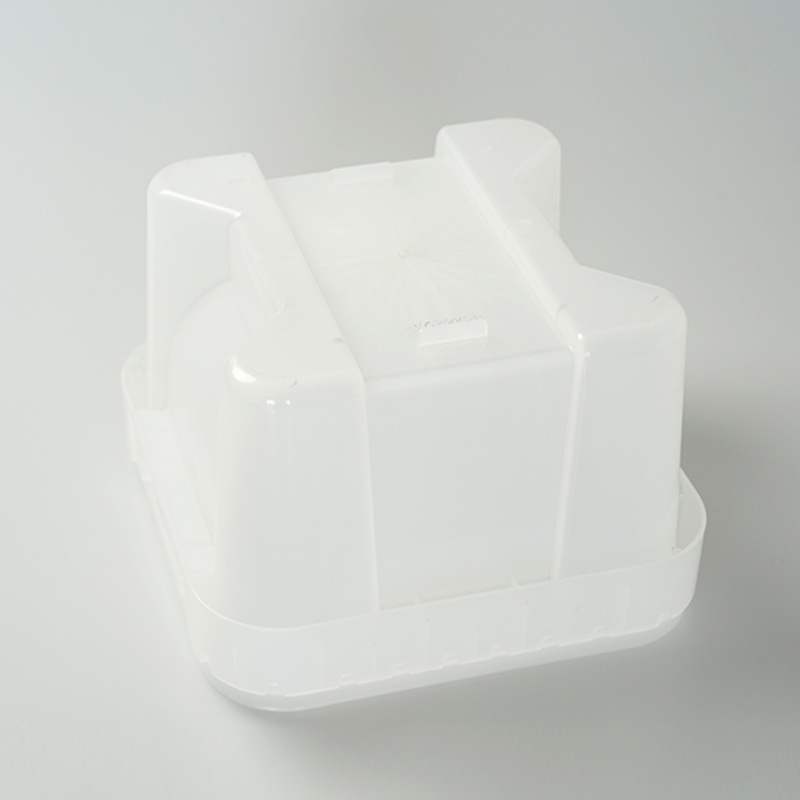
corner stacking feet land inside the box below, so stack load never passes through the wafers
rim flatness measured on a surface plate at four corners and four mid-points on first articles
antistatic and conductive PP grades available, decided before the mold is designed
The wafer carrier box is an open storage and transfer container moulded in semi-transparent PP as one piece. Wafers rest inside on the floor, the tall corner feet let boxes stack without the rim of one touching the wafers in the box below, and the closed walls keep dust off during moves between process areas.
Nothing on this box is decorative. The rim carries the stacking lip, the feet carry the load, and the floor has to stay flat enough that a stack of wafers sits without rocking. This page walks through the geometry and the tooling behind those three jobs.
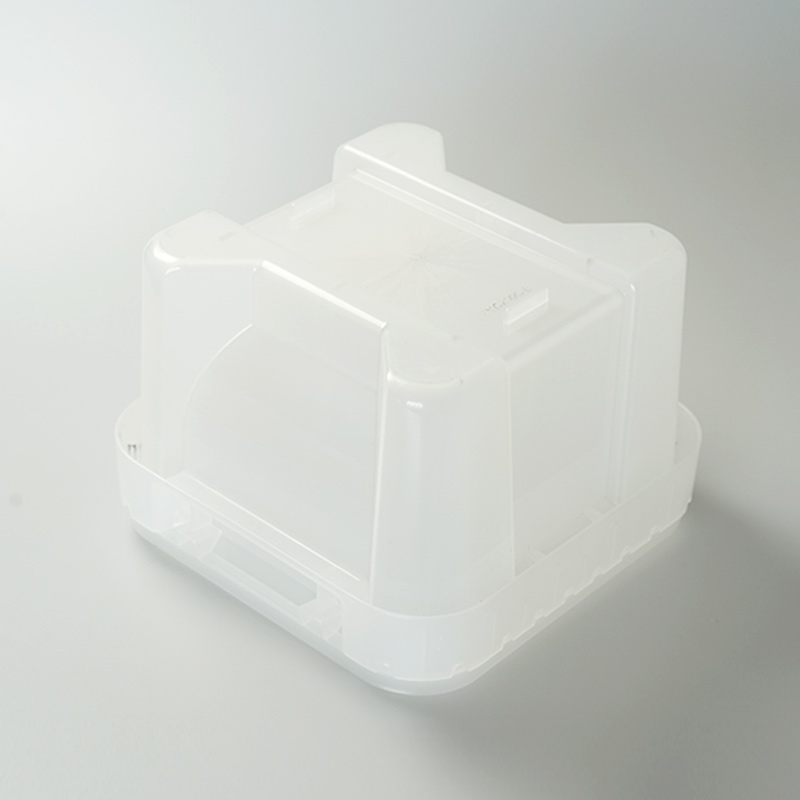
Closed view of the wafer carrier box showing the corner feet that define the stacking gap.
Stacking Feet and the Rim Lip
Four corner feet moulded into the body do the stacking. Each foot lands inside the recess of the box below, so the full weight of a stack passes foot to base and never through the wafers. The feet are solid sections on purpose, but each one is ribbed on the inside; a foot thick enough to sink would print its sink mark onto the box below after weeks of stacking.
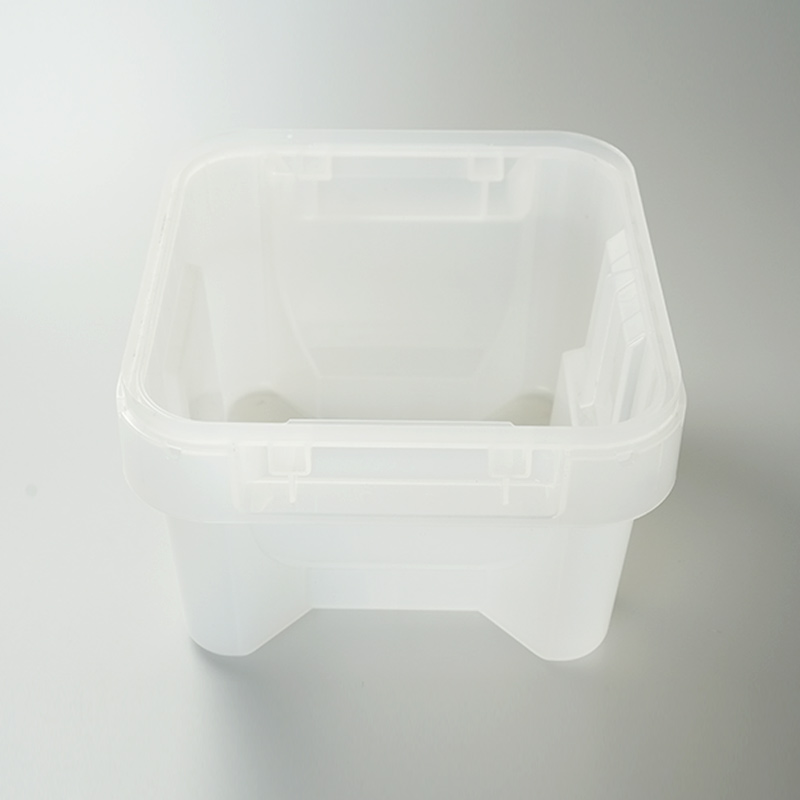
The rim carries a shallow outward lip. It stiffens the open mouth of a wide box — without it, the walls bow outward and stacked boxes lock together. The lip also gives a handhold for carrying the box with gloves on.
Open view showing the interior, the rim lip and the stacking recess.
Warpage on a Wide Flat Rim
Half-filled PP is the enemy of a flat rim. A box this wide cools unevenly: the rim solidifies last, and differential shrink across the width will twist the mouth out of plane if the mold does not fight it. Uniform wall sections, generous corner radii and balanced cooling behind both the cavity and the core keep the rim flat enough that stacked boxes sit square.
We measure the rim on a surface plate, not by eye. The first articles from a new mold are checked at four corners and at the mid-points of each wall; if the mouth is out of flat, the fix is usually in the cooling layout, not in the steel.
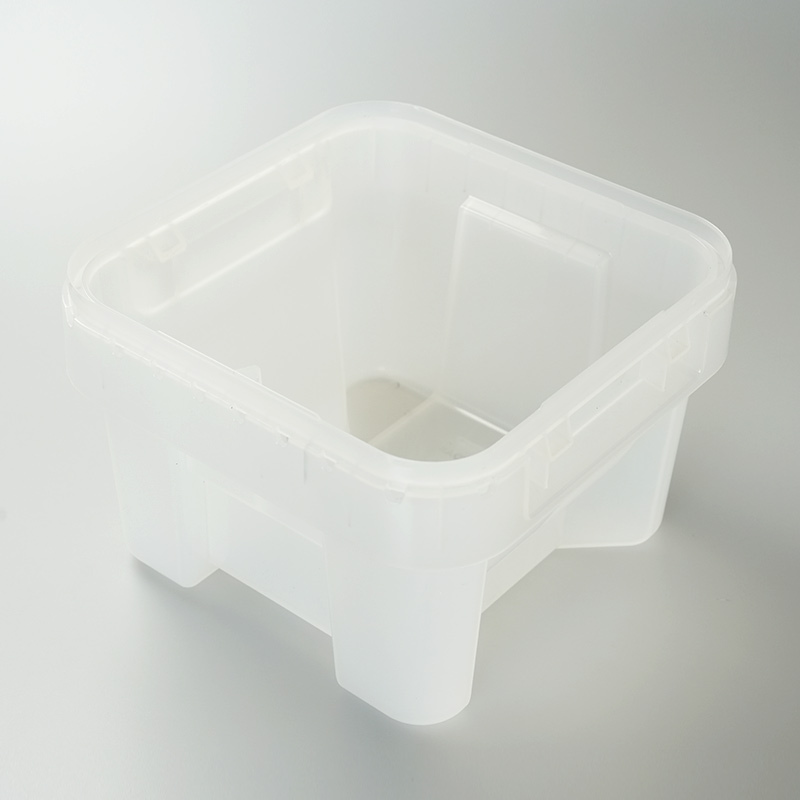
Open box seen from above showing the interior floor and wall detail.
Molding a Deep One-Piece Box
A deep box is a textbook core-gripping part. Resin is gated so the flow runs down the walls evenly — multiple gates around the cavity keep the flow front level, and a level front is what lets the corners fill without hesitation marks. Vents sit at the corners and at the rim, because that is where the air ends up.
Ejection is by stripper ring around the rim plus ejector pads under the floor corners. Semi-transparent PP marks easily, so the ejection faces are wide and polished. The recessed underside you see from below is the core side; it also stiffens the floor against the load of a full stack pressing down through the feet.
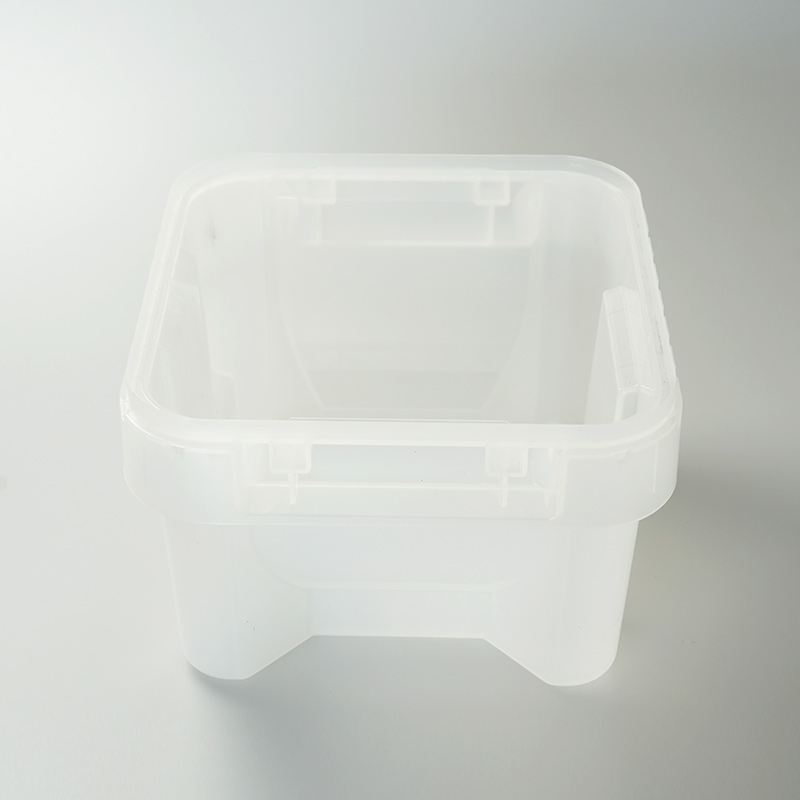
Second open view showing the wall thickness and the moulded rim section.
Why Semi-Transparent PP
PP shrugs off the acids, solvents and cleaning agents that pass through a wafer fab, generates fewer particles than most rigid resins, and survives drops that would crack a polycarbonate box of the same size. Semi-transparent rather than fully clear is a deliberate trade: the translucency lets an operator confirm contents at a glance, while the resin’s natural haze is put to work instead of fought.
One honest limitation. Standard PP is insulating, and in areas where static discharge is a concern the customer may need a conductive or antistatic grade. We mold both; the grades machine differently, so the material decision should be made before the mold is designed, not after.
Underside view of the box showing the recessed base panel and moulded structure.
Information to Confirm Before Starting a Wafer Carrier Box Project
Wafer size and carrier format, since the interior dimensions follow them directly.
Stacking height, because the feet and the floor are sized for the worst-case load.
Whether an antistatic or conductive PP grade is required in the working area.
Cleanroom class expectations, which affect packaging and post-molding handling.
The sealing lid interface, if a lid will be moulded or sourced to close the box.
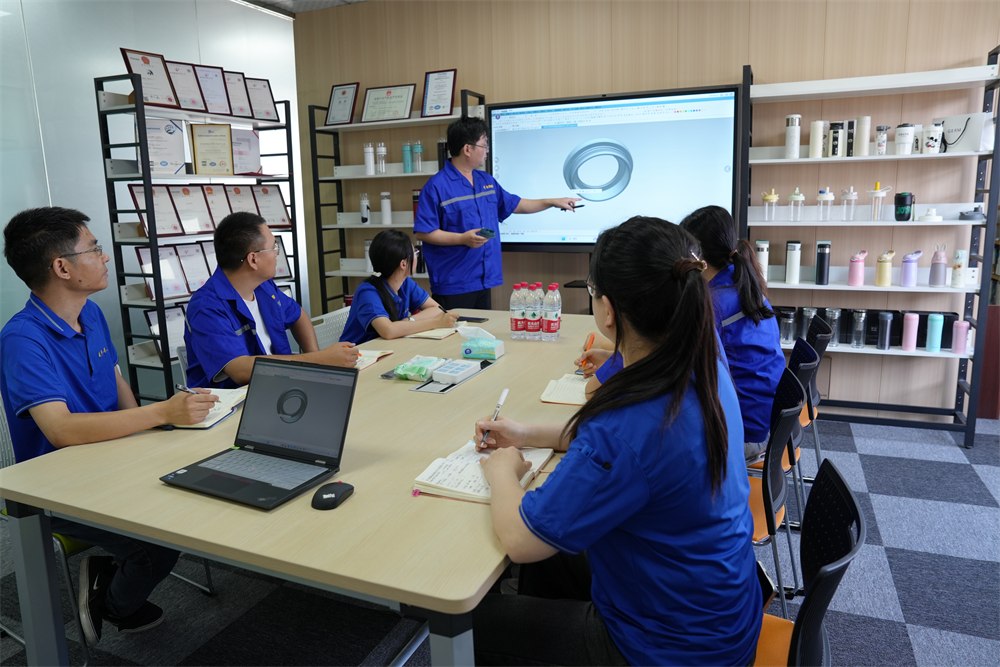
Kunshan Maifeng Precision Industry Co., Ltd. reviews carrier box designs before quoting, builds the injection molds in house, and molds single-color and dual-color parts on 36 machines from 90 to 700 tons. Send us the wafer format and the stacking requirement, and we will come back with a feasibility comment and a tooling proposal.
Company Profile
About Us
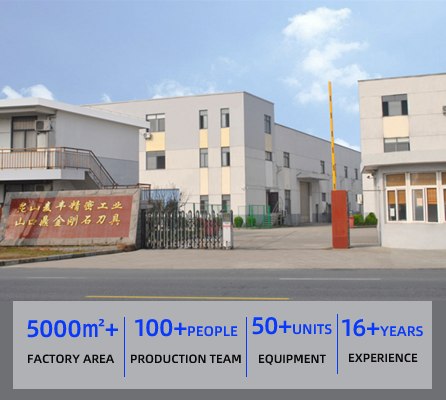
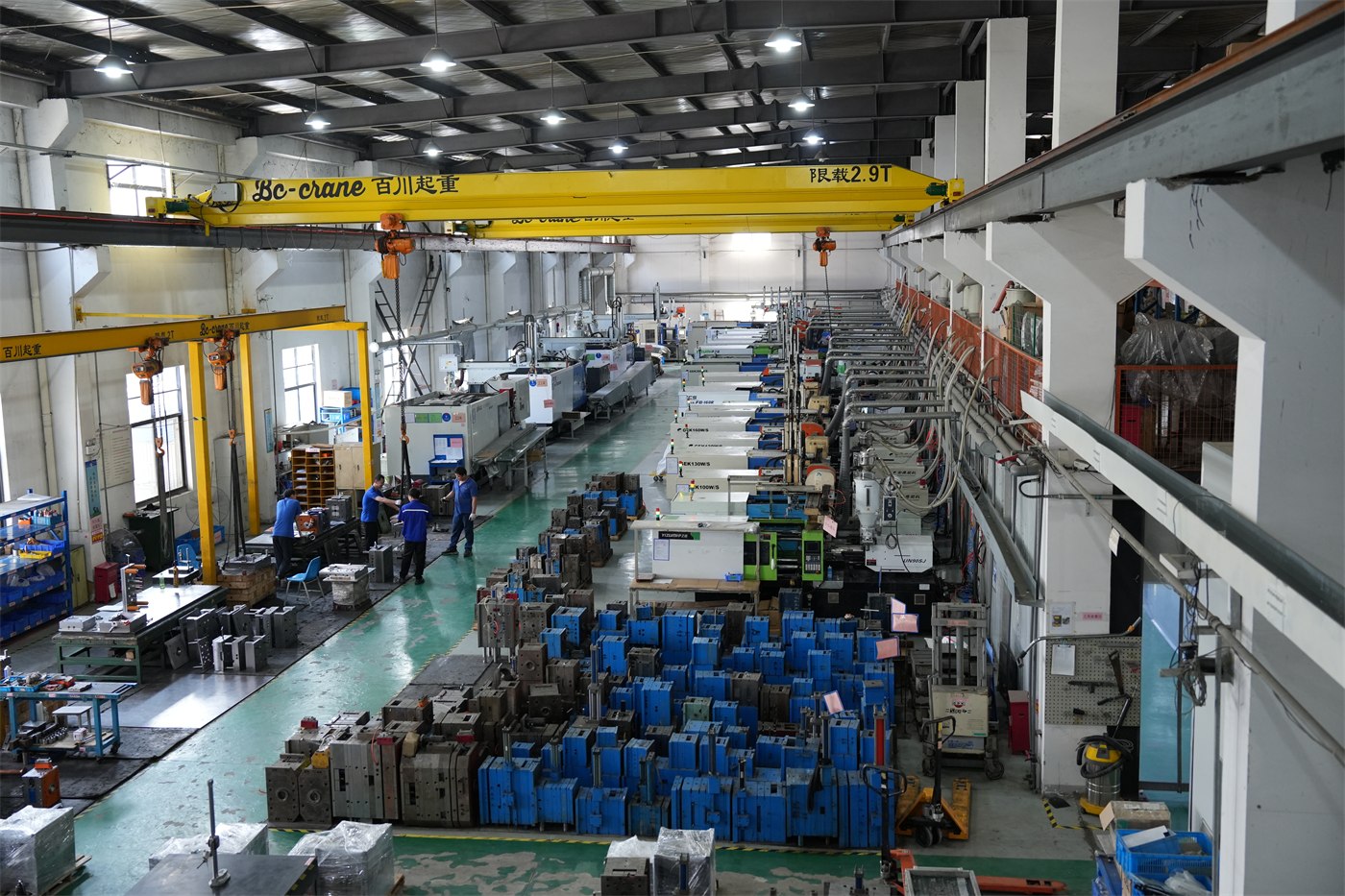
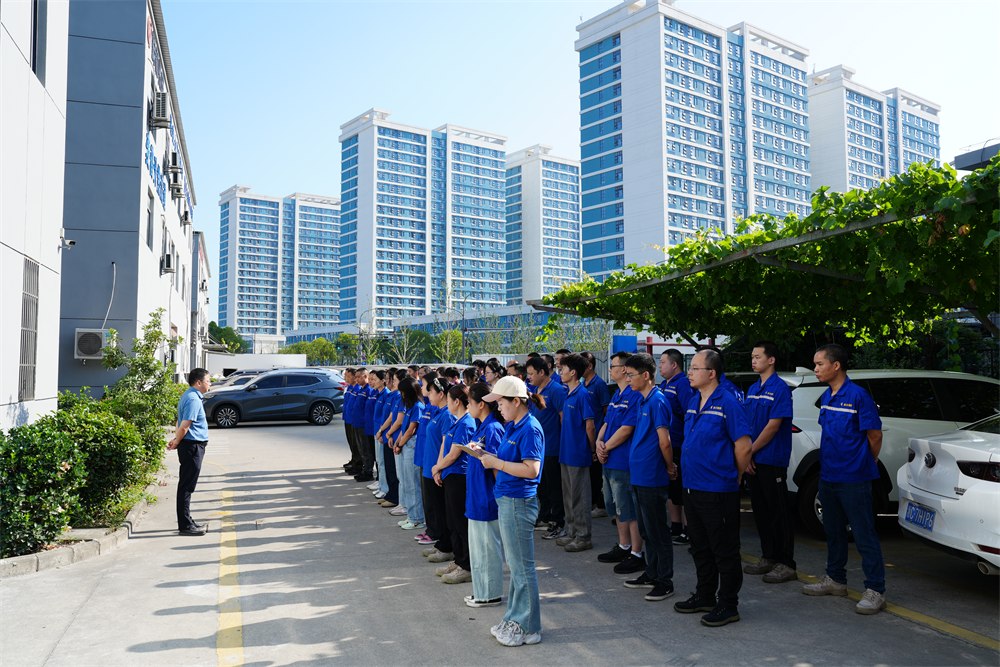
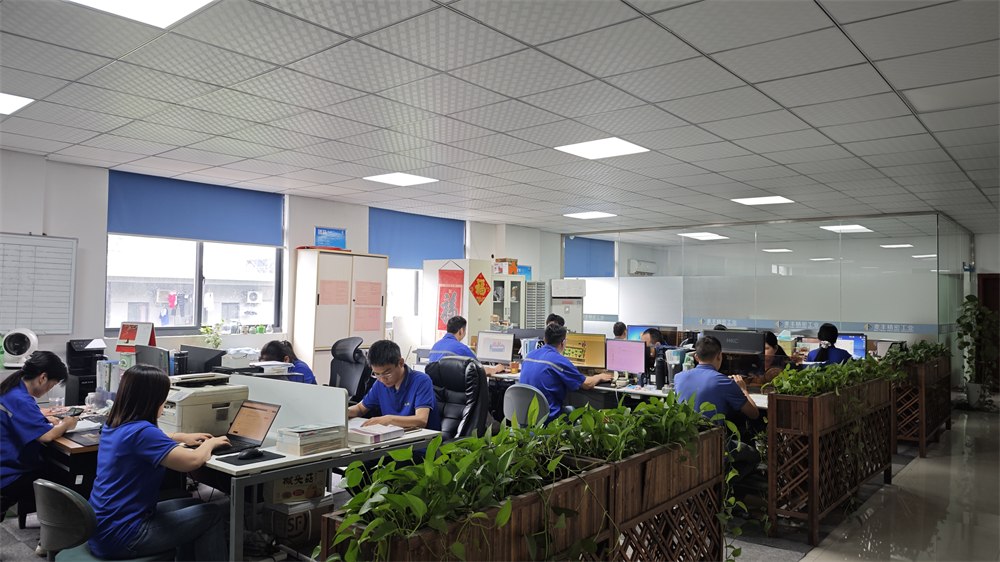
Kunshan Maifeng Precision Industry Co., Ltd. (MIF) has an investment of RMB 35 million and an independent factory of more than 5,000 m². The company operates 36 single- and dual-color injection molding machines from 90 to 700 tons, together with more than 50 sets of mold manufacturing and processing equipment. Our service, management and production team includes over 100 people.
Our parent company was established in 2008. We provide product design, mold design and manufacturing, injection molding and product assembly services for custom plastic parts, supporting both domestic and international customers.
1. Product Design
Product structure design and optimization based on customer drawings and samples.
2. Mold Design
Mold design developed around product geometry, material and production requirements.
3. Mold Manufacturing
Machining, polishing, fitting and assembly for custom injection molds.
4. Injection Molding
Single- and dual-color injection molding for project and order requirements.
5. Product Assembly
Supporting assembly services for molded plastic components.
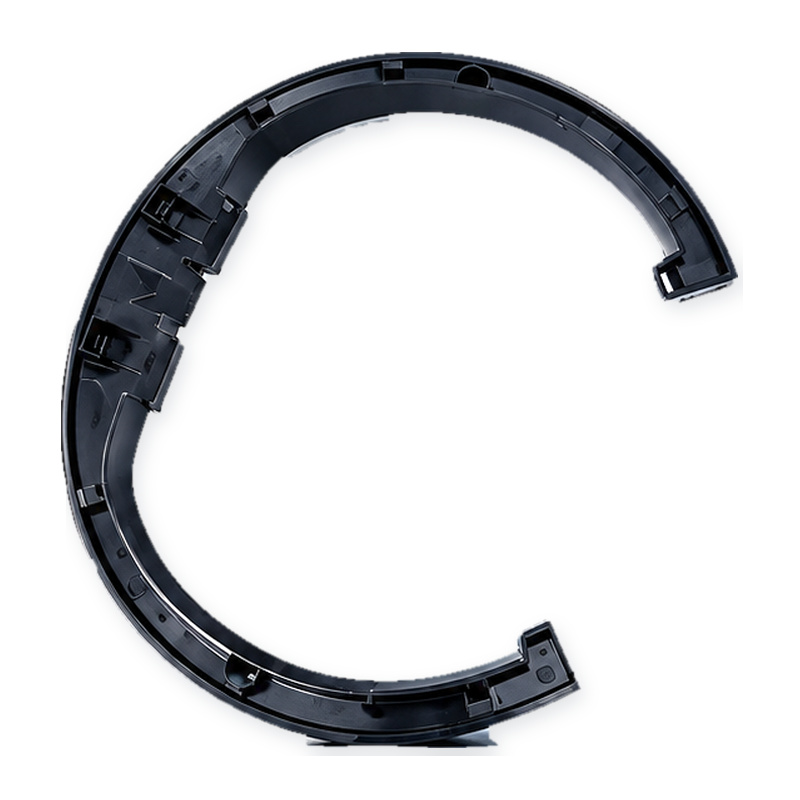
Custom glossy black PC protective cover for lawn mowers: an open-ring shell with snap clips molded in one shot and a class-A face that survives stones, sun and cleaning.
Custom PC light-diffusion tail light grille for lawn mowers: an even light band, a ribbed outer face, a sealed fixing flange and an optical surface finished to the agreed polish.
Custom clear PC tail light strip for mowers and outdoor equipment: compound curve, uniform wall, polished optical face and colour matched to your chip.
PC+ABS automotive wireless charging housing with an open coil window, four mounting ears and a stiffening rib, molded, inspected and packed for console assembly.
PC lawn mower tail light grille produced through custom mold development, precision injection molding and strict quality control for demanding outdoor applications.
PP handles and plastic parts for a 3rd generation magnetic wall mounted toilet brush, produced at Maifeng Precision through custom mold design, injection molding and careful inspection.
ABS nasal irrigator outer housing produced with custom multi-cavity molds, precision injection molding, careful trimming and dust-free packaging for personal care brands.
ABS nasal irrigator base produced with custom mold design, precision injection molding, strict inspection and dust-free packaging for personal care and medical device assemblies.
No matter what your automotive needs may be, we’re here to help. Contact us today to learn more about our
services and how we can assist you with all of your needs.
ISO 13485-certified medical injection molding in Class 10,000/100,000 cleanrooms: 36 single and dual-color machines, proven medical cases and trusted partners.
One-stop cup and bottle molding: dual-color lids, tea-separation cups and handles, QS food-contact licensed production with proven cases for global brands.
Contact Us
To grow into a top global mold & injection molding supplier
To grow into a top global mold & injection molding supplier, specializing in differentiated custom parts. We focus on structural development, streamlined production and consistent quality supply.






 Chinese
 English